Foot Pain in Dubai: Plantar Fasciitis, Nerve Issues, or Something Else? A Physio’s Guide
A practical guide for Dubai residents explaining common causes of heel and foot pain, how physiotherapists assess gait, footwear and nerve involvement, what foot-focused rehabilitation looks like, and when orthotics or specialist referral may be needed.

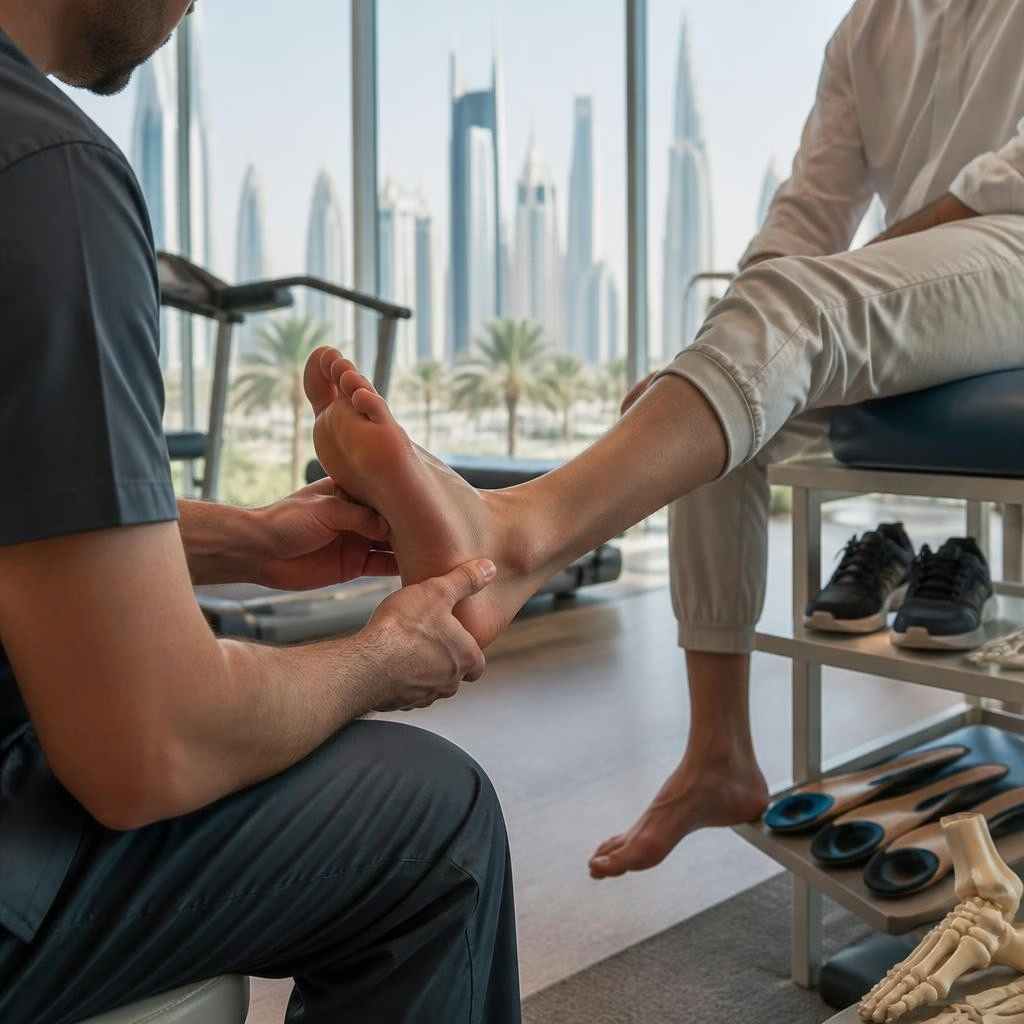
Understanding heel and persistent foot pain
Heel and foot pain can come from several sources, and calling every painful foot “flat feet” misses important differences. Common presentations include sharp heel pain on first steps in the morning, aching along the arch, burning sensations, tingling or pins-and-needles, and reduced ability to push off or walk normally. The right diagnosis matters because a plantar fascia strain, tendon overload, bony irritation, or a nerve entrapment each need a different rehab approach.
Common causes we see in Dubai patients
Plantar fasciitis (or plantar fasciopathy) is one of the most frequent causes of heel pain and often relates to sudden increases in load or persistent mechanical strain. Tendon problems (like posterior tibial or peroneal tendinopathy), metatarsalgia, and bony issues such as stress reactions can also present as forefoot or heel pain. Nerve-related causes — including tarsal tunnel syndrome or radicular pain from the low back — may produce burning, numbness, or radiating pain. Lifestyle and footwear factors (hard-soled shoes, long standing shifts, or inappropriate running shoes) commonly contribute to symptoms.
How a physiotherapist assesses foot pain
A thorough physio assessment looks beyond the painful spot. We observe standing posture and gait, check shoe wear patterns, and test ankle and foot range of motion. Functional tests — such as single-leg balance, heel raises, and palpation of the plantar fascia — help identify mechanical weak points. Because the foot is part of a kinetic chain, we also screen hip, knee and lumbar spine movement to identify contributing sources. Where appropriate, therapists may use neural tension tests to evaluate possible nerve involvement.
Recognizing nerve involvement versus local foot issues
Nerve-related pain often presents with tingling, shooting pains, or a burning quality that may travel down the leg into the foot. Symptoms that change with neck or low-back movements, or those accompanied by muscle weakness or clear sensory loss, raise suspicion for nerve compression higher up the chain. When nerve signs are present, physiotherapists will tailor treatment to include neural mobilization techniques and coordinate with medical colleagues for imaging or neurological opinion if needed.
What foot-focused rehabilitation typically includes
A structured rehab program usually combines hands-on treatment, targeted exercises, and practical load management. Manual therapy can reduce local stiffness and pain, while guided stretching and progressive strengthening (for intrinsic foot muscles, calf complex and hip stabilizers) restore force transfer and resilience. We may use modalities provided at the clinic — such as cold laser therapy or acupuncture — to support pain control, and introduce gait and activity retraining to prevent recurrence. Custom exercise programs are adjusted session-by-session so intensity increases safely as symptoms improve.
When orthotics or a specialist referral make sense
Orthotic devices can be helpful when a biomechanical imbalance or persistent overload is identified and conservative therapy alone is insufficient. A physiotherapist will trial off-the-shelf supports and assess response before recommending custom orthotics. Referral to a podiatrist, orthopaedic specialist, neurologist, or for imaging is considered when red flags appear (progressive weakness, unexplained swelling, sudden severe loss of function) or when symptoms fail to improve despite an adequate course of conservative care.
Finding help at Advanced OrthoSpine in Dubai
At Advanced OrthoSpine Health Center—Knee & Ankle, Shoulder, Back Pain Physiotherapy in Dubai—we focus on accurate assessment and structured treatment plans that address the root cause, not just the symptoms. Many patients report meaningful recovery after a short, focused program; for example, one patient described regaining normal walking ability after a structured course of treatment. Our team uses manual therapy, custom exercise programs, gait and footwear advice, and available modalities such as cold laser or acupuncture when appropriate. We’re based on Al Wasl Road (Office 209, Dubai) with free parking and offer a free consultation to discuss current symptoms and recommended next steps—call to arrange an appointment and get a targeted plan that helps you walk and move with less pain.
Customer review


Article by
Advanced OrthoSpine Health Center– Knee & Ankle, Shoulder, Back Pain Physiotherapy Dubai
Advanced OrthoSpine is a leading physiotherapy and non-surgical pain relief clinic in Dubai, located on Al Wasl Road with free parking. We offer expert care for back pain, sciatica, neck disc issues, sports injuries, and ligament or tendon problems. Our services include cold laser therapy, cupping/Hijama, manual therapy, lymphatic drainage, and stress relief treatments. We also specialize in fat reduction, body contouring, cellulite treatments, and post-surgery physiotherapy. Whether you're looking for a sports injury clinic, foot orthotics, or hip pain relief, our professional team is here to help. Call us for a free consultation and let Dubai’s top physiotherapists help you recover faster.