Posture Problems in Dubai Teenagers: When to Worry About Slouching, Backpacks, and Screen Time
Practical guidance for parents in Dubai on which posture changes are normal during growth, when to seek a professional assessment, simple home and school adjustments, and how early posture-focused physiotherapy can prevent longer-term spine problems.

Why posture matters for teenagers
Adolescence is a time of rapid growth, changing activity patterns, and increased device use — all of which affect posture. While a bit of slouching or rounded shoulders is common, persistent poor posture can lead to muscle imbalance, pain (especially in the neck, shoulders and lower back), and movement habits that become harder to correct with time. Focusing on posture now helps protect spinal health and supports sports performance, school comfort and long‑term mobility.
Normal growth-related changes vs. signs to worry about
Some posture changes are part of normal growth: temporary uneven shoulders after a growth spurt, mild forward head posture when studying, or occasional backache after intense activity. You should consider a professional assessment if your teen has any of the following: ongoing back or neck pain that limits activity, visible curve or asymmetry in the spine, one leg appearing shorter, frequent headaches related to neck tension, numbness or tingling in the arms or legs, or pain that persists despite simple home measures. These signs suggest an underlying mechanical issue that benefits from early evaluation.
How backpacks affect posture (and safer ways to carry them)
Heavy or poorly fitted backpacks are a common source of pain and poor posture in school-aged children. Encourage the following: use both shoulder straps to distribute weight, choose a bag with wide, padded straps and a padded back, pack heavier items close to the center and reduce unnecessary contents, and keep load under roughly 10–15% of body weight when possible. If a locker or digital textbooks are available, rotate heavy items during the day. Also teach teens to lift with knees and avoid twisting while carrying a heavy load to protect the spine.
Managing screen time and device posture
Tablets and phones promote forward head posture and rounded shoulders. Simple changes help a lot: raise devices to eye level when possible, use a stand or prop for tablets, sit with hips pushed to the back of the chair and feet flat on the floor, and encourage regular breaks — a brief change of position every 20–30 minutes. For prolonged study sessions, adopt an ergonomic workstation: a chair that supports the lower back, a desk at elbow height, and a screen positioned so the top third of the display is at eye level.
Practical home and school adjustments parents can make today
Small environmental tweaks and daily habits are effective and easy to implement. Promote regular movement breaks, simple posture checks (ask your teen to stand side-on to a mirror weekly), and a short daily routine of posture‑focused exercises such as wall angels, scapular squeezes and core activation. Work with teachers to reduce long consecutive periods of sitting and explore locker use or lighter textbook options where available. Emphasize consistency: daily 5–10 minute habits often outperform occasional intensive sessions.
Simple posture exercises teens can do safely
Begin with low‑risk, easy exercises that build awareness and strength: chin tucks to reduce forward head posture, scapular retractions (shoulder blade squeezes) to strengthen upper back muscles, dead bug or bird‑dog variations for core control, and standing hip hinge drills to protect the lower back during lifting. Start with a few slow repetitions, focus on quality of movement, and avoid painful ranges. If your teen has a specific complaint (sharp pain, numbness or sudden change), stop these exercises and seek professional advice before continuing.
When to see a physiotherapist and what to expect
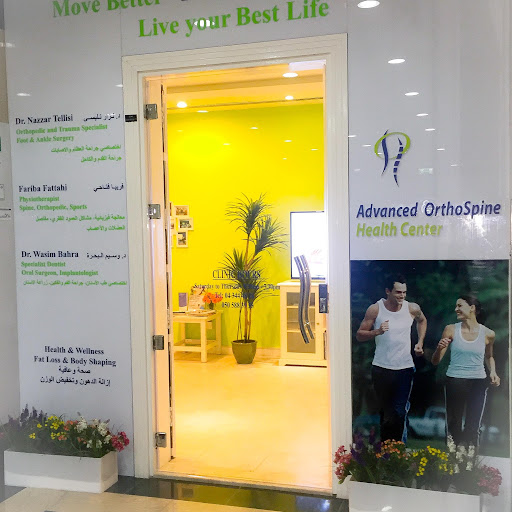
If your teen has persistent pain, visible asymmetry, neurological symptoms or if home measures don’t help after a few weeks, book an assessment with a physiotherapist. At a posture assessment you can expect a detailed history, movement and strength tests, and education about contributing factors. Treatment may include hands‑on manual therapy to ease stiff or painful areas, personalized exercise programs to correct movement patterns, and practical advice for school and sports. Clinics like Advanced OrthoSpine Health Center offer posture correction therapy, manual therapy and custom exercise programs tailored for teenagers; many parents report that clear explanations and hands‑on guidance make home routines easier to follow.
How early physiotherapy can help — and next steps in Dubai
Addressing posture and movement early reduces the chance that small problems become chronic. Early physiotherapy focuses on education, correcting habits, and building balanced strength and control — all aiming to prevent future episodes of back, shoulder or neck pain. If you’re in Dubai and would like an assessment, Advanced OrthoSpine Health Center provides posture-focused physiotherapy, non‑surgical spine care and tailored rehab programs. The clinic emphasizes clear explanations and patient education, and offers a free consultation — a useful first step to decide whether a full assessment or targeted therapy is needed for your teen.
Article by
Advanced OrthoSpine Health Center– Knee & Ankle, Shoulder, Back Pain Physiotherapy Dubai
Advanced OrthoSpine is a leading physiotherapy and non-surgical pain relief clinic in Dubai, located on Al Wasl Road with free parking. We offer expert care for back pain, sciatica, neck disc issues, sports injuries, and ligament or tendon problems. Our services include cold laser therapy, cupping/Hijama, manual therapy, lymphatic drainage, and stress relief treatments. We also specialize in fat reduction, body contouring, cellulite treatments, and post-surgery physiotherapy. Whether you're looking for a sports injury clinic, foot orthotics, or hip pain relief, our professional team is here to help. Call us for a free consultation and let Dubai’s top physiotherapists help you recover faster.