Returning to the Gym After Injury in Dubai: A Physiotherapist’s Step-by-Step Checklist
A practical, clinician-led checklist for Dubai gym-goers recovering from back, knee or shoulder injuries — how to know you’re ready, safe progression steps, warning signs, and when to get clearance from a physiotherapist at our Al Wasl clinic or by appointment for nearby areas such as Jumeirah.

Why a cautious return matters
Heading back to gym training after a back, knee or shoulder injury is an important step, but returning too quickly or with the wrong exercises can delay recovery or cause setbacks. This article gives a simple, clinically informed checklist you can use to decide when to restart gym workouts, how to progress safely, and when to seek clearance from a physiotherapist. The guidance here draws on the clinic’s non-surgical spine and musculoskeletal expertise and on outcomes reported by patients who progressed back to activity with physiotherapy support.
Before you step back into the gym: clinical readiness checklist
Use this short readiness check before planning gym sessions: (1) pain behavior — no new or increasing sharp pain during normal daily activities or at rest; (2) basic function — you can walk, climb stairs and sleep without substantial pain; (3) movement control — you can perform basic, pain-free movement patterns (for example, squat to a chair or lift a light object) with controlled technique; (4) no worrying neurological signs — no new numbness, progressive weakness or loss of balance; (5) professional clearance — if you had recent surgery, ongoing nerve symptoms, or are uncertain, get a physiotherapy clearance. Many patients report clear mobility improvements after targeted physiotherapy sessions, and a physiotherapist can confirm whether your movement and symptoms are stable enough to begin gym work.
A step-by-step gym checklist for each session
Treat every gym session as part of rehabilitation until you are fully symptom-free with your usual activities. Follow these steps: start with a longer warm-up and mobility work for the affected region; begin with low-load, controlled exercises that prioritise quality of movement over heavy weight; avoid high-velocity or ballistic loading in the early stages; monitor symptoms closely during and for 24–48 hours after the session — mild muscle soreness is expected, but increasing joint pain, sharp pain, swelling or new neurological symptoms are not. Communicate with your trainer about modifications and use conservative progressions for load and range.
Sample progression approach for back, knee and shoulder injuries
Use a three-stage progression for most injuries: reactivation → strengthening/control → sport-specific conditioning. For the back: begin with gentle spinal mobility and deep core activation, progress to controlled loaded lifts focusing on technique, then reintroduce heavier compound lifts with attention to spinal alignment. For the knee: start with non–weight-bearing activation and closed-chain control (e.g., supported single-leg stands), progress to squatting and step work with controlled range, then add plyometrics or heavier loaded squats once pain-free and controlled. For the shoulder: begin with scapular control and rotator cuff isometrics, progress to pain-free resisted rotations and press patterns, then reintroduce overhead and throwing loads with careful technique. Perform these progressions under physiotherapist supervision or with a trainer who understands your restrictions.
How to measure safe progress (practical signs, not exact numbers)
Rather than relying on strict timelines, look for functional markers: ability to complete daily tasks without increased pain, consistent movement quality in rehabilitation exercises, no increase in pain or swelling after gym sessions, and confidence in technique. Keep a short symptom log after workouts to detect patterns. If you see steady improvement in strength and control and symptoms remain stable or improve, you can gradually increase load or complexity. If symptoms worsen or new neurological signs appear, stop and contact your physiotherapist.
When to get clearance from a physiotherapist in Al Wasl or nearby areas
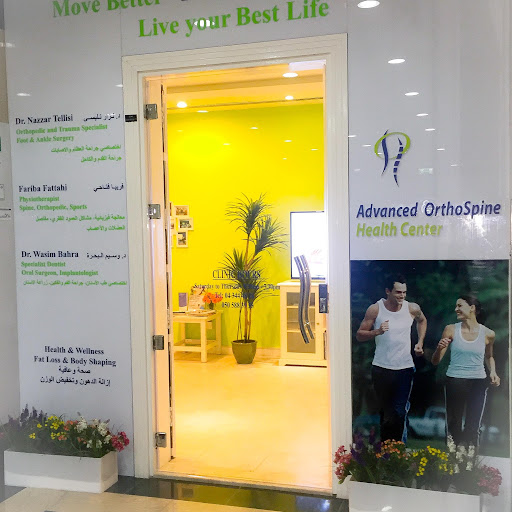
Seek professional clearance if you had recent surgery, persistent nerve pain, repeated flare-ups, or if you’re unsure how to structure progression. Advanced OrthoSpine Health Center—located on Al Wasl Road (Office 209) with free parking—offers assessments that combine hands-on examination, movement analysis and a tailored return-to-gym plan. We also support patients from nearby neighbourhoods such as Jumeirah and across Dubai by appointment. A brief physiotherapy clearance visit can reduce risk and provide a clear, individualized progression plan for safe gym return.
Practical tips for training sessions and next steps
Practical habits that help long-term: always prioritise technique over load, warm up the specific area you’re returning (hips, thoracic spine, shoulder girdle), coordinate with trainers so they know your restrictions, and schedule periodic physiotherapy check-ins during your return. Use complementary clinic therapies—manual therapy, targeted exercise programs, and post-surgical rehabilitation—if recommended by your therapist. If you’d like personalised guidance, call Advanced OrthoSpine Health Center for a free consultation and an assessment focused on Knee & Ankle, Shoulder, Back Pain Physiotherapy in Dubai to create a safe gym-return plan tailored to you.
Customer review


Article by
Advanced OrthoSpine Health Center– Knee & Ankle, Shoulder, Back Pain Physiotherapy Dubai
Advanced OrthoSpine is a leading physiotherapy and non-surgical pain relief clinic in Dubai, located on Al Wasl Road with free parking. We offer expert care for back pain, sciatica, neck disc issues, sports injuries, and ligament or tendon problems. Our services include cold laser therapy, cupping/Hijama, manual therapy, lymphatic drainage, and stress relief treatments. We also specialize in fat reduction, body contouring, cellulite treatments, and post-surgery physiotherapy. Whether you're looking for a sports injury clinic, foot orthotics, or hip pain relief, our professional team is here to help. Call us for a free consultation and let Dubai’s top physiotherapists help you recover faster.