Sports Injuries for Weekend Athletes in Dubai: When Rest Isn’t Enough and Rehab Matters
A practical guide for casual footballers, padel players and gym-goers explaining how to recognise common sports injuries, why ‘playing through pain’ risks long-term problems, and how sports-specific rehab and functional movement training at a specialist physiotherapy clinic can get you back to sport safely.

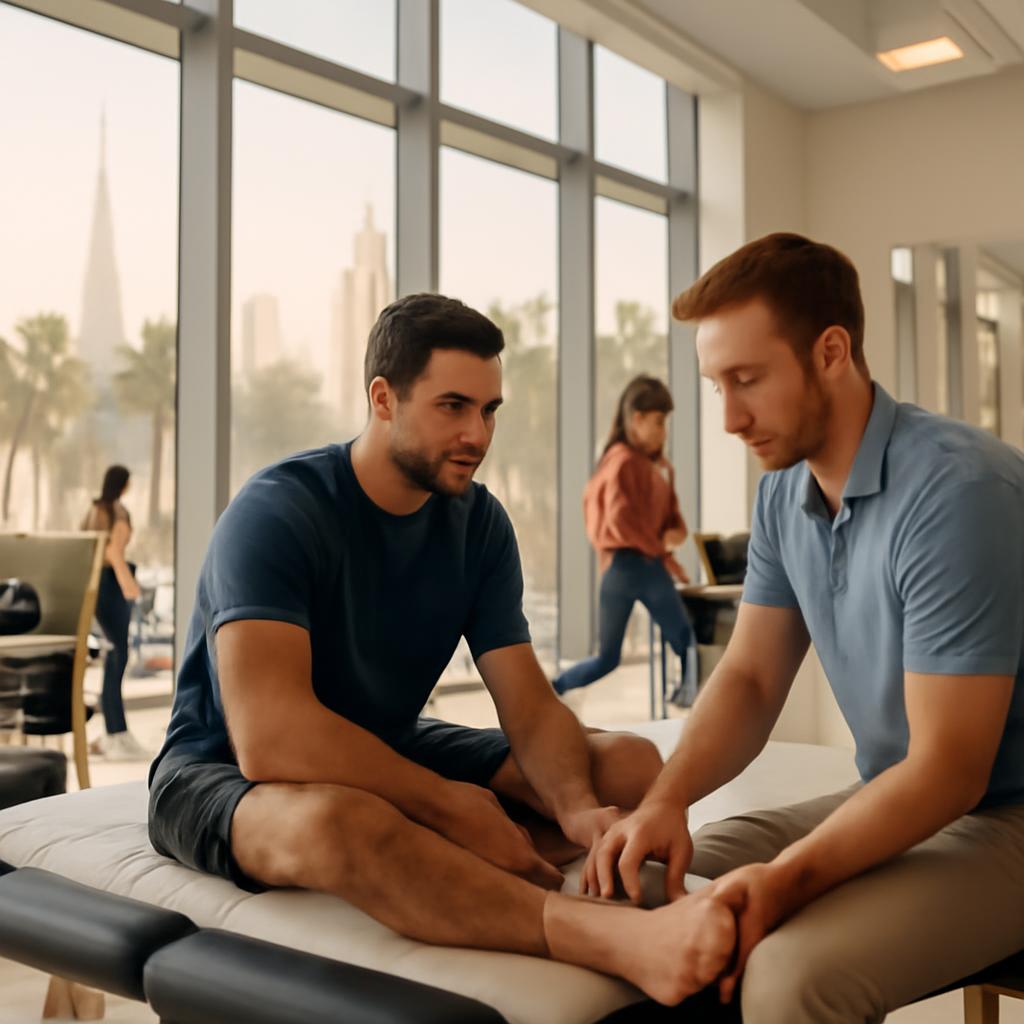
Why this matters to weekend athletes
If you play football, padel or train hard at the gym on weekends, you’re not alone — but occasional players face a particular pattern of injuries: recurring ankle sprains, hamstring pulls, shoulder strains and flare-ups of lower back pain. These injuries often start as a small niggle that gets worse with repeated activity. This article explains how to tell a simple strain from a more serious ligament or joint problem, why ignoring pain can lead to chronic issues, and what effective, sports-specific rehabilitation looks like from a physiotherapy perspective.
Common injuries seen in casual sport and how they present
Weekend sport frequently produces soft tissue injuries (muscle strains and tendon overload), ligament sprains (ankle, knee) and joint irritations (shoulder impingement, knee pain). Typical signs that need more than a few days’ rest include persistent swelling, instability (for example, the ankle giving way), marked loss of mobility or strength, numbness/tingling, and pain that worsens with activity rather than easing. If you notice these, a professional assessment is the next sensible step rather than continuing to play.
Strain versus ligament injury: practical differences
A muscle strain usually causes localized pain, limited strength, and soreness that improves gradually with rest and controlled movement. A ligament injury (a sprain) often involves immediate swelling, bruising, and a feeling of instability in the joint. Ligament damage can also delay return to sport if not rehabilitated properly. Simple self-care might help a minor strain, but suspected ligament injuries, repeated sprains, or persistent functional loss should be evaluated by a physiotherapist to avoid repeated damage and long-term instability.
Why 'playing through pain' is risky
Continuing to play on an injured structure can increase tissue damage, change movement patterns, and create compensations elsewhere in the body (for example, a weak ankle causing hip or back problems). Recurrent sprains can weaken the joint’s support system and raise the risk of osteoarthritis later on. For many weekend athletes the difference between a short break plus targeted rehab and months of recurring pain is early assessment and a structured return-to-play plan.
What sports-specific rehab involves at a specialist physiotherapy clinic
Effective rehab is more than passive treatments. At a specialist clinic you can expect a full assessment to identify the injury’s root cause, hands-on manual therapy where appropriate, tailored exercise programmes that progress from mobility to strength and power, and functional movement training that recreates sport demands. Services commonly used for weekend-sport injuries include knee & ankle, shoulder, back pain physiotherapy in Dubai, joint mobility restoration, ACL/MCL recovery protocols, and custom exercise programmes. Where needed, clinicians add modalities such as cold laser therapy or targeted techniques to manage swelling and pain while you rebuild function.
Simple steps you can start today
Immediately after an injury, control swelling and pain with relative rest, ice, compression and elevation where appropriate, and avoid activities that cause sharp pain. Begin gentle mobility exercises as pain allows and focus on balance and proprioception for ankle injuries (single-leg stands, wobble-board drills) and on eccentric strengthening for hamstrings. Gradually reintroduce sport-specific drills and only return to full play when you can perform key movements (jumping, cutting, sprinting) without pain or instability. Wearing appropriate footwear and adding a brief dynamic warm-up before play reduces repeat injury risk.
When to book an assessment — and what patients report
Book a professional assessment if you have ongoing swelling, loss of function, repeated sprains, or pain that doesn’t settle after a few days. Patients at local physiotherapy clinics often report meaningful improvements after structured rehab: for example, one person regained normal walking ability within six sessions following an accurate assessment and a focused protocol. Other patients praise attentive, explanatory care and noticeable pain reduction after just a few visits. If you want a sports-focused evaluation — whether for knee & ankle, shoulder, or back pain physiotherapy in Dubai — consider arranging a consultation to get a personalised plan and a safe return-to-play roadmap.
Customer review


Article by
Advanced OrthoSpine Health Center– Knee & Ankle, Shoulder, Back Pain Physiotherapy Dubai
Advanced OrthoSpine is a leading physiotherapy and non-surgical pain relief clinic in Dubai, located on Al Wasl Road with free parking. We offer expert care for back pain, sciatica, neck disc issues, sports injuries, and ligament or tendon problems. Our services include cold laser therapy, cupping/Hijama, manual therapy, lymphatic drainage, and stress relief treatments. We also specialize in fat reduction, body contouring, cellulite treatments, and post-surgery physiotherapy. Whether you're looking for a sports injury clinic, foot orthotics, or hip pain relief, our professional team is here to help. Call us for a free consultation and let Dubai’s top physiotherapists help you recover faster.