Using a Hair Simulator in Gurgaon to Preview Your Transplant Result: Pros and Limitations
Learn how hair simulation tools help you visualise possible transplant outcomes, what they can and cannot predict, and how clinics in Gurgaon combine simulations with clinical judgment and honest counselling to set realistic expectations.
Why visualising results matters
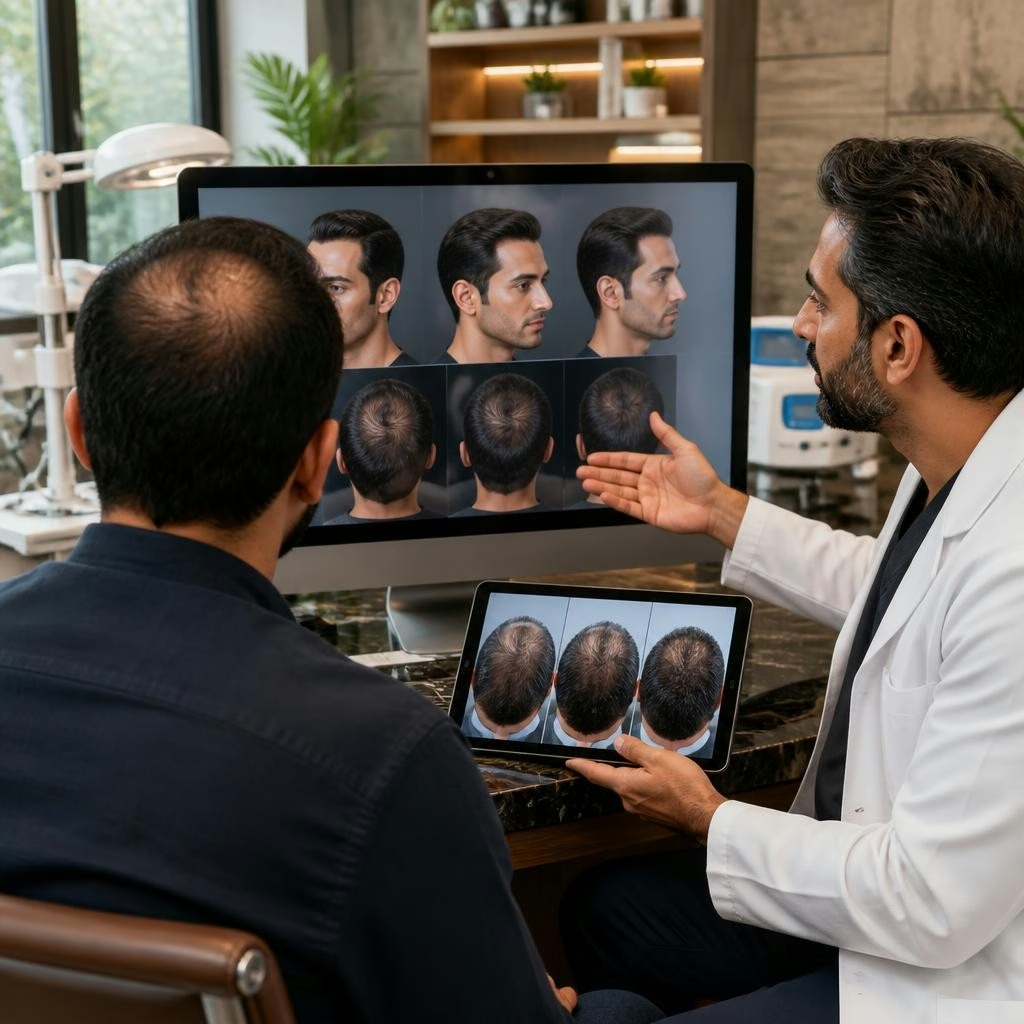
Deciding on a hair transplant is both medical and personal: you want safe, lasting results and a hairline that suits your face. A visual preview can reduce uncertainty, help you choose a hairline design, and make discussions with your surgeon more productive. Many patients in Gurgaon find that seeing a simulated outcome makes it easier to imagine post-procedure life and to compare treatment options.
What a hair simulator is and how it works
A hair simulator is a software or imaging tool that overlays expected hairlines, density, and style onto photos or live images of your head. Clinics use photos taken from standard angles and then adjust hairline placement, graft density, and styling to show potential outcomes. Some simulators are simple photo edits, while others use more advanced algorithms to model density and growth patterns.
How clinics in Gurgaon typically use simulators
At clinics like AKS Clinic, simulators are used during the consultation as a communication aid—not as a guarantee. The tool helps the surgeon and patient agree on goals (for example, conservative versus aggressive hairline) and plan graft distribution. It complements clinical assessments such as donor-area evaluation, scalp laxity, and hair quality rather than replacing them.
What simulators do well
Simulators are strong for visual planning: they show different hairline shapes, illustrate how density changes appearance, and help you choose a style that flatters your face. They also make it easier to discuss immediate cosmetic results—how your face will look with a lower or more conservative hairline—and can assist in setting a shared goal between you and the surgeon.
What simulators cannot predict
Simulations cannot reliably forecast biological outcomes. They cannot predict exact graft survival rates, the precise timing of hair growth, individual healing, scarring, or long-term density changes due to future hair loss. They also can’t show micro-level texture differences or how hair will behave as it grows and matures. In short, a simulator is an illustrative guide, not a medical guarantee.
How doctors balance simulations with honest counselling
Experienced surgeons use simulations alongside clinical judgment. That means evaluating donor supply, hair caliber, and the pattern of hair loss before promising any result. Surgeons should explain limitations clearly: what the simulation shows, what depends on biology, and what follow-up treatments (medical therapy, PRP, or touch-ups) might be needed. This balanced approach helps patients make informed choices and avoid unrealistic expectations.
Questions to ask during a simulated consultation
When you see a simulation, ask: How was this image generated? Does this take my donor supply into account? What graft count and technique would be needed to achieve this look? How long until I can expect visible change, and what variability exists? What are realistic alternative outcomes? These questions help separate visual preference from medical feasibility.
What patients notice in real consultations
Many patients appreciate clear explanations during consultation and value time spent answering questions. For example, one patient highlighted that the doctor explained each step and helped them understand why a particular approach was recommended, which supported their decision-making. Positive feedback also often mentions attentive staff and good aftercare—important parts of a clinic’s overall approach to managing expectations.
Using simulation to set realistic expectations
Treat the simulation as a starting point for planning. Use it to decide on a hairline shape and to visualise density, but always confirm feasibility with a clinical assessment. A responsible clinic will document the plan, discuss risks and variability, and outline follow-up care so you understand both the likely appearance and the medical steps that influence the final result.
Next steps if you’re considering a transplant in Gurgaon
If you’re exploring options, schedule a consultation that includes a simulation alongside a hands-on clinical exam. Bring photos of hairstyles you like, ask for explanations about donor availability and graft management, and request a clear aftercare plan. A thoughtful clinic will use simulation as one tool among many to help you make a confident, informed decision about your hair restoration journey.
Customer review


Article by
𝐀𝐊𝐒 𝐂𝐋𝐈𝐍𝐈𝐂 - Best Hair Transplant Skin Specialist Dermatologist In Gurgaon India
AKS Clinic is one stop solution for all hair related problems. AKS Clinic is the best hair transplant clinic in Gurgaon with professional Dermatologist & skin specialist, and it's an initiative by Dr. Akhilendra Singh backed by a strong team of Medically Trained consultants, technicians & laser operators. Contact AKS Clinic for hair transplant surgery (FUE, PRP), laser treatment (Hair Fall/Loss) and dermatological issues in Gurgaon including cosmetic and plastic surgery. 🔵 Hair transplant clinic in Gurgaon 🔵 Best hair transplant clinic in Gurgaon 🔵 Best skin specialist in Gurgaon 🔵 Hair transplant clinic in Gurgaon 🔵 Dermatologist in Gurgaon 🔵 Best skin care specialist in Gurgaon