Magazine & Book Printing in Dubai: Choosing Binding, Paper and Colour for Professional Results
A practical guide for publishers, schools and corporates in Dubai on selecting saddle-stitch, perfect or spiral binding, choosing interior and cover stocks, and planning print runs using digital or offset printing.

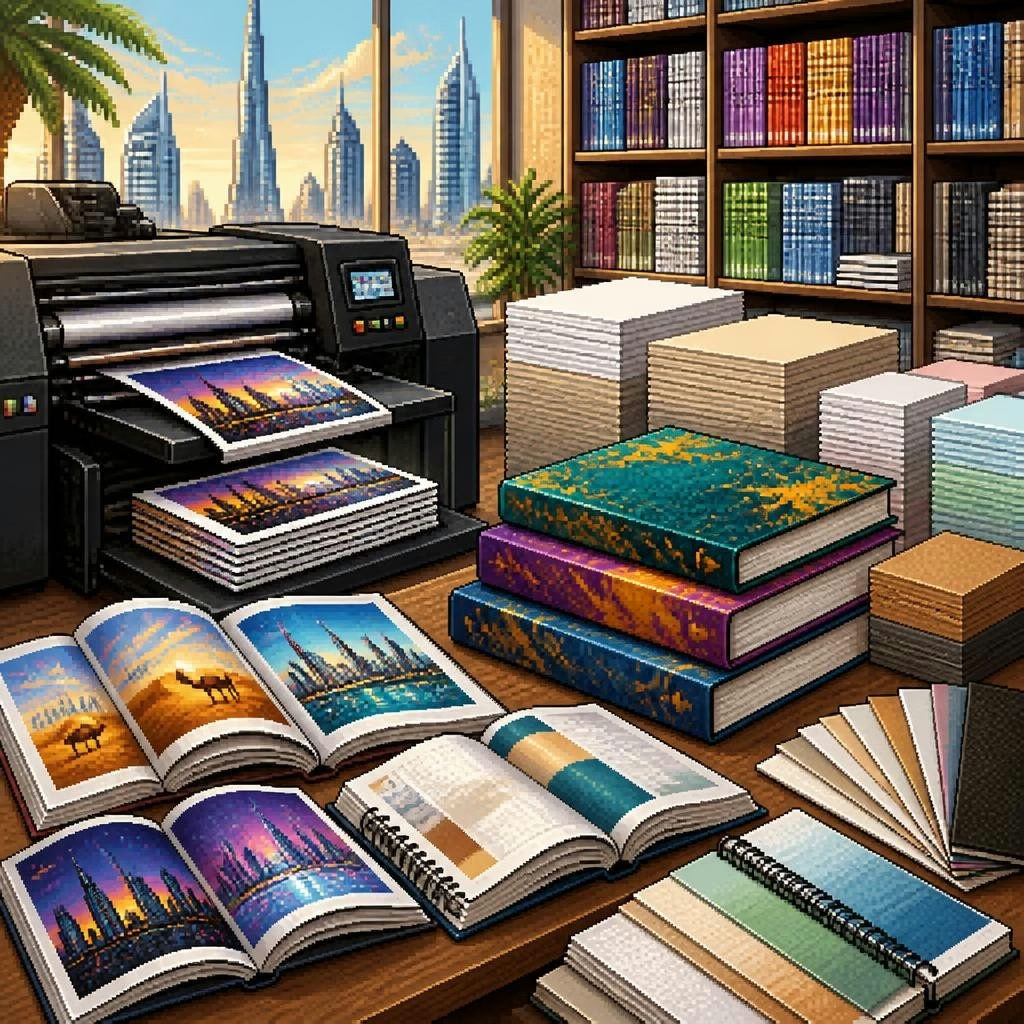
Why the right choices matter
Printing a magazine, manual or coffee-table book combines several decisions—binding type, paper stock, and colour management—that determine look, durability and cost. Choosing appropriately ensures readability, brand alignment and long-term value for readers, whether you’re producing a short-run company manual or a high-volume magazine distribution in Dubai.
Who should use which formats
Different projects have different priorities: school textbooks and user manuals need durability and clear legibility; lifestyle magazines and catalogues prioritize vibrant images; coffee-table books demand premium covers and tight binding. Corporates producing annual reports may balance image quality with cost. Understanding your end use, distribution plan and budget is the first step to selecting materials and processes.
Overview of common binding options
Three binding types are most common for magazines and books: saddle-stitch, perfect binding and spiral/coil. Each has distinct advantages and trade-offs in appearance, spine behavior, cost and maximum page count. Your choice should reflect the book thickness, desired finish and how the publication will be used.
Saddle-stitch: fast and cost-effective for thin publications
Saddle-stitching (stapled spine) is ideal for thinner magazines, newsletters and program booklets. It lies relatively flat and is economical for short and medium page counts. If your publication is image-heavy but under a modest page count, saddle-stitch keeps costs down while producing a clean finish. Consider stronger cover paper or a light lamination if the piece will be handled frequently.
Perfect binding: polished look for thicker books
Perfect binding creates a square spine and a more book-like appearance, suited to thicker magazines, catalogues and softcover books. It provides a professional shelf-ready look and is common for coffee-table books and corporate reports. Keep in mind that very thin publications can feel floppy with perfect binding; for heavier photographic work, coordinate cover stiffness and paper weight to maintain structure.
Spiral/coil binding: flexible and functional
Spiral or coil binding is favored for manuals, workbooks and notebooks that must open flat or fold back on themselves. It’s practical for training manuals and in-field guides where ease of use matters more than a formal appearance. Spiral binding also allows for full 360-degree opening, making it a functional choice for repeated handling.
Choosing interior paper: finish and feel
Interior paper affects print reproduction, readability and perceived quality. Coated papers (gloss or silk/matte) enhance image vibrancy and colour saturation, making them suitable for magazines and photo-heavy catalogues. Uncoated papers are often better for text-heavy manuals because they reduce glare and are easier to write on. When planning, request physical samples to compare opacity, thickness and how images render—real samples reveal differences that digital proofs can’t fully capture.
Cover stocks and finishing options
Cover stock should be noticeably heavier than interior pages to provide stability and impact. Common finishing choices—such as gloss or matte lamination, spot UV or a heavier textured stock—can elevate perception and protect the cover from wear. For branded pieces and coffee-table books, a sturdier cover combined with appropriate lamination or varnish will improve longevity and visual appeal.
Colour choices, proofs and consistency
Accurate colour reproduction requires attention to colour workflow. Designers should convert images to the printer’s colour space and allow for press-proofing so you can confirm tones before full production. For large photographic runs or brand-critical projects, discuss colour matching and proof options with your print partner to avoid surprises. Al Wasl’s customers frequently praise the press for vibrant colours and sharp resolution, which reflects the importance of pre-press checks and effective communication.
Print quantities: digital vs. offset considerations
Decide between digital and offset printing based on run length, turnaround and unit cost. Digital printing is efficient for short runs and faster turnaround with minimal setup, making it suitable for prototypes, small batches or time-sensitive projects. Offset printing generally offers lower cost per copy for larger quantities and highly consistent colour across a print run but typically requires a higher minimum quantity and more setup time. If you’re unsure, discuss your expected volumes and timelines with your printer to evaluate the best balance of cost and quality.
Preparing files and working with your printer in Dubai
To avoid delays, provide print-ready PDFs with embedded fonts, high-resolution images and crop/bleed marks. Include clear instructions on trim size and page order, and confirm spine width and cover layout for bound projects. In Dubai, look for a printing partner that offers clear communication and timely turnarounds—customers have noted that team responsiveness and helpful pre-press guidance make a big difference, especially for last-minute jobs. If you’re comparing local options, search for established printing press dubai or printing company dubai providers that can support proofs, samples and practical advice.
How to choose a local partner for magazines and books
When selecting a vendor in Dubai, evaluate their experience with similar projects, sample quality, proofing processes, and their ability to advise on bindery and paper choices. Read customer feedback regarding turnaround and service—many clients cite professional, helpful staff and consistent quality as deciding factors. If you need signage or display support for book launches or events, consider a provider with broader capabilities (for example, a Signage Company in Dubai) so you can handle banners, backdrops and POS materials through a single supplier.
Next steps and a quick checklist
Start by defining purpose, expected circulation and budget. Request paper and binding samples, ask for a proof, and confirm lead times for both digital and offset options. Communicate deadlines early, and work with your printer to finalize file specs. Engaging a trusted printing press dubai that offers both offset and digital services will help streamline the process and reduce surprises when production begins.
Customer review


Article by
Al Wasal Printing Press - Printing Company in Dubai
Al Wasl Printing Press is one of the leading printing press companies in Dubai. We are your one-stop commercial printing company for all of your branding and publishing needs. We strive to provide our customers with the best and highest quality products available in the industry. Our Services Includes:- Digital Printing, Offset Printing Commercial Printing (Brochures, Flyers, Catalogues) Business Card Printing Letterhead & Stationery Printing Magazine & Book Printing Advertising & Display Printing Banner & Flex Printing Signage & Sign Board Printing (LED, Acrylic, etc.) Vehicle Branding & Wrapping Window Graphics & Glass Printing Packaging & Specialized Printing Packaging & Box Printing (Custom Packaging)