Cosmetic Teeth Whitening in Gurgaon: Clinic Treatments vs At‑Home Kits and How to Reduce Sensitivity
A practical guide for Gurgaon residents comparing in‑office whitening, custom take‑home trays, and over‑the‑counter kits, with realistic expectations on shade change, appointment time, and clear, evidence‑based steps to minimise sensitivity before and after treatment.

Why this guide matters
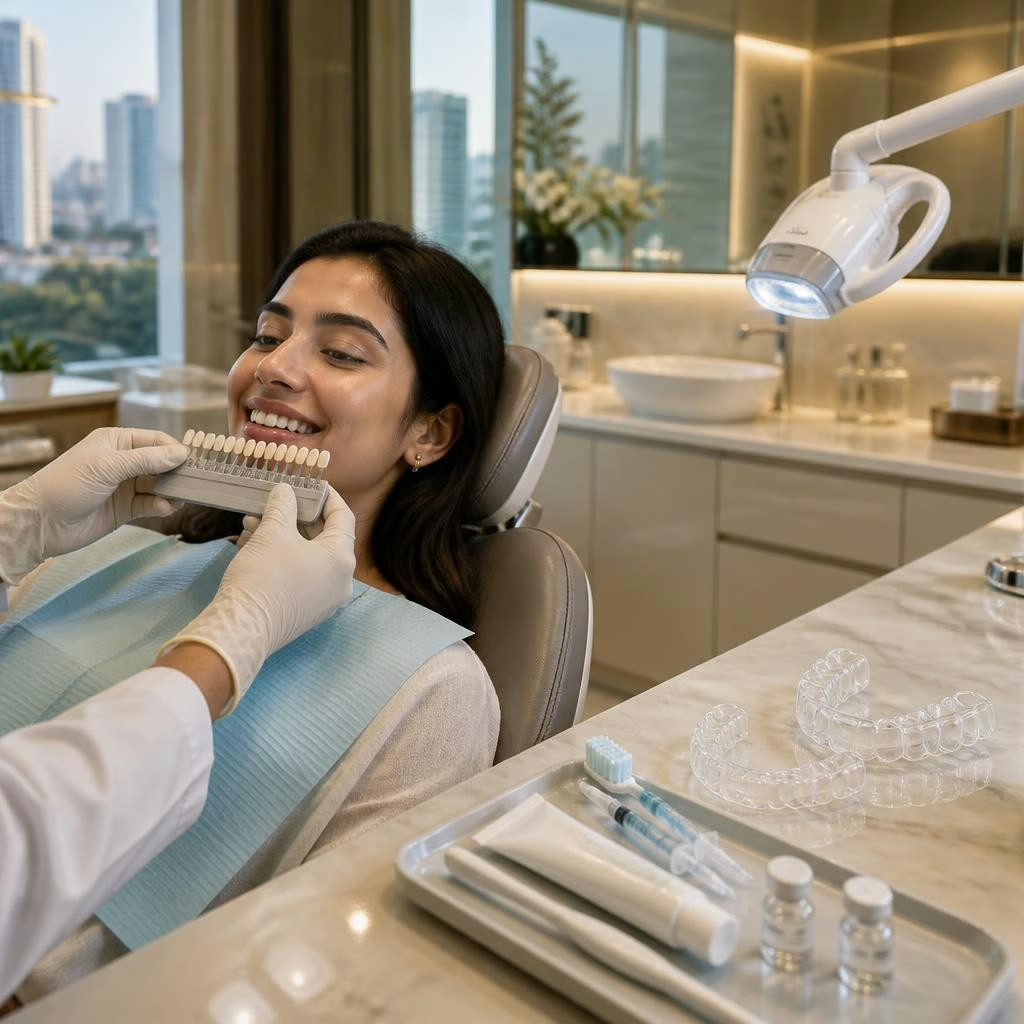
If you are considering cosmetic teeth whitening in Gurgaon, it helps to understand the differences between professional in‑office treatment, dentist‑provided take‑home trays, and over‑the‑counter (OTC) kits. Each option has tradeoffs in speed, predictability, and risk of sensitivity. This article explains what to expect in terms of shade improvement and appointment time, and gives practical steps you can take before and after treatment to reduce sensitivity and protect results.
Start with a professional assessment
A pre‑whitening dental exam is the safest first step. A dentist will check for cavities, gum disease, exposed root surfaces, and existing restorations (crowns, veneers, composite fillings) that will not change colour with bleaching. Cosmetically minded clinics in Gurugram typically offer a whitening consultation, shade‑matching and a pre‑whitening evaluation; patients often cite clear explanations and hygienic clinics as important factors when they choose a provider. If any dental problems are present, treating them first reduces the risk of post‑procedure sensitivity or uneven results.
In‑office whitening: fast, supervised, and predictable
In‑office whitening is performed by a dentist and is the fastest way to a visibly brighter smile. The procedure usually involves professional cleaning, isolation of soft tissues, application of a high‑concentration bleaching gel, and activation with LED or laser light when appropriate. Most clinics schedule about 45–90 minutes for a single visit; some patients may require an additional session. Advantages include immediate, noticeable improvement and expert control over concentration and exposure time. Because the procedure is supervised, dentists can take steps to protect enamel and limit discomfort, making it a strong option for those seeking rapid results under clinical care.
Custom take‑home trays from your dentist
Custom whitening trays are made from impressions or digital scans and are used with professional‑grade gels at home. After an initial consultation and tray fabrication, you wear the trays for a prescribed time each day over several days to weeks. This method balances convenience with control: the materials are dental‑grade and the concentration of gel is tailored to reduce sensitivity while delivering consistent lightening. Take‑home systems allow gradual shade change and are often recommended when patients prefer a slower approach or need to minimise risk of sensitivity.
Over‑the‑counter kits: convenience with limitations
OTC whitening kits (strips, generic trays, toothpaste) are widely available and affordable, but they produce more variable results. These products typically use lower concentrations of active ingredient and lack the custom fit and professional oversight of dentist‑provided options. OTC kits can help with mild surface stains (coffee, tea, tobacco) but are less predictable for deep, intrinsic staining. If you have sensitive teeth or extensive restorations, consult a dentist before using OTC products to avoid inconsistent shade results or increased sensitivity.
What to expect: shade change and durability
Expectations depend on the type of stain and the chosen method. Professional in‑office whitening often provides the most noticeable change in a single visit; custom take‑home trays produce gradual, controllable improvement over days or weeks; OTC kits generally yield modest whitening and require longer use. Durability varies with diet and habits: consumption of staining foods and beverages, tobacco use, and oral hygiene affect how long results last. Many clinics offer maintenance options, such as touch‑up kits or periodic in‑office sessions, to preserve results.
Why whitening can cause sensitivity
Sensitivity after bleaching occurs because peroxide-based bleaching agents can temporarily increase fluid flow in dentinal tubules or expose areas of weakened enamel and dentin. Pre‑existing issues — thin enamel, gum recession with exposed roots, untreated decay, or recent dental work — increase the likelihood of sensitivity. Selecting an enamel‑safe protocol and addressing dental problems before whitening reduces that risk.
How to minimise sensitivity before and during treatment
Several practical steps lower the chance of sensitivity: (1) Have a dentist perform a pre‑whitening check and treat any cavities or gum disease. (2) Use a desensitising toothpaste containing potassium nitrate or stannous fluoride for two weeks before treatment. (3) When undergoing professional whitening, discuss lower‑concentration gels or staged applications to reduce intensity. (4) For take‑home trays, follow the prescribed wear time rather than prolonging sessions, and rinse trays after use. Many dental clinics provide specific pre‑treatment options such as topical fluoride or in‑office desensitising agents to enhance comfort.
Aftercare: protecting results and easing recovery
Post‑whitening care improves comfort and prolongs whitening effects. For 48–72 hours after treatment, avoid high‑staining foods and drinks (coffee, tea, red wine, beetroot) and tobacco; choose lighter‑coloured meals. Continue using a sensitivity toothpaste if needed and avoid abrasive whitening toothpaste for a week. Maintain good oral hygiene and schedule periodic maintenance—dentist‑provided touch‑up gels or custom trays are often more effective and gentler than repeated OTC use. If sensitivity persists beyond a few days, consult your dentist for targeted interventions such as topical fluoride or professional desensitising treatments.
Choosing the right option in Gurugram and next steps
Deciding between in‑office whitening, custom trays, and OTC kits depends on your goals, sensitivity history, and budget. If you want fast, predictable results and professional oversight, in‑office whitening is recommended; if you prefer gradual change with controlled application, a dentist‑issued take‑home tray is a good compromise; OTC kits are best for modest surface stain removal in low‑risk individuals. Cosmodontist Dental and Implant Centre and similar dental clinics in Gurgaon provide pre‑whitening exams, shade matching, in‑office and take‑home systems, and guidance on sensitivity management. Patients frequently report hygienic facilities and clear explanations from doctors as important factors when selecting a dentist in Gurgaon. To proceed, book a whitening consultation or pre‑whitening assessment — many clinics offer online booking — so a dentist can recommend the safest, most effective approach for your smile.
Article by
Cosmodontist India - DLF Phase 3
Cosmodontist Dental and Implant Centre is one of the best dental clinic in Gurgaon. The clinic is headed by Dr. Nlay AB and Dr. Vidushii Mayor who are acknowledged as one of the best dentists in Gurgaon by their patients. Our vision is to be one of the leading dental clinic in India. To do this we have shaped our practice around the principles of high-quality treatments, combined with best-in-class customer service. We believe in providing quality dental care at budget price. We provide services like dental implants at affordable cost, painless root canal treatment, cosmetic dentistry, smile makeover, invisalign braces, instant teeth whitening, cosmetic dentistry. Cosmodontist is one of the top notch award winning dentist in gurgaon