How to Verify a Dholera Plot Before You Pay: Documents and On‑Ground Checklist
A practical, step‑by‑step checklist for investors outlining the key documents to review, approvals to confirm, and site checks to perform before buying a plot in Dholera so you can focus on verified, low‑risk options.
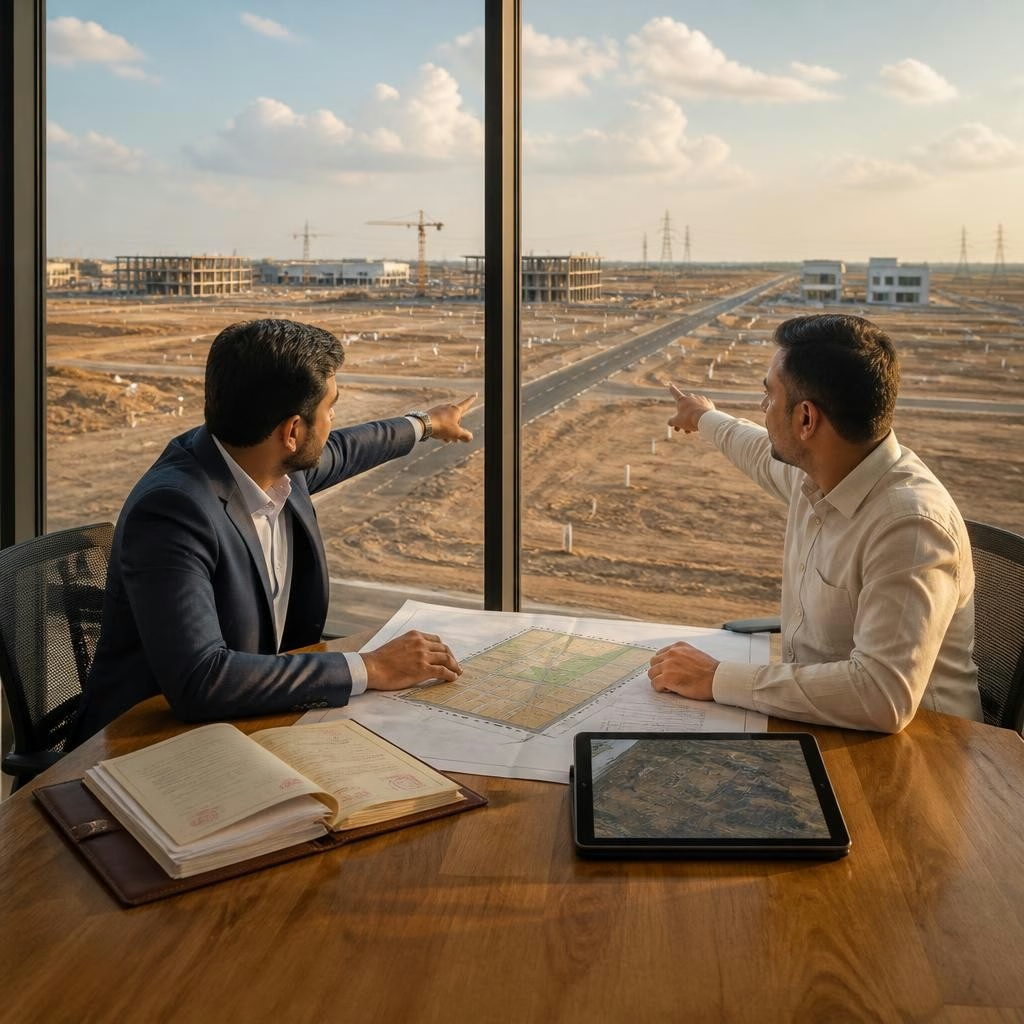
Why verification matters for Dholera investments
Dholera is being developed as a Special Investment Region under the Delhi‑Mumbai Industrial Corridor, so land and project approvals are central to long‑term value. Verifying a plot before you pay protects you from title disputes, missing approvals, or unexpected development limitations. This article gives a practical checklist—documents to demand, official approvals to check, and on‑ground inspections to perform—so you can make an informed decision and focus on trusted, verified options.
Essential documents to request and review
Always review originals (or certified copies) and get stamped copies for your records. Key documents include: 1) Chain of title/parent deed(s) showing previous transfers; 2) Latest Sale Deed or allotment letter; 3) Encumbrance Certificate (EC) covering at least the last 10–12 years to show liens or mortgages; 4) Mutation/khata or local land tax receipts proving current ownership; 5) Approved layout plan and site plan with plot numbers; 6) Land‑use conversion certificate (if agricultural land was converted); 7) No Objection Certificates (NOCs) from relevant local authorities or the Dholera development authority; and 8) Receipts of payment and clear copies of any agreement to sell. If any item is missing or inconsistent, pause the transaction until clarified.
Confirm approvals and planning status
For Dholera plots, verify that the project or layout is sanctioned by the appropriate Dholera authority and that the plan aligns with the region’s master plan or approved development framework. Check whether the plot appears on the approved layout and whether there are outstanding environmental, infrastructure, or land‑use conditions. Ask the seller or developer for official reference numbers or approval letters and cross‑check these with the issuing authority or public records. If a project claims registration with a regulatory body, request the registration number and verify it independently.
On‑ground checks to perform during a site visit
A field visit lets you confirm what documents claim. At the site, verify boundary markers and survey numbers, check that the plot dimensions match the plan, and look for encroachments or visible disputes. Confirm access roads (public or private), availability of basic utilities (electricity poles, water lines, sewage/drainage), and the condition of nearby development. Photograph the site from different angles, note GPS coordinates, and inspect for flooding signs or major topographic issues. A smooth, well‑organised site visit is often cited by buyers as an important part of the purchase experience.
Assess the developer or seller’s credibility
Check the seller’s identity and authority to sell: confirm the owner name on title documents matches ID presented and registration details. For developers, review past projects, timelines, and public feedback. Independent reviews and buyer experiences can be helpful—many customers highlight smooth, transparent support from brokers who offer verified plots. Ask for references of past buyers, visit earlier projects if possible, and verify that the developer responds to queries about approvals and timelines in writing.
Common red flags to watch for
Proceed cautiously if you encounter: missing or incomplete chain of title; EC showing mortgages or disputes; layout plans that are not officially approved; sellers pressuring for cash payments or rushed signatures; mismatched survey numbers or plot dimensions; no clear access road or utilities; or vague answers about conversion and approvals. Any request to rely on verbal assurances rather than documented approvals is a reason to delay payment until the paperwork is clear and verified by an expert.
Next steps: professional checks and working with trusted partners
Before final payment, get an independent lawyer to review title documents and sale agreements, and consider an independent land surveyor to verify dimensions and markers. Obtain an up‑to‑date Encumbrance Certificate and ensure registration procedures (stamp duty, registration) are understood. If you prefer working with a firm that focuses on verified plots and guided site visits, consider agencies that provide documented verification and buyer support—many buyers report a smooth, well‑explained process when working with such teams. Finally, keep copies of all documents and a clear timeline of steps required to complete registration and transfer.
Article by
Dholera Properties - Plots Investment in Dholera, Gujurat
Dholera Properties is not just a development—it's a revolution in urban planning and infrastructure, envisioned by India’s Prime Minister Narendra Modi. As the first Special Investment Region (SIR) under the high-impact Delhi-Mumbai Industrial Corridor (DMIC), Dholera is strategically poised to become a global manufacturing and investment hub backed by world-class infrastructure.