ACL Tear Treatment in Dubai: Surgery vs PRP — Choosing the Right Path and When Athletes Can Return
A clear, practical guide for active adults and athletes in Dubai, Sharjah, and Ajman on how orthopedic surgeons decide between ACL reconstruction and non‑surgical care (including PRP + rehabilitation), typical recovery milestones, and how close follow‑up helps reduce the risk of re‑injury.
Why this question matters for athletes and active adults
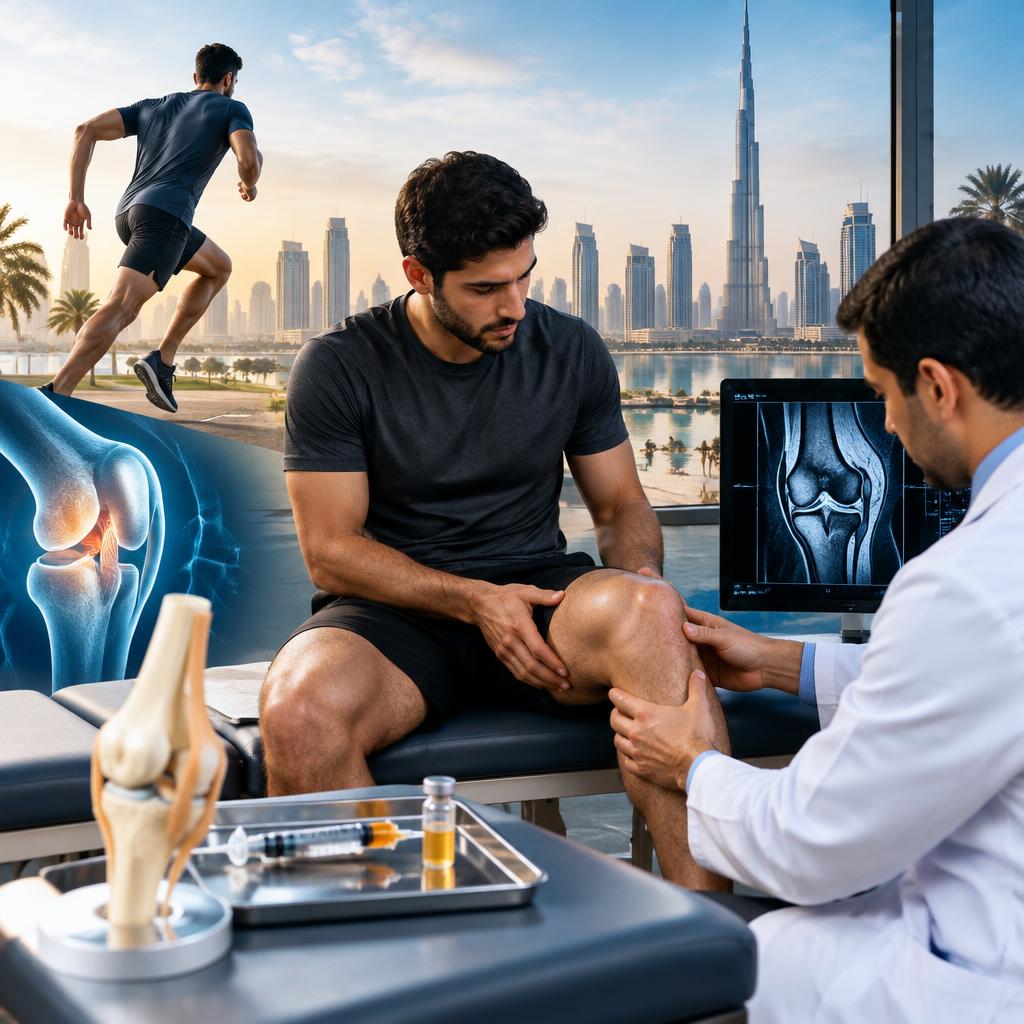
An ACL tear raises two immediate concerns: restoring knee stability and getting back to the activities you love as safely and quickly as possible. The right choice—surgery or non‑surgical management such as PRP combined with structured rehabilitation—depends on the injury itself and your personal goals. This article explains the factors orthopedic surgeons consider, what each option can realistically achieve, and typical return‑to‑sport milestones so you can have a more informed discussion with your clinician in Dubai, Sharjah or Ajman.
Understanding ACL injuries: partial vs complete and what instability means
ACL injuries range from small partial tears to complete ruptures. A partial tear may leave the knee largely stable, while a complete rupture often leads to a sensation of the knee ‘giving way’ during pivoting or cutting. Associated damage — for example to the meniscus or collateral ligaments — also influences treatment choice because combined injuries increase the risk of long‑term joint problems if not addressed.
How surgeons decide: clinical exam, imaging, and patient goals
Decisions start with a careful history and physical exam to assess knee laxity and functional instability. MRI is used to confirm the extent of ACL damage and to identify other injured structures. Equally important are the patient’s activity level and priorities: a recreational walker, a weekend runner, and a competitive pivoting‑sport athlete have different functional demands, and that often guides the recommended pathway.
When non‑surgical care (rehab + PRP) is a reasonable first step
Non‑surgical management commonly includes a period of protective activity, bracing as needed, and a progressive physiotherapy program focused on strength, balance and neuromuscular control. PRP (platelet‑rich plasma) sessions are used in some cases to support symptom relief and tissue healing; they can be considered when the tear is partial, the knee remains functionally stable, or when a patient prefers to attempt non‑operative treatment first. For lower‑demand patients or those who accept a measured return to sport, this approach can restore comfort and function without immediate reconstruction.
What PRP can — and cannot — achieve
PRP is an adjunctive, non‑surgical option that aims to reduce inflammation and promote local healing. It may improve pain and support recovery of surrounding tissues, and patients often report symptomatic improvement when PRP is combined with targeted rehabilitation. However, PRP does not recreate the mechanical stability of an intact ACL in cases of complete rupture. If the knee continues to give way, structural reconstruction is usually required to restore reliable stability for pivoting sports.
When ACL reconstruction is typically recommended
Orthopedic surgeons generally recommend ACL reconstruction when the knee shows functional instability (recurrent giving way), when the patient participates in pivoting or contact sports, or when there are significant associated injuries such as meniscal tears that need repair. Reconstruction is also considered after failed non‑operative management where the patient is unable to achieve their activity goals safely.
A brief overview of surgery and what to expect
Modern ACL reconstruction is performed arthroscopically and involves replacing the torn ligament with a graft chosen based on individual factors and surgeon discussion. The operation is typically followed by a staged rehabilitation plan. Your surgeon will explain the surgical approach, anticipated risks, and the rehabilitation pathway so you know the steps required to regain strength and function.
Rehabilitation phases and typical timelines for returning to activity
Rehabilitation progresses from early range‑of‑motion and weight‑bearing milestones to strength rebuilding and neuromuscular training, then to sport‑specific drills. Straight‑line jogging commonly resumes once strength, swelling and movement are controlled, while a safe return to cutting and pivoting sports usually takes longer and is based on objective strength and functional testing. Timelines vary by patient, the extent of injury, graft healing and adherence to rehab; an individualized plan and objective testing are essential for risk‑based decisions about returning to competition.
Close follow‑up and testing to reduce re‑injury risk
Regular follow‑up with the surgeon and physiotherapy team helps track recovery and detect problems early. Functional assessments (strength ratios, hop tests, movement quality) and progressive neuromuscular training are used to confirm readiness. Close communication between surgeon, therapist and athlete reduces the chance of returning to sport prematurely and helps tailor protective strategies that lower re‑injury risk.
Choosing care in Dubai, Sharjah or Ajman and questions to ask your surgeon
If you are weighing PRP + rehab versus ACL reconstruction, ask your surgeon about how your exam and MRI findings support each option, expected functional outcomes for your sport, the planned rehabilitation timeline, and how recovery milestones will be measured. In Dubai, Dr. Farivar Bagheri is an orthopedic and sports surgeon who offers both ACL reconstruction and PRP‑based treatments and is based at DHCC under the Emirates Hospital Group; his practice emphasizes clear explanations, attentive follow‑up and coordinated rehab. Patients frequently note thorough consultations, strong post‑operative support, and good functional outcomes after knee procedures. One patient who had knee surgery described a rapid, satisfying recovery and ongoing symptom‑free activity months later, illustrating how individualized care and active follow‑up can support a successful return to sport. If you plan to consult locally, confirm availability for close follow‑up and coordinated physiotherapy to support the option you choose.
Customer review


Article by
𝐃𝐫. 𝐅𝐚𝐫𝐢𝐯𝐚𝐫 𝐁𝐚𝐠𝐡𝐞𝐫𝐢
Orthopedic Surgeon & Sports Surgeon in Dubai – Specialized in Knee, Shoulder & Ankle Arthroscopy, Joint Replacement (Knee & Hip), Foot Surgery (Flat Foot & Hallux Valgus), and Trauma Surgery. With over 15 years of experience, practicing in Dubai under the Emirates Hospital Group. 📞 Emergency Line Available 24/7 – Our mobile and WhatsApp number is always active. Emergency cases are accepted anytime, regardless of the clinic schedule.