Choosing Between PRP, Steroid Injections and Surgery for Shoulder Pain in Dubai: A Practical Guide
A clear, practical overview to help patients in Dubai understand when physiotherapy, steroid injections, PRP, or surgery may be appropriate for shoulder pain, what to expect from each option, and how to decide with your surgeon.
Why a clear pathway matters
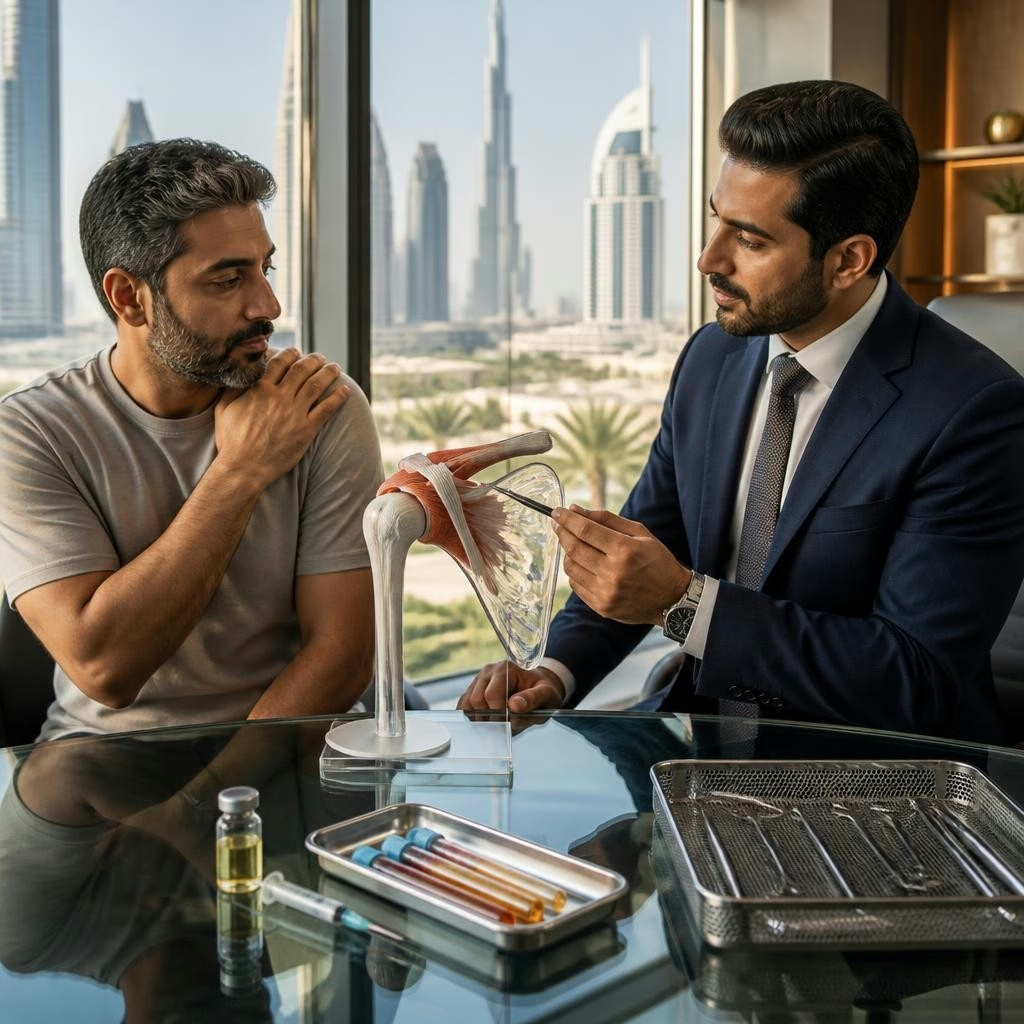
Shoulder pain has many causes and treatments range from simple exercises to surgery. Knowing where physiotherapy, steroid injections, PRP, and surgery fit in the treatment pathway helps set realistic expectations, reduce unnecessary delays, and improve outcomes. This guide walks through each option in plain terms and highlights practical considerations for patients in Dubai seeking specialist care.
Accurate diagnosis: the first step
Before choosing any treatment it’s essential to confirm the cause of pain. A focused history, clinical examination and targeted imaging (X-ray, ultrasound or MRI when needed) allow the surgeon to distinguish tendon problems, bursitis, rotator cuff tears, frozen shoulder, calcific tendinitis and shoulder instability. Reviews of local specialist care emphasise thorough examinations and clear explanations—qualities to look for when you consult a shoulder surgeon.
Start conservatively: physiotherapy and activity changes
Most shoulder problems begin with non-surgical measures: structured physiotherapy, improving posture and movement patterns, activity modification and pain control. Physiotherapy can restore mobility, strengthen the shoulder and sometimes avoid procedures entirely. Give a well-designed conservative program adequate time (guided by your clinician) before moving to injections or surgery, unless there’s a clear structural reason to intervene sooner.
Steroid (corticosteroid) injections: when and what to expect
Steroid injections reduce inflammation and pain quickly for conditions such as subacromial bursitis or inflammatory tendonitis. They are often used when pain prevents effective rehabilitation or when symptoms flare despite physiotherapy. Benefits can be rapid pain relief, allowing improved participation in rehab; limitations include temporary effect and a finite number of injections recommended over time. One patient review described marked and lasting relief after a shoulder injection, illustrating that injections can be highly effective for many people.
PRP and regenerative injections: who may benefit
Platelet-rich plasma (PRP) aims to support tissue healing and is offered for tendon injuries and some early degenerative conditions. Unlike steroid injections, PRP seeks to promote repair rather than suppress inflammation. PRP may be considered when conservative care has not provided enough improvement and when tissue quality suggests potential for biologic response. Recovery after PRP is usually gradual; several sessions or combination with physiotherapy may be recommended. Discuss with your specialist whether PRP is suitable for your specific pathology.
When is surgery the right choice?
Surgery is considered when there is a clear structural problem unlikely to heal with conservative care—examples include full-thickness rotator cuff tears that cause persistent weakness and pain, severe calcific deposits causing refractory pain, significant instability or mechanical block, or failed non-surgical treatment over an appropriate period. Minimally invasive shoulder arthroscopy, rotator cuff repair or targeted procedures for frozen shoulder and calcific tendinitis are common approaches when surgery is indicated. Several patient reports from local specialist practice note good surgical outcomes when operations were selected appropriately.
Recovery and rehabilitation differences
Recovery timelines differ greatly across treatments. A steroid injection has minimal immediate downtime but needs activity modification for a short period; PRP may require several days of relative rest followed by progressive rehab; surgery typically involves a protective phase (immobiliser or sling), a staged physiotherapy program and several weeks to months before full strength returns. Successful recovery depends heavily on a tailored rehabilitation plan and regular follow-up—patients who combine surgery with structured physiotherapy commonly report the best functional gains.
Costs, logistics and practical concerns in Dubai
Costs and logistics vary: injections and PRP are usually delivered in-clinic or day procedures, while surgery requires a hospital setting and associated perioperative care. Check whether your insurance covers each option and whether pre-authorisation is required. Consider recovery needs (time off work, physiotherapy access) and where follow-up will occur—Dr. Farivar Bagheri practices in Dubai Healthcare City (DHCC) and his team accepts emergency referrals and provides follow-up support, which can ease logistics for local patients.
How to decide: shared decision-making
Good decision-making combines clinical findings, treatment risks and benefits, and your personal goals (pain relief, return to sport, work demands). Ask whether a trial of physiotherapy and an injection is reasonable before surgery, or whether early operative repair would reduce long-term disability. A second opinion is appropriate when major surgery is suggested. Choose a surgeon who explains options clearly and discusses realistic outcomes and rehabilitation expectations.
Questions to ask at your consultation
Prepare focused questions: What is the likely diagnosis and prognosis? Which non-surgical options should we try and for how long? If considering injections, what are the risks and expected benefit? Is PRP appropriate for my condition? If surgery is recommended, what procedure, expected recovery timeline, and rehabilitation will be needed? Also ask about follow-up and how complications would be managed. Clear answers help align treatment with your priorities.
Red flags and when to seek urgent care
Seek urgent evaluation for sudden severe pain with fever, rapidly increasing swelling, signs of infection after a procedure, major loss of movement or strength after an injury, or neurological symptoms such as numbness down the arm. The practice described in this guide has an emergency line and accepts urgent cases—if you experience these red-flag symptoms, contact your treating team promptly.
What patients report about local specialist care
Patients in Dubai who have sought specialist shoulder care highlight thorough examinations, clear explanations, compassionate bedside manner and good follow-up from the clinical team. Reviews frequently praise effective injections, successful surgical outcomes when needed, and coordinated post-procedure rehabilitation support. When evaluating providers, look for clinical expertise plus reliable nursing and administrative support to help with scheduling, insurance coordination and follow-up care.
Customer review


Article by
𝐃𝐫. 𝐅𝐚𝐫𝐢𝐯𝐚𝐫 𝐁𝐚𝐠𝐡𝐞𝐫𝐢
Orthopedic Surgeon & Sports Surgeon in Dubai – Specialized in Knee, Shoulder & Ankle Arthroscopy, Joint Replacement (Knee & Hip), Foot Surgery (Flat Foot & Hallux Valgus), and Trauma Surgery. With over 15 years of experience, practicing in Dubai under the Emirates Hospital Group. 📞 Emergency Line Available 24/7 – Our mobile and WhatsApp number is always active. Emergency cases are accepted anytime, regardless of the clinic schedule.