Chronic Shoulder Pain in Dubai: How Long to Try Physiotherapy Before Considering Surgery
A practical guide for patients with months of shoulder pain on realistic timelines for rest, medication, injections and physiotherapy, red-flag symptoms that need faster imaging or referral, and when arthroscopy or rotator cuff repair is usually considered.
Why a clear diagnosis matters
Chronic shoulder pain can come from several causes that require different approaches — rotator cuff tears, impingement, calcific tendinitis, frozen shoulder, instability and post‑traumatic changes are common examples. Before deciding how long to continue conservative care, an accurate clinical assessment (history and focused exam) often combined with imaging (X‑ray, ultrasound or MRI) is essential to know whether the problem is primarily inflammatory, tendinous, mechanical or structural.
First steps: rest, activity modification and pain control
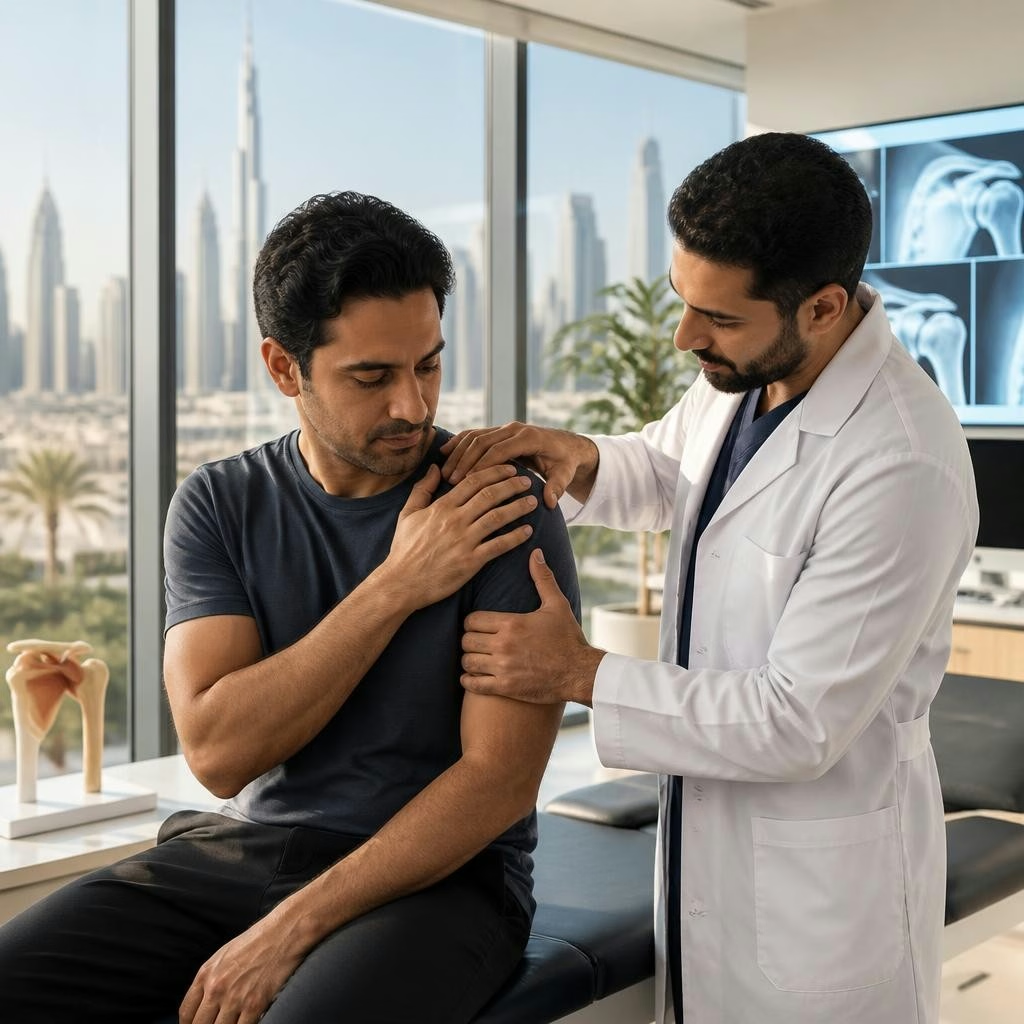
Initial management for most non‑traumatic shoulder pain focuses on avoiding activities that aggravate symptoms, maintaining range of motion, and controlling pain. Short courses of analgesics or anti‑inflammatory medication under medical advice can help you engage with rehabilitation. Gentle home exercises aimed at posture, scapular control and pain‑free mobility are reasonable while you arrange formal assessment and physiotherapy.
How long to try physiotherapy: realistic expectations
A structured course of physiotherapy is the mainstay for many shoulder conditions. Most clinicians recommend an initial trial of supervised physiotherapy and guided home exercises for approximately 6–12 weeks to judge response. Outcomes vary: some patients improve substantially within weeks, while others need a longer program or additional interventions. For example, one patient who had nearly five months of persistent shoulder pain reported marked improvement after targeted assessment and treatment at the clinic (see cited review), illustrating that clear diagnosis plus tailored therapy can turn a long problem around.
When injections can be helpful
Image‑guided or peri‑tendinous injections can both provide symptom relief and help confirm the pain source. Intra‑articular steroid injections are useful for inflammatory pain and can allow participation in rehabilitation by reducing pain. Platelet‑rich plasma (PRP) is another option sometimes used for tendinopathy. Expect variable duration of benefit — injections may provide weeks to months of relief, and for some patients they are enough to avoid surgery, while for others they are a bridge to definitive treatment.
Red flags that need faster imaging or urgent referral
Seek earlier assessment if you have new, severe weakness (inability to lift the arm), sudden loss of shoulder function after an injury, rapidly worsening pain at night, signs of infection (fever, redness, swelling), or progressive numbness/neurological symptoms. These signs may mean a significant structural injury, nerve involvement or another serious condition that needs prompt imaging and possible urgent intervention. The clinic accepts emergency cases and maintains a 24/7 contact line for urgent advice and triage.
When surgery becomes the safer long‑term choice
Surgery is usually considered when a clear structural problem explains persistent pain or loss of function despite an adequate course of conservative care. Examples include full‑thickness rotator cuff tears with weakness, calcific deposits that do not respond to non‑operative measures, recurrent instability, or mechanical impingement that limits activity. After an appropriate trial of physiotherapy (typically 6–12 weeks) and other non‑surgical measures, many clinicians will consider referral for surgical assessment if pain or functional loss remains significant — earlier referral is appropriate when imaging shows a repairable lesion or when weakness and disability are progressive.
Common surgical options for shoulder pain
Minimally invasive shoulder arthroscopy can treat many causes of chronic shoulder pain: removal of calcific deposits, subacromial decompression, capsular release for frozen shoulder, and arthroscopic rotator cuff repair. Rotator cuff repair restores tendon continuity in tears that are repairable and aims to reduce pain and improve strength. Surgical decisions are individualized based on symptoms, imaging, tissue quality and patient goals, and are always paired with a planned rehabilitation pathway.
Recovery and the role of postoperative rehabilitation
Recovery after shoulder surgery is gradual and depends on the procedure. Early motion, protected activity, and staged strengthening under physiotherapy supervision are central to good outcomes. Many patients notice meaningful pain reduction within the first few weeks to months, while strength and full function may continue to improve for several months. Reviewers of local care described smooth recoveries when postoperative physiotherapy and follow‑up were closely coordinated.
Questions to ask at your surgical consultation
Before committing to surgery, ask for a clear explanation of the diagnosis, what the operation will address, expected benefits and realistic timelines for recovery, non‑surgical alternatives and their likely outcomes, potential complications, and the rehabilitation plan. It is also reasonable to ask about the surgeon’s experience with the specific procedure and how follow‑up is arranged. Many patients value clinicians who give clear explanations and consistent follow‑up during recovery.
Practical next steps in Dubai
If you’ve had months of shoulder pain despite home measures or physiotherapy, arrange a specialist assessment to confirm the diagnosis and review imaging. In Dubai Healthcare City (DHCC) and surrounding areas, patients can access orthopaedic services that offer comprehensive assessment, image‑guided injections, arthroscopy and rotator cuff repair when indicated. For urgent or rapidly worsening symptoms, use the clinic’s emergency contact to secure prompt triage. An individualized plan — whether continued physiotherapy, injection therapy or surgical repair — is determined by your symptoms, imaging and personal goals.
Customer review


Article by
𝐃𝐫. 𝐅𝐚𝐫𝐢𝐯𝐚𝐫 𝐁𝐚𝐠𝐡𝐞𝐫𝐢
Orthopedic Surgeon & Sports Surgeon in Dubai – Specialized in Knee, Shoulder & Ankle Arthroscopy, Joint Replacement (Knee & Hip), Foot Surgery (Flat Foot & Hallux Valgus), and Trauma Surgery. With over 15 years of experience, practicing in Dubai under the Emirates Hospital Group. 📞 Emergency Line Available 24/7 – Our mobile and WhatsApp number is always active. Emergency cases are accepted anytime, regardless of the clinic schedule.