Dubai Parents’ Guide to Children’s Hand and Finger Injuries: When Is It an Emergency?
A practical, step‑by‑step guide for parents in Dubai, Sharjah, and Ajman to recognise serious finger injuries, perform safe first aid at home, decide when to seek emergency orthopedic care, and understand child‑friendly treatment and follow‑up.

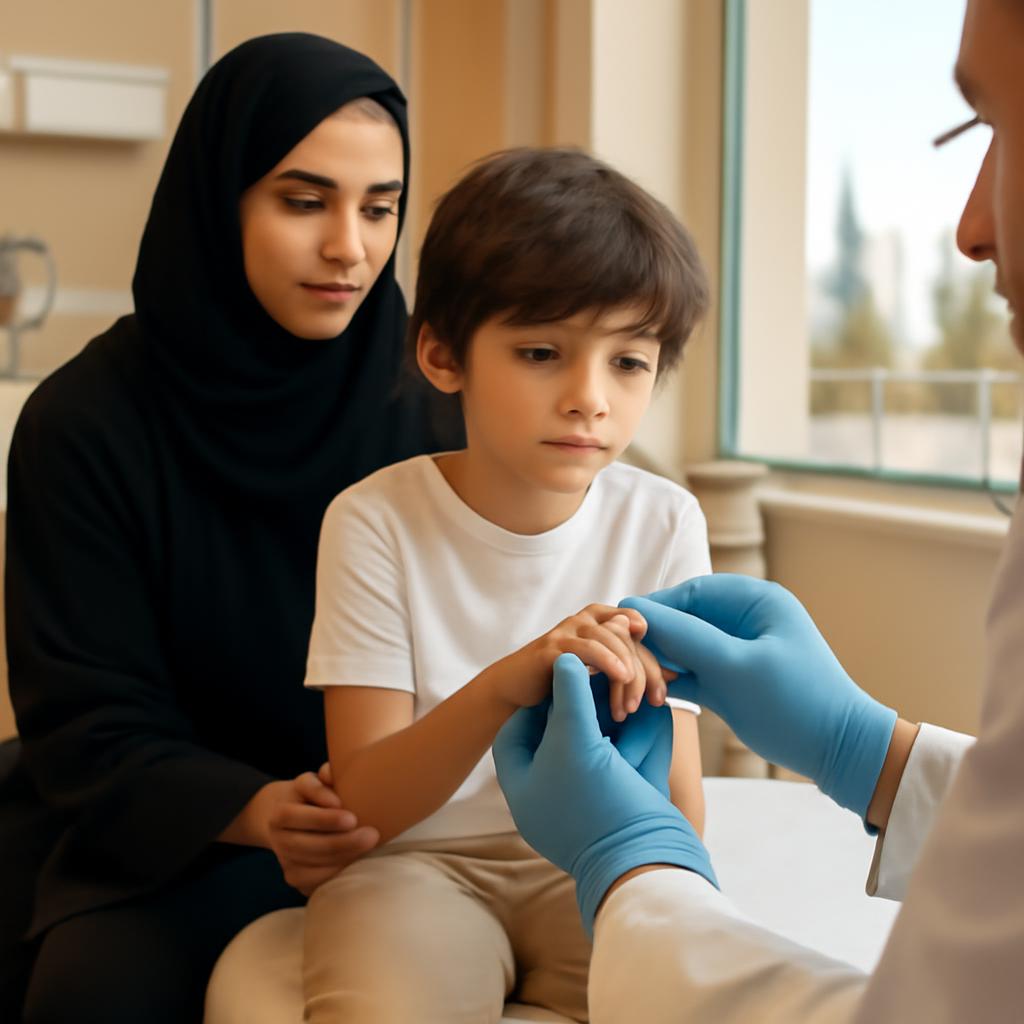
Why this guide matters
Hand and finger injuries are common in children and range from minor nicks to fractures or crushed fingertips. Quick, appropriate action keeps a child safe, reduces pain, and can protect long‑term function. This guide summarizes practical signs to watch for, immediate first‑aid steps you can reasonably perform at home, when to head straight to emergency orthopedics, and what to expect during pediatric‑friendly treatment and follow‑up in Dubai and the surrounding area.
Common types of pediatric hand and finger injuries
The injuries parents most often see include: simple bumps and sprains, fingertip crushes, nail‑bed injuries and subungual hematomas (blood under the nail), lacerations (cuts), dislocations, and finger fractures. Some injuries look minor but can involve the bone or nail matrix; conversely, an obviously deformed finger usually means a broken bone or dislocation that needs urgent attention.
Red flags — when an injury may be an emergency
Seek emergency care immediately if any of the following are present: heavy or uncontrollable bleeding; bone or tendon visible through the skin; a finger that is clearly bent or misshapen; loss of normal color, numbness, coldness, or inability to move the finger; a fingertip partially or completely amputated; or signs of spreading infection (increasing redness, swelling, pain, fever). Persistent severe pain or inability to use the hand normally also warrants prompt assessment.
Safe first‑aid steps to take at home
Calm the child and, if possible, have another adult help. For bleeding, apply firm pressure with a clean cloth and elevate the hand above heart level. For bumps or suspected fractures, immobilize the finger with a soft splint or by taping it gently to the adjacent finger (buddy taping) and apply an ice pack wrapped in cloth for 10–15 minutes to reduce swelling. For small cuts, gently rinse with clean water and cover with a sterile dressing. Do not try to push bones back into place or remove deeply embedded objects; leave that to professionals. If you’re unsure about pain management, contact your pediatrician or the orthopedic emergency line before giving any medication.
When to go straight to emergency orthopedics
If the injury matches any red‑flag criteria, go directly to an emergency department that accepts orthopedic emergencies. In this practice, emergency cases are accepted 24/7 regardless of clinic hours, and urgent review is available for fractures, open wounds, and significant nail‑bed or fingertip injuries. For non‑emergent injuries that still worry you, arrange an early orthopedic appointment to avoid delayed treatment.
What to expect at the emergency or urgent orthopedic visit
An orthopedic clinician will examine the hand, assess circulation and sensation, and usually obtain X‑rays when a fracture or dislocation is suspected. Small wounds may require local wound care or stitches; nail‑bed injuries sometimes need repair under local or regional anaesthesia. Fractures can be treated with splints or casts; some dislocations or displaced fractures require a controlled realignment (reduction) or surgical repair. The team will explain the recommended plan and the follow‑up schedule before you leave.
Child‑friendly treatment and the importance of follow‑up
Children heal quickly when injuries are managed correctly and followed closely. Expect plain explanations from the care team, reassurance for your child, and a clear plan for wound care, immobilization, and repeat checks. Parents have reported rapid improvement in young children after timely orthopedic treatment, reflecting how effective prompt, child‑centred care can be. Regular follow‑up ensures bones heal in the right position and that range of motion, nail health, and hand function recover properly.
Protecting long‑term hand function
The priorities after the acute phase are maintaining mobility and avoiding stiffness or malalignment. Encourage gentle finger movements when your clinician clears them, attend all scheduled follow‑ups and physiotherapy sessions if prescribed, and follow wound‑ and cast‑care instructions to reduce infection or scarring. If there is persistent stiffness, deformity, or nail deformity after healing, return for re‑assessment — early intervention usually offers the best outcome.
Preparing for a clinic or emergency visit in Dubai, Sharjah or Ajman
Bring any prior medical records or X‑rays, the child’s identification and insurance information, and a comfort item for the child. If possible, bring a photo of the injury taken immediately after it happened; it can help clinicians understand how the injury occurred. Expect a focused examination, possible imaging, and clear discharge instructions; don’t hesitate to ask the team for written care steps and contact details for questions or worsening symptoms.
Prevention tips and when to use the 24/7 line
Reduce risk at home by supervising play around doors, windows and heavy objects; teach safe use of scissors, tools and sports equipment; use protective gloves for rough tasks; and keep fingernails trimmed to reduce some nail injuries. If ever in doubt about a child’s hand injury — severe pain, deformity, heavy bleeding, numbness, or signs of infection — call your orthopedic emergency line or seek immediate care. Prompt assessment and the right early treatment make the biggest difference in preserving a child’s hand function.
Customer review


Article by
𝐃𝐫. 𝐅𝐚𝐫𝐢𝐯𝐚𝐫 𝐁𝐚𝐠𝐡𝐞𝐫𝐢
Orthopedic Surgeon & Sports Surgeon in Dubai – Specialized in Knee, Shoulder & Ankle Arthroscopy, Joint Replacement (Knee & Hip), Foot Surgery (Flat Foot & Hallux Valgus), and Trauma Surgery. With over 15 years of experience, practicing in Dubai under the Emirates Hospital Group. 📞 Emergency Line Available 24/7 – Our mobile and WhatsApp number is always active. Emergency cases are accepted anytime, regardless of the clinic schedule.