First Orthopedic Visit in DHCC: How to Prepare and What Happens During Your Knee or Shoulder Assessment
A clear, step-by-step guide for patients coming to Dubai Healthcare City for their first knee or shoulder consultation — what to bring, typical questions and exams, common imaging and treatment explanations, and how the clinic team supports you through decisions and recovery.

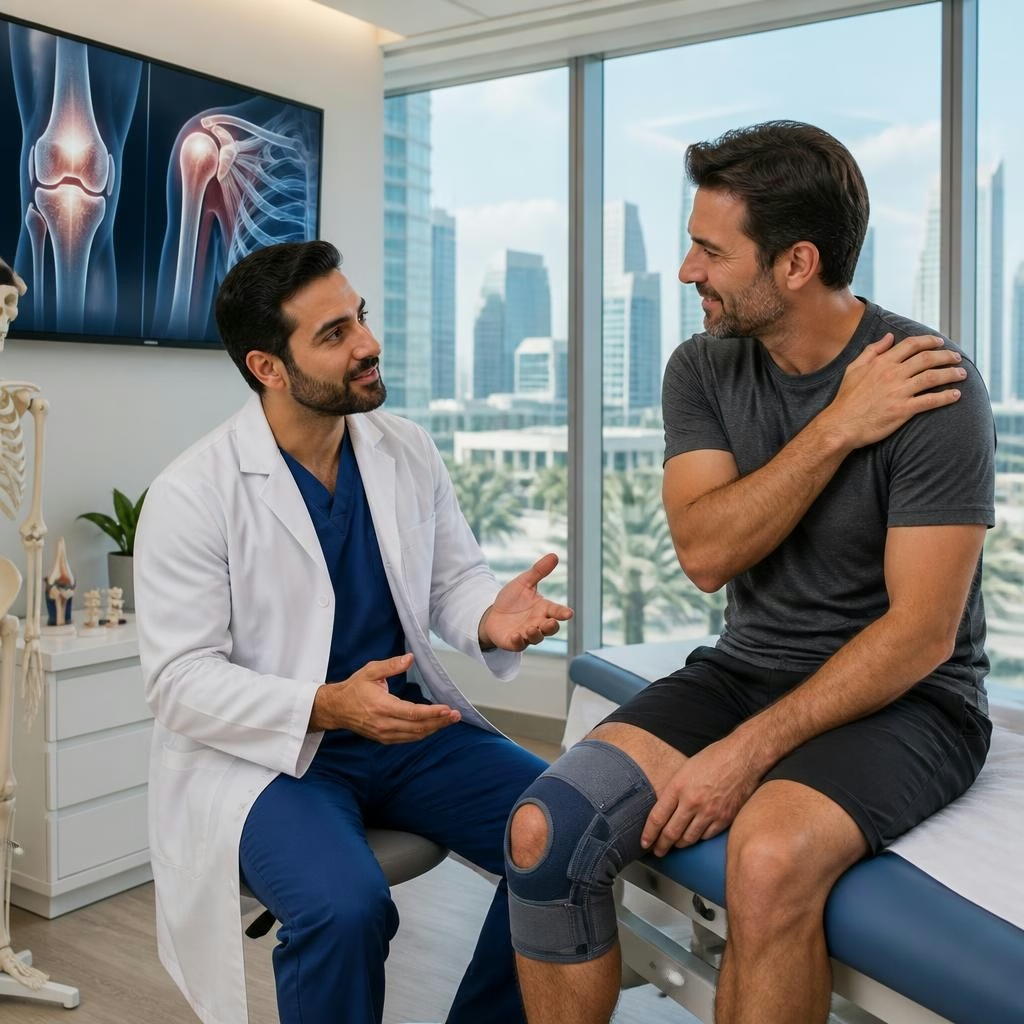
Why the first visit is important
Your first consultation with an orthopedic surgeon establishes the diagnosis, scope of the problem, and a practical plan tailored to your goals. For knee and shoulder concerns this visit is where the surgeon listens to your history, performs focused physical tests, reviews any existing imaging, and outlines reasonable next steps. A thorough first appointment helps avoid unnecessary delays, clarifies conservative versus procedural options, and sets expectations for recovery and follow-up.
What to bring to your appointment
Bring any previous scans or reports (X-rays, MRIs, CTs), a list of current medications, basic ID and insurance details, and notes on your symptom timeline (when pain began, aggravating/relieving factors, previous treatments). Wear clothing that allows easy access to the affected area (shorts for knee, sleeveless or loose top for shoulder). If you have a referral letter or operative notes from other hospitals, bring them — they can save time and prevent duplicated testing.
How to prepare your medical history
Prepare brief answers about how the injury or pain started (gradual wear vs sudden injury), exact pain location and behaviour, any locking, giving way, numbness or weakness, and how symptoms limit daily activities or work. Note prior surgeries, chronic conditions, allergies, and responses to past treatments (physiotherapy, injections, medications). Being specific about your recovery goals — returning to walking, sports, or simply pain-free daily life — helps the surgeon recommend the most suitable path.
Questions the surgeon typically asks
Expect focused questions about onset and mechanism of injury, symptom pattern, treatments already tried and their results, night pain or systemic symptoms, and your functional priorities. The surgeon will also ask about medical conditions that affect surgery or healing, such as diabetes or heart issues, and about your support network for recovery. Clear, honest answers help the surgeon advise realistic timelines and safer choices.
What happens during a knee assessment
The knee exam usually starts with observation (alignment, swelling), followed by palpation to localise pain and assessment of range of motion. Stability tests (e.g., Lachman/anterior drawer for ACL, varus/valgus for collateral ligaments) and meniscal tests (McMurray or joint line tenderness) help differentiate ligament, cartilage, or joint surface problems. Gait and functional checks (squatting, straightening) show how the knee performs under load. Findings guide whether immediate imaging or conservative care is appropriate.
What happens during a shoulder assessment
A shoulder exam assesses active and passive range of motion, strength of the rotator cuff, and signs of impingement or instability. The surgeon will look for asymmetry, atrophy, tenderness, and specific test responses (impingement tests, strength against resistance, instability checks). Many shoulder problems produce distinctive patterns that inform whether targeted physiotherapy, injections, or arthroscopic surgery are likely to help.
Common imaging and tests you may need
Plain X-rays are often the first step to assess bone alignment or arthritis. MRI is commonly used for soft-tissue detail (meniscus, ligaments, rotator cuff) and is helpful when surgery or cartilage repair is considered. Ultrasound can evaluate tendons and guide injections in some cases. Blood tests and nerve studies are reserved for specific situations. The surgeon will recommend only the tests necessary to clarify the diagnosis and plan treatment efficiently.
How treatment options are explained
Expect a balanced discussion of non-surgical measures (physiotherapy, activity modification, medications), interventional options (targeted injections, PRP or hyaluronic therapies where appropriate), and surgical solutions when indicated. The surgeon should explain benefits, possible risks, and the anticipated recovery timeline for each option, plus what rehabilitation will involve. Good communication of alternatives and realistic outcomes helps patients make informed decisions aligned with their priorities.
If surgery is recommended: what to expect next
If surgery is advised, the surgeon will outline preoperative steps (medical clearance when needed), the type of anaesthesia, the expected hospital stay, and a postoperative rehabilitation plan. You should receive information about pain control, weight-bearing or movement restrictions, wound care, and follow-up appointments. The team will discuss functional milestones — for example, timelines for walking, driving, or returning to sport — and who will coordinate your physiotherapy and check-ins during recovery.
Communication, support, and follow-up
A first visit should leave you feeling informed and supported, with clear next steps and a plan for follow-up. Many patients value not only surgical skill but also calm, patient explanations and attentive team support. Reviews from patients highlight how clear explanations and ongoing follow-up build trust and confidence after the consultation. If symptoms are urgent, remember the clinic maintains an emergency line and accepts urgent cases, and the care team will advise when to seek immediate attention.
Questions you should not forget to ask
Before you leave, ask for a concise diagnosis, the reasoning behind the recommended tests, all treatment options and their timelines, expected recovery milestones, likely restrictions, and specific rehab plans. Also clarify who to contact with concerns, how follow-up will be arranged, and what to expect from pain management. Understanding these practical details ahead of time reduces anxiety and helps you plan for a smoother recovery.
Customer review


Article by
𝐃𝐫. 𝐅𝐚𝐫𝐢𝐯𝐚𝐫 𝐁𝐚𝐠𝐡𝐞𝐫𝐢
Orthopedic Surgeon & Sports Surgeon in Dubai – Specialized in Knee, Shoulder & Ankle Arthroscopy, Joint Replacement (Knee & Hip), Foot Surgery (Flat Foot & Hallux Valgus), and Trauma Surgery. With over 15 years of experience, practicing in Dubai under the Emirates Hospital Group. 📞 Emergency Line Available 24/7 – Our mobile and WhatsApp number is always active. Emergency cases are accepted anytime, regardless of the clinic schedule.