Foot Deformities in Dubai: Hallux Valgus, Hallux Rigidus, and When to Consider Corrective Surgery
A clear, practical guide for UAE residents with bunions or a stiff big toe: how to recognise hallux valgus and hallux rigidus, conservative measures to try, and when to consult an orthopedic foot specialist in Dubai about day‑case corrective surgery and realistic recovery expectations.
What are Hallux Valgus and Hallux Rigidus?
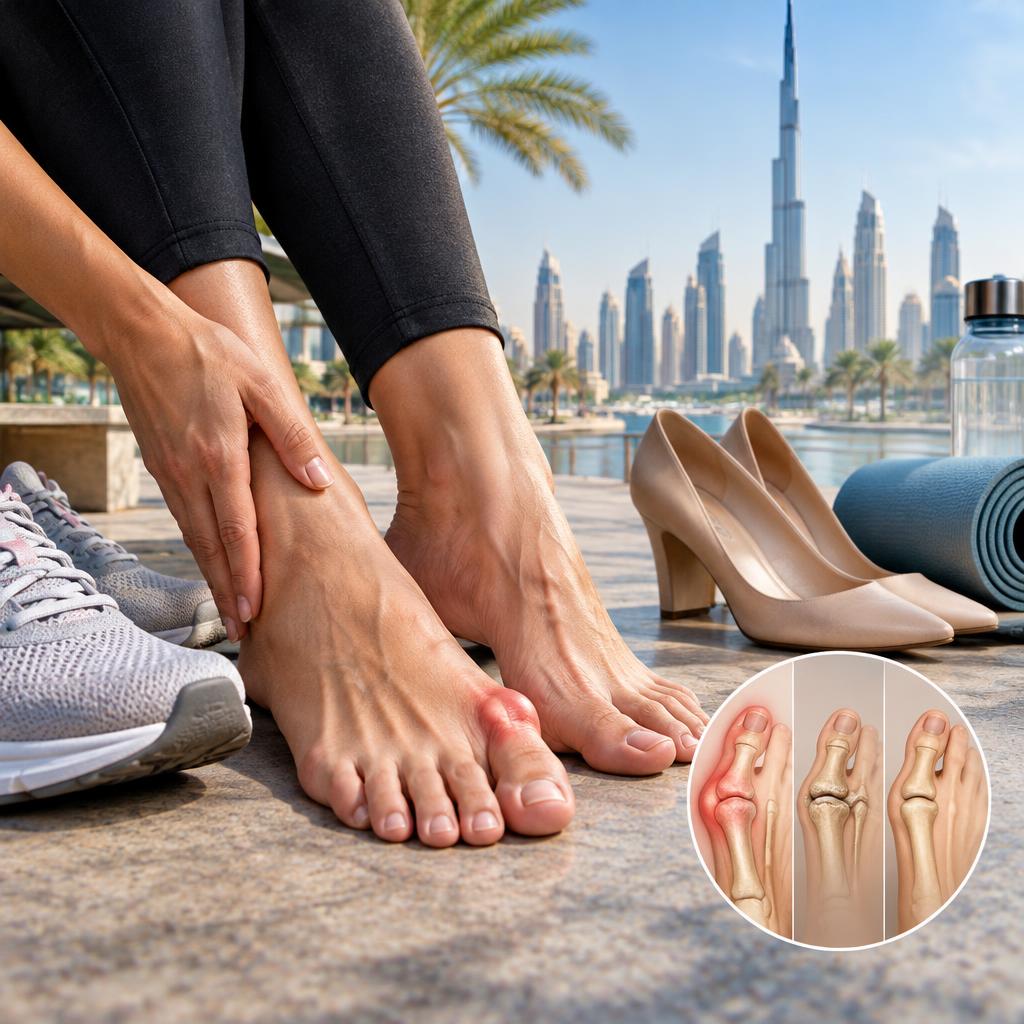
Hallux valgus (commonly called a bunion) is a sideways deviation of the big toe where the joint at its base becomes prominent and may be painful. Hallux rigidus describes stiffness and loss of motion at the big‑toe joint, often caused by cartilage wear or joint changes. Both conditions affect how the foot bears weight and can interfere with walking, footwear, and daily activities.
How these deformities develop
A combination of factors can contribute to bunions or a stiff big toe: foot shape and genetics, repeated stress from certain activities or footwear, and degenerative joint changes. Ill‑fitting, narrow shoes or high heels can worsen a bunion’s appearance and pain, while previous injuries or arthritis may lead to reduced motion at the big‑toe joint.
Common signs and when to be concerned
Look for a visible bump at the base of the big toe, gradual angling of the toe toward the second toe, rubbing or skin irritation from shoes, persistent joint pain, and reduced ability to bend the big toe. Seek specialist advice if pain limits walking or work, if footwear no longer fits, or if swelling, redness or infection develop around the toe.
Conservative (non‑surgical) measures that often help
Many people find meaningful relief without surgery. Practical steps include switching to wider, supportive shoes with a roomy toe box; using over‑the‑counter bunion pads or protective sleeves; trying custom or off‑the‑shelf orthotic insoles to improve foot mechanics; and modifying activities that increase pain. Targeted physiotherapy, toe mobilisation exercises and anti‑inflammatory strategies can also reduce symptoms. These approaches are worth exploring under a specialist’s guidance before deciding on surgery.
Interventional and minimally invasive non‑surgical options
For some patients, image‑guided injections or other interventional treatments offered by an orthopedic team can reduce pain and inflammation and support function while conservative care continues. A specialist will review whether such options are appropriate in your case and how they fit into a broader treatment plan.
When surgery becomes a practical option
Corrective surgery is considered when conservative care fails to control pain or when deformity prevents normal footwear use or daily activities. In Dubai, foot specialists discuss tailored, evidence‑based options that aim to correct alignment, relieve joint impingement, or restore motion depending on the condition’s severity. Many procedures are planned as day‑case operations so patients can return home the same day, but suitability and technique depend on individual assessment.
What to expect from a day‑case corrective procedure
A typical pathway includes a focused clinical assessment, imaging review, discussion of risks and benefits, and a clear plan for postoperative care. On the day of surgery you will meet the surgical and nursing team, receive anaesthesia as recommended, and after the procedure there will be instructions for wound care, footwear or boot use, and early mobilisation. The specialist and clinical team should provide scheduled follow‑up and be reachable for questions during recovery.
Realistic recovery goals and follow‑up
Recovery timelines vary by procedure and by patient. Expect staged progress: initial wound healing and controlled weight‑bearing, then gradual restoration of activity with guided exercises. Your surgeon will give a personalised recovery plan and milestones. Many patients find that careful follow‑up and attentive nursing support make recovery smoother and reduce anxiety about returning to normal life.
Choosing an orthopedic foot specialist in Dubai
Look for a surgeon who specialises in foot and ankle care and who explains diagnosis and options clearly. In Dubai, Dr. Farivar Bagheri practises within the Emirates Hospital Group (DHCC) and provides assessment and treatments for hallux valgus and hallux rigidus, from non‑surgical care to corrective procedures when appropriate. Patient feedback consistently highlights clear explanations, compassionate care and attentive follow‑up — for example, one patient who underwent a minor foot procedure described a smooth experience and strong postoperative support from the clinical team.
Next steps: preparing for a consultation
If your bunion or stiff big toe limits daily life, book a specialist assessment. Bring comfortable shoes, any prior foot X‑rays or scans if available, and a brief list of symptoms and activities that cause pain. Ask about conservative options, possible surgical approaches, whether a procedure can be done as a day case, and what the expected recovery pathway will look like. For urgent problems such as worsening pain, sudden swelling, suspected infection, or an acute injury, contact the clinic’s emergency line — the practice maintains a 24/7 emergency mobile/WhatsApp contact to ensure timely advice.
Customer review


Article by
𝐃𝐫. 𝐅𝐚𝐫𝐢𝐯𝐚𝐫 𝐁𝐚𝐠𝐡𝐞𝐫𝐢
Orthopedic Surgeon & Sports Surgeon in Dubai – Specialized in Knee, Shoulder & Ankle Arthroscopy, Joint Replacement (Knee & Hip), Foot Surgery (Flat Foot & Hallux Valgus), and Trauma Surgery. With over 15 years of experience, practicing in Dubai under the Emirates Hospital Group. 📞 Emergency Line Available 24/7 – Our mobile and WhatsApp number is always active. Emergency cases are accepted anytime, regardless of the clinic schedule.