Hallux Valgus (Bunions) in Dubai: Practical Shoe Advice, Non‑Surgical Relief, and When to Consider Surgery
A practical guide for people in Dubai dealing with bunion pain — explains how footwear, insoles, toe spacers, and physiotherapy can help, how to recognise progression, and what modern surgical treatment and recovery typically involve locally.

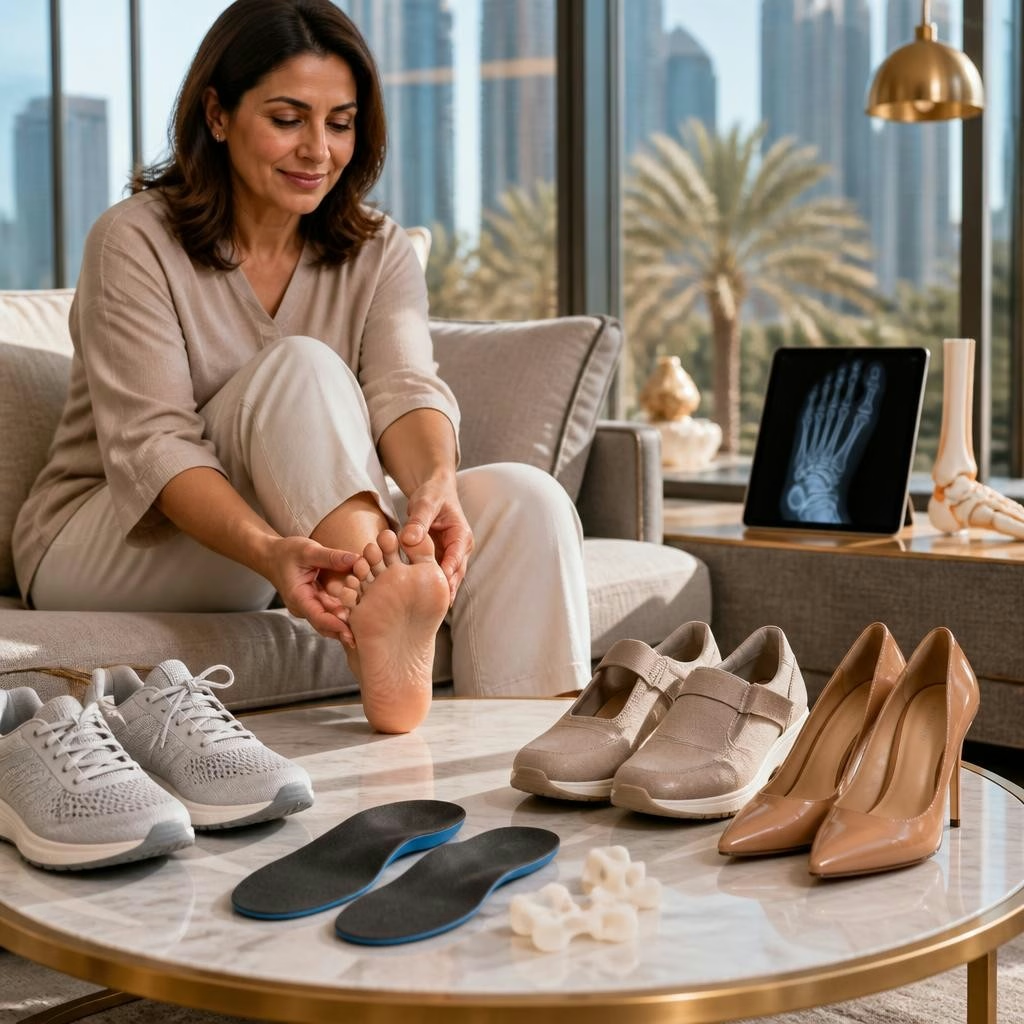
Why this guide matters
Bunions (hallux valgus) are a common source of toe, forefoot and shoe-related pain. Whether you’re noticing early redness and discomfort or have a more established bump affecting shoe fit or activity, practical self-care and informed decisions about treatment can make a big difference. This guide explains conservative measures that reduce symptoms, how to spot signs the deformity is progressing, and what modern corrective surgery typically looks like in Dubai.
What is hallux valgus?
A bunion forms when the big toe drifts toward the other toes and the joint at its base becomes prominent and often painful. The condition combines a mechanical change in the toe alignment with local inflammation. Symptoms range from occasional soreness to constant irritation, rubbing, or problems wearing normal footwear.
How footwear influences bunions
Shoes that compress the toes, have a narrow or pointed front, or place the foot in excessive pressure can increase irritation and speed discomfort. Conversely, shoes that offer a roomy toe box, stable sole and sensible heel help reduce rubbing and redistribute pressure away from the bunion. Footwear is often the simplest and most immediate factor you can change to limit worsening symptoms.
Practical shoe choices for daily comfort
Look for shoes with a wide, rounded toe box that allows the toes to lie flat without crowding. A low, stable heel and a firm midsole help control forefoot load and reduce sliding that causes friction. Breathable materials and soft linings reduce local irritation. For formal or occasional wear in Dubai’s warmer climate, choose dress shoes with a wider toe and avoid prolonged use of tight, pointed heels or unsupportive thin‑soled sandals.
Insoles and orthotics: shop-bought vs custom
Therapeutic insoles and orthotics can help by cushioning the forefoot, improving foot mechanics, and reducing pressure on the bunion. Over‑the‑counter insoles are a reasonable first step for symptom relief. Custom orthotics, prescribed after a specialist assessment, can be more effective when there are underlying foot structure issues or when generic inserts provide limited benefit. A specialist can advise which option suits your foot shape and lifestyle.
Toe spacers, padding and splints — benefits and limits
Soft toe spacers and protective pads can reduce rubbing between toes and ease painful pressure in shoes. Night splints aim to hold the big toe in a straighter position while you sleep; some patients report reduced morning stiffness. These devices can provide symptom relief but do not reliably correct established deformity. Use them as part of a broader conservative plan and discuss options with your clinician.
Physiotherapy and home exercises that help
Targeted physiotherapy can improve joint mobility, strengthen surrounding muscles and reduce pain. Useful exercises include toe mobilisation (gentle passive movement of the big toe), toe-spread and resistive toe strengthening, towel scrunches or marble pickups to work intrinsic foot muscles, and calf and ankle mobility work to improve overall foot function. A physiotherapist or podiatrist can tailor exercises and advise on footwear, activity modification and supportive taping techniques.
Warning signs the deformity may be progressing
Seek specialist review if you notice rising or persistent pain that limits walking or activity, increasing redness or recurrent inflammation, overlap of toes, difficulty finding shoes that fit, or new forefoot pain under other toes. Progressive deformity can change gait and cause secondary problems such as bursitis or transfer metatarsalgia — early assessment helps determine whether continued conservative care is appropriate or if surgical correction should be discussed.
Modern bunion surgery — what to expect locally
When conservative measures no longer control pain or the deformity progresses to affect daily life, surgical options aim to realign the toe, correct bone position and balance soft tissues. Contemporary techniques range from joint-sparing bone corrections (osteotomies) to combined soft-tissue procedures; minimally invasive approaches are also used in selected cases. Surgery is planned based on the individual foot anatomy and functional goals. Post-operative care typically includes protected weight-bearing in a specialised shoe, wound care and staged physiotherapy to restore motion and strength. A careful discussion with your surgeon about expected recovery, follow-up and realistic outcomes is essential.
Finding the right care and next steps
Start by trying sensible footwear changes, supportive insoles and directed exercises. If symptoms persist, book a specialist consultation to assess structure, function and treatment options. When deciding on surgery, ask about the specific procedure recommended for your foot, the rehabilitation plan and the team supporting your recovery. Many patients report that clear explanations and attentive follow-up make a major difference during treatment — local patient feedback highlights clinicians who take time to explain options and coordinate care, including nursing support, as particularly helpful. If you would like a specialist opinion in Dubai, Dr. Farivar Bagheri provides assessment and both non‑surgical and surgical treatments for hallux valgus; one patient review specifically commended the physician’s skill and the helpfulness of nursing support during treatment (cited review).
Customer review


Article by
𝐃𝐫. 𝐅𝐚𝐫𝐢𝐯𝐚𝐫 𝐁𝐚𝐠𝐡𝐞𝐫𝐢
Orthopedic Surgeon & Sports Surgeon in Dubai – Specialized in Knee, Shoulder & Ankle Arthroscopy, Joint Replacement (Knee & Hip), Foot Surgery (Flat Foot & Hallux Valgus), and Trauma Surgery. With over 15 years of experience, practicing in Dubai under the Emirates Hospital Group. 📞 Emergency Line Available 24/7 – Our mobile and WhatsApp number is always active. Emergency cases are accepted anytime, regardless of the clinic schedule.