Knee Pain in Dubai: When PRP Is a Better Option Than Immediate Surgery
A practical guide for people in Dubai weighing platelet-rich plasma (PRP) injections versus immediate knee surgery — who benefits from PRP, what to expect from treatment, and when surgery or joint replacement remains the safer choice.
Why this question matters
Deciding between a non-surgical option such as platelet-rich plasma (PRP) and moving straight to surgery is one of the most common dilemmas for people with persistent knee pain. If you live in Dubai or the surrounding emirates and are exploring treatment beyond painkillers and physiotherapy, understanding how PRP works, who it helps, and when surgery is still recommended will help you choose a path that fits your goals, activity level, and X-ray/MRI findings.
What is PRP and how it’s used here
PRP uses a concentrated sample of a patient’s own platelets to support tissue healing and reduce inflammation. In Dubai, PRP is offered as a conservative treatment for knee pain and early osteoarthritis and as part of interventional orthopedic care. At this practice, PRP is one of several non-surgical options available alongside injections and guided procedures, and it is presented as a treatment pathway rather than an automatic replacement for surgery.
Who is most likely to benefit from PRP
PRP tends to be most appropriate for patients with persistent knee pain but without advanced joint destruction. Typical candidates include people with early osteoarthritis, degenerative or inflammatory changes that are not yet severe, focal cartilage or tendon problems, or those who wish to delay or avoid surgery. Patients who have tried structured physiotherapy, weight management and simple injections but still have disabling symptoms are often considered for PRP.
How the decision is made in clinic
A careful clinical assessment is essential. Expect your surgeon to review your history, perform a focused exam and look at recent imaging (X-ray, MRI) before recommending PRP. The decision takes into account the pattern of pain, presence of mechanical symptoms (locking, giving way), alignment and cartilage loss. At this practice, consultations emphasize clear explanations and follow-up planning so patients can weigh PRP against other options, including arthroscopy or joint replacement when indicated.
What a typical PRP treatment course looks like
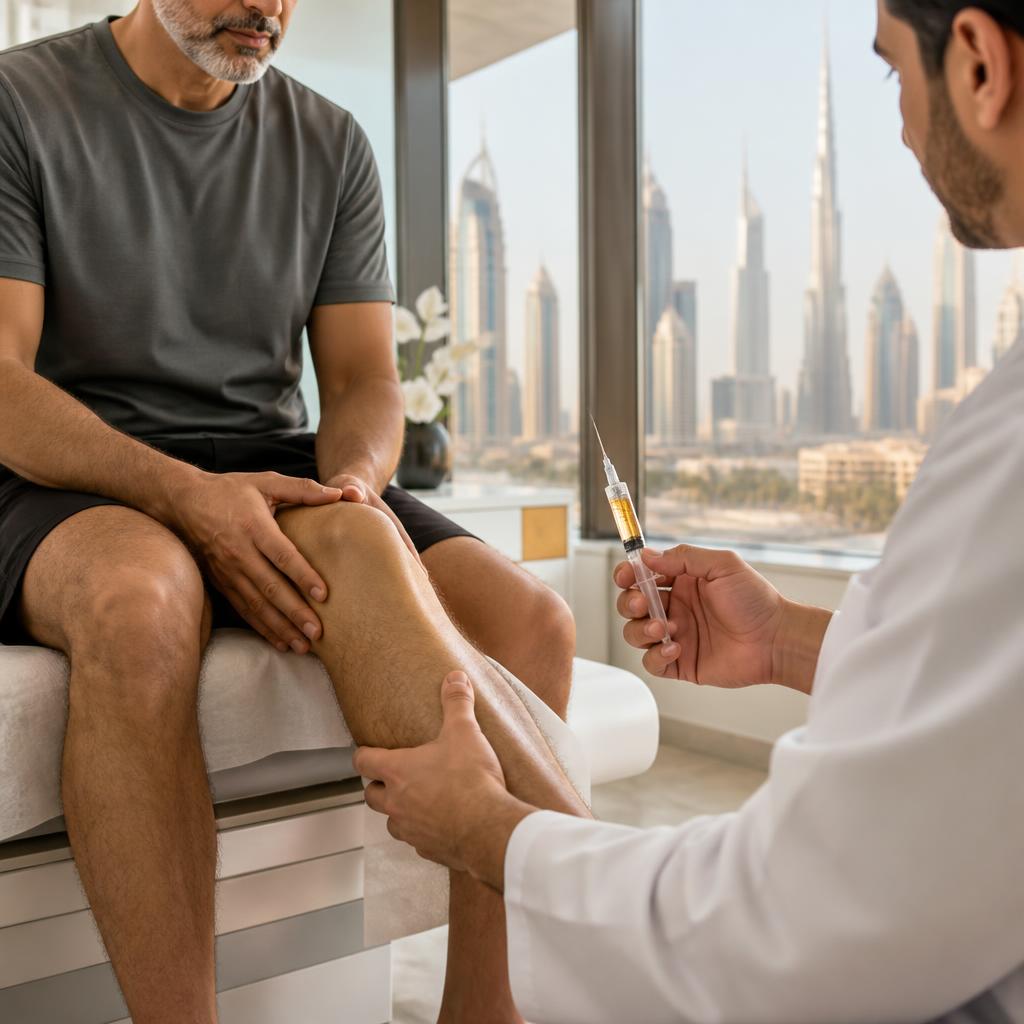
Protocols vary between clinicians, but PRP is usually given as one or a small number of injections spaced over weeks. Treatment is performed as an outpatient procedure and may be image-guided when precise placement is important. Your surgeon will explain the proposed schedule based on the knee problem being treated and how you respond to the first injection.
How quickly patients may see improvement
Response to PRP differs between individuals. Some patients report relief within a few weeks, while others notice gradual improvement over several months as inflammation settles and tissue response develops. Clinical follow-up and guided rehabilitation are important parts of the program; one patient who received PRP here described significant improvement and highlighted the attentive follow-up from the clinical team as part of their positive outcome.
When surgery or joint replacement is the safer choice
Surgery becomes the safer or more effective route when structural damage is advanced or when mechanical problems dominate the clinical picture. Examples include severe, full‑thickness cartilage loss with persistent pain limiting daily function, major deformity or instability, locked knees or failed conservative care including injections and rehabilitation. For end-stage osteoarthritis, total or partial knee replacement remains the treatment with the most predictable long-term pain relief and functional improvement.
How surgical and non-surgical options are balanced
A balanced approach combines realistic expectations with individualized care. PRP is often offered as part of a stepwise plan: optimize conservative measures first, consider PRP for eligible patients, and reserve arthroscopy, ligament reconstruction or joint replacement for those with clear surgical indications. This practice emphasizes detailed explanation, shared decision-making and ongoing follow-up so that treatment can be escalated if symptoms fail to improve.
Practical points for patients in Dubai
Before booking treatment, bring any recent imaging and a brief summary of prior therapy (physiotherapy, injections, medications). Discuss goals (pain relief, return to sports, daily activities) and expected timelines. Confirm whether image-guided injections are planned, ask about the follow-up schedule, and check rehabilitation plans after injection. The clinic accepts patients across Dubai and nearby emirates, and provides a 24/7 emergency line and active mobile/WhatsApp support for urgent concerns.
How to take the next step
If you’re unsure whether PRP or surgery is right for you, schedule a consultation that includes clinical assessment and review of imaging. A thoughtful consult will explain likely outcomes for your specific condition and outline both non-surgical and surgical options, including rehabilitation and expected recovery. If you decide to try PRP, make sure there is a clear follow-up plan and criteria to consider surgery later if needed. The goal is to choose the option that best restores your function and quality of life while minimising unnecessary interventions.
Customer review


Article by
𝐃𝐫. 𝐅𝐚𝐫𝐢𝐯𝐚𝐫 𝐁𝐚𝐠𝐡𝐞𝐫𝐢
Orthopedic Surgeon & Sports Surgeon in Dubai – Specialized in Knee, Shoulder & Ankle Arthroscopy, Joint Replacement (Knee & Hip), Foot Surgery (Flat Foot & Hallux Valgus), and Trauma Surgery. With over 15 years of experience, practicing in Dubai under the Emirates Hospital Group. 📞 Emergency Line Available 24/7 – Our mobile and WhatsApp number is always active. Emergency cases are accepted anytime, regardless of the clinic schedule.