Living with Early Knee Osteoarthritis in Dubai: How to Stay Active Without Making It Worse
Practical guidance for middle‑aged patients in Dubai on safe activities, footwear and weight tips, and non‑surgical options such as PRP or injections that can help manage early knee osteoarthritis and delay surgery.
Understanding early knee osteoarthritis
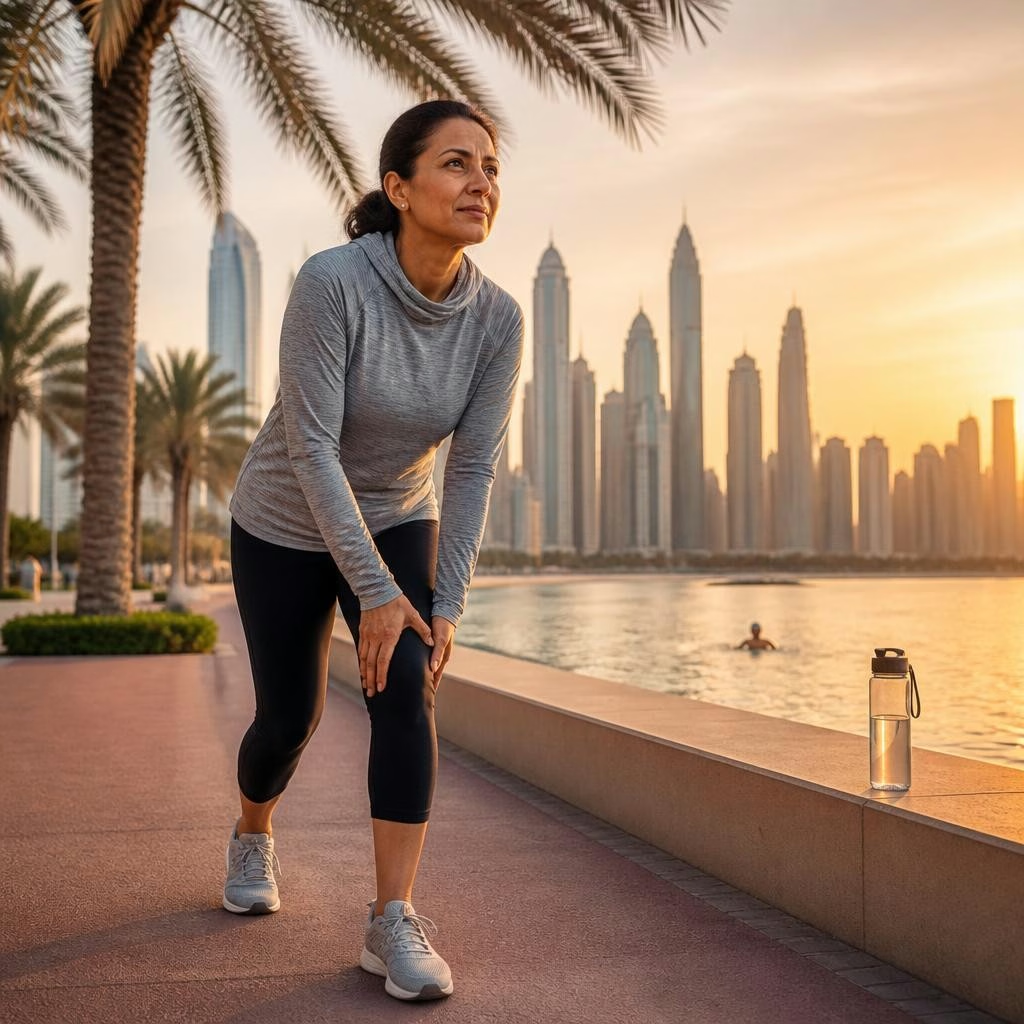
Early knee osteoarthritis (OA) means there are signs of cartilage wear and joint irritation but not yet severe joint destruction. Typical symptoms include intermittent pain with activity, stiffness after rest, and occasional swelling. The goal at this stage is to preserve joint function and manage symptoms so you can remain active—rather than rushing into major surgery. An individualized plan that combines appropriate activity, weight management, and targeted treatments is the most practical approach.
Why staying active matters — but how to be safe
Movement helps maintain joint range, muscle strength and overall health, but not all activity is equal. Low‑to‑moderate intensity exercise that avoids repeated high‑impact loads is usually safest for early knee OA. Increase activity gradually, listen to pain (transient soreness is different from sharp or prolonged pain), and allow recovery days. If an activity causes persistent swelling, catching or sharp pain, reduce or modify it and discuss options with your orthopedic specialist.
Walking in Dubai: smart choices for comfort
Walking is an excellent, accessible option for many people with early knee OA. In Dubai, choose routes with even surfaces—promenades, malls or waterfront paths—rather than uneven sand or steep dunes. Start with short, regular walks (for example, multiple 10–20 minute sessions) and progress slowly. Use a steady pace rather than repeated fast stops and starts. If outdoor heat is a concern, plan walks early morning or evening, or use air‑conditioned indoor walking spaces to avoid overheating and fatigue, which can worsen perception of pain.
Swimming and water exercise: low‑impact benefits
Aquatic exercise is among the best options for knee OA because water supports body weight while allowing resistance training. Swimming laps, pool walking, and guided water‑based classes improve cardiovascular fitness and leg strength with minimal joint stress. If you have access to a supervised clinical pool or physiotherapy aquatic sessions in Dubai, those can provide tailored progressions and monitoring.
Padel, tennis and pivoting sports — modify, don’t stop
Racket sports like padel are popular in the UAE but involve cutting, twisting and sudden stops that can strain an arthritic knee. Many patients can still enjoy padel with adjustments: shorter sessions, fewer matches in a week, longer warm‑ups, focused strengthening of the hip and thigh muscles, and avoiding play when the knee is flared or swollen. Consider doubles rather than singles to reduce court coverage. If symptoms persist despite modifications, switch temporarily to lower‑impact activities until symptoms improve.
Gym sessions: what to prioritise and what to avoid
A gym can be very useful for controlled strengthening and aerobic work. Prioritise low‑impact machines such as the stationary bike (recumbent or upright with moderate resistance), elliptical trainers and seated rowing. Focus on quadriceps, hip abductors and core strength with supervised technique. Avoid heavy, deep squats or repeated high‑load lunges that place compressive force on the joint unless guided by a physiotherapist. If you use weights, keep loads moderate and concentrate on higher repetitions with good form.
Footwear, insoles and simple biomechanical tips
Supportive, well‑fitting shoes can reduce knee stress. Choose footwear with good arch support, a stable heel, and cushioning; avoid high heels and completely flat soles for prolonged walking. For some people, over‑the‑counter or custom insoles can improve alignment and comfort—these are reasonable to trial under professional advice. Simple gait changes, like shortening stride and avoiding a big heel‑strike, often reduce painful impact. If you have long‑standing foot or ankle issues, seek assessment since those conditions can change knee loading.
Weight, diet and everyday load management
Even modest weight loss can reduce the mechanical load on a knee and ease symptoms. Combine sensible portion control and a balanced diet with regular low‑impact activity. In daily life, reduce repetitive squatting, heavy lifting and long periods of standing on hard surfaces. Use chairs for tasks when practical and consider assistive tools (reacher, raised seating) to avoid painful positions. Small, consistent changes are more sustainable than extreme measures.
Non‑surgical therapies available in Dubai: PRP, injections and rehabilitation
Before considering knee replacement, several non‑surgical options can help manage symptoms and delay surgery for many patients. These include structured physiotherapy, activity modification, bracing, intra‑articular injections (e.g., corticosteroid or hyaluronic acid) and regenerative injections such as PRP, which are offered here in Dubai. These treatments aim to reduce inflammation, improve function and buy time for conservative care to work. Outcomes vary between individuals; some patients report meaningful improvement with PRP or targeted injections, while others need further interventions. Discuss realistic expectations and timing with your orthopedic specialist.
When to talk to an orthopedic surgeon and what to expect
See an orthopedic surgeon if pain limits daily activities despite conservative measures, if you have persistent swelling or mechanical symptoms (locking, catching), or if your mobility is declining. A thorough assessment typically includes history, physical examination and imaging as needed. Patients repeatedly praise clear explanations and careful planning by the orthopedics team here; for example, one patient noted that their doctor listened attentively, explained the condition clearly, and that following the recommended plan led to noticeable improvement. If surgery becomes necessary, options include joint-preserving procedures or, for advanced cases, knee replacement—but these decisions are made case‑by‑case after discussing risks, benefits and recovery expectations.
Putting a practical plan together and local support
A practical weekly plan might combine three low‑impact aerobic sessions (walking, cycling or swimming), two short strengthening sessions focused on the legs and hips, and regular flexibility work. Prioritise gradual progression, rest after flare‑ups, and ongoing review with physiotherapy or your orthopedic specialist. In Dubai, patients can access multidisciplinary care including orthopedics, physiotherapy and image‑guided injections. Dr. Farivar Bagheri and his team are based in Dubai Healthcare City (DHCC) and serve patients across Dubai, Sharjah and Ajman; emergency contact lines are also available for urgent issues. If you have early knee OA, schedule an assessment so your plan is tailored to your lifestyle and goals.
Customer review


Article by
𝐃𝐫. 𝐅𝐚𝐫𝐢𝐯𝐚𝐫 𝐁𝐚𝐠𝐡𝐞𝐫𝐢
Orthopedic Surgeon & Sports Surgeon in Dubai – Specialized in Knee, Shoulder & Ankle Arthroscopy, Joint Replacement (Knee & Hip), Foot Surgery (Flat Foot & Hallux Valgus), and Trauma Surgery. With over 15 years of experience, practicing in Dubai under the Emirates Hospital Group. 📞 Emergency Line Available 24/7 – Our mobile and WhatsApp number is always active. Emergency cases are accepted anytime, regardless of the clinic schedule.