Meniscus Surgery in Dubai: Week‑by‑Week Recovery and When You Can Walk, Drive and Travel Again
A practical, week‑by‑week recovery guide for patients in Dubai, Sharjah and Ajman planning or recovering from meniscus repair or arthroscopic chondroplasty, covering mobility, driving, flying, returning to work and exercise, and the role of close follow‑up with your orthopedic team.
What this guide covers
This article outlines realistic, commonly observed stages after arthroscopic meniscus procedures (meniscus repair or chondroplasty/partial meniscectomy) to help you know what to expect week by week. It focuses on mobility milestones (walking and bearing weight), timelines for driving, work and travel, safe return to exercise, and why regular follow‑up with your surgeon and care team matters. Individual recovery varies; always follow the personalised plan your surgeon gives you.
Two common procedures — different recovery paths
Meniscus procedures fall into two broad categories: meniscus repair (suturing torn tissue to preserve the meniscus) and chondroplasty/partial meniscectomy (trimming or smoothing damaged tissue). Repairs aim to protect the meniscus long term but usually require a more protective recovery initially. Trimming procedures often allow faster early movement. Your surgeon will tell you which procedure you had and the implications for walking, rehabilitation and timelines.
Immediate post‑op (first week): pain, swelling and protected movement
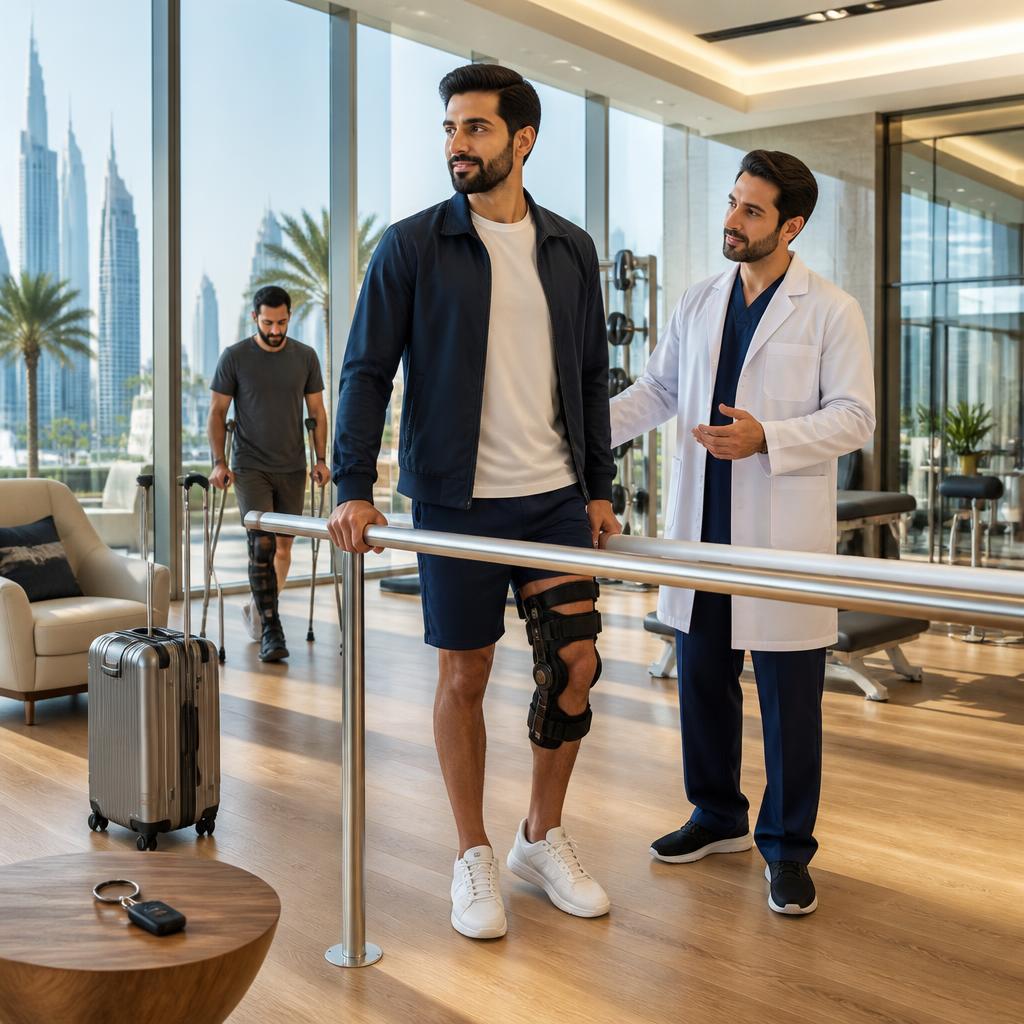
In the first days after arthroscopy you should expect swelling, some pain controlled with medication and elevation, and instructions for wound care. Many patients use crutches for short periods to reduce swelling and protect the knee — especially after a repair. Gentle ankle and hip movements and straight‑leg raises are commonly recommended early to prevent stiffness; strict weight‑bearing rules depend on whether your meniscus was repaired or trimmed. Keep dressings clean and attend the first wound check as advised.
Weeks 2–4: starting to walk and regain confidence
Around the second week many patients begin walking with less support and start supervised physiotherapy focused on regaining range of motion and basic strength. Some patients report substantial early improvement after trimming procedures; for example, a patient who had arthroscopic chondroplasty described being able to cycle comfortably for 30 minutes about two weeks after surgery, illustrating how recovery can progress quickly in selected cases. If your surgeon protected your knee after a repair, you may still have gradual weight‑bearing rules and a guided physiotherapy plan.
Weeks 4–8: building strength and more normal walking
Between one and two months most patients make steady gains in walking tolerance, reduce swelling, and progress to strengthening exercises for the quadriceps and hip muscles. Those who had partial meniscectomy often resume most normal daily walking and light activities in this period. If you had a meniscal repair, strength and functional milestones usually progress more slowly and under closer supervision to protect the healing tissue. Your physiotherapist will advance balance and closed‑chain exercises as pain and swelling permit.
Driving and returning to work: practical considerations
When you can drive depends on pain, knee control and whether you can perform an emergency stop safely. Many patients with a trimmed meniscus can consider short, local drives once they can perform safe, comfortable vehicle maneuvers and are off sedating pain medication; patients with repairs are usually advised to wait longer and require surgeon clearance. Returning to work depends on job demands: desk work is often possible earlier with precautions, while jobs requiring heavy standing, lifting or kneeling need a graded return and specific clearance from your orthopedic team.
Flying and longer travel: planning ahead
If you need to fly after surgery, discuss timing with your surgeon. Short trips may be acceptable once you are mobile and swelling is controlled, but long flights often require extra planning (mobility aids, compression measures and taking breaks to move). Notify the surgical team before travel so they can advise on wound care, mobility precautions and emergency contact options while you are away.
When to resume exercise and sports
Returning to sport or high‑impact exercise is staged and guided by clinical recovery, strength, and the type of procedure. Low‑impact activities and supervised gym work typically begin before high‑impact running or contact sports. Patients who have a chondroplasty often progress to more demanding activities sooner than those who required a repair, but a stepwise program with physiotherapy guidance reduces re‑injury risk. Always get formal clearance from your surgeon or physiotherapist before resuming sport.
Follow‑up, physiotherapy and the role of the care team
Close follow‑up is important for a smooth recovery: early checks allow wound review, assessment of swelling and range of motion, and timely adjustments to your rehabilitation plan. Patients of Dr. Farivar Bagheri consistently report detailed explanations, responsive follow‑up and supportive post‑op care from the surgical team and nurse staff — a continuity of care that many find reassuring throughout recovery. If new pain, fever, increasing redness or mechanical symptoms occur, contact your orthopedic team promptly; emergency lines and advice options are part of many surgical services.
Practical checklist before you leave hospital and final reassurance
Before discharge, confirm your weight‑bearing instructions, pain medication plan, wound care steps, physiotherapy referral, and the date of your first post‑op review. Ask when you may drive, travel and resume specific activities tailored to your job and sport. Recovery timelines vary — some patients feel marked improvement within a fortnight after chondroplasty, while others need a slower phased program after a repair — and close communication with your surgeon and physiotherapist is the best way to a safe, confident return to daily life.
Customer review


Article by
𝐃𝐫. 𝐅𝐚𝐫𝐢𝐯𝐚𝐫 𝐁𝐚𝐠𝐡𝐞𝐫𝐢
Orthopedic Surgeon & Sports Surgeon in Dubai – Specialized in Knee, Shoulder & Ankle Arthroscopy, Joint Replacement (Knee & Hip), Foot Surgery (Flat Foot & Hallux Valgus), and Trauma Surgery. With over 15 years of experience, practicing in Dubai under the Emirates Hospital Group. 📞 Emergency Line Available 24/7 – Our mobile and WhatsApp number is always active. Emergency cases are accepted anytime, regardless of the clinic schedule.