Non‑Surgical Fracture Care for High‑Risk Patients: A Dubai Orthopedic Approach
This article explains how fractures can be safely managed without surgery for elderly or medically high‑risk patients in Dubai — covering common non‑surgical methods, what to expect during casting and follow‑up, how families can support recovery at home, and when surgery may be reconsidered.
Why non‑surgical care matters for high‑risk patients
Not every fracture requires an operation. For patients with significant medical risks — such as serious heart disease, advanced age, or other conditions that make anaesthesia or surgery dangerous — orthopedists often pursue careful non‑surgical management. The objective is to support safe bone healing while minimising procedural risk, pain, and disruption to overall health.
Real cases from local practice that illustrate the approach
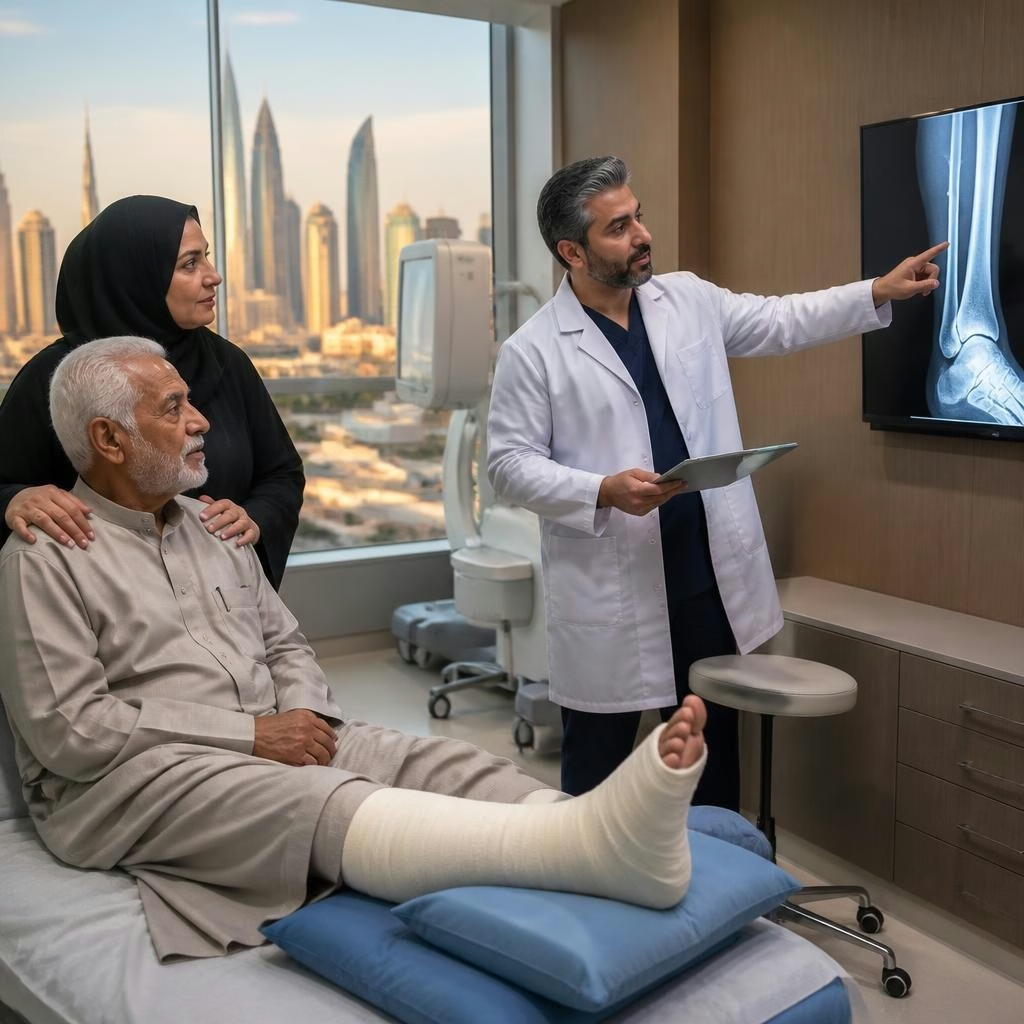
Local patient accounts from Dubai highlight how non‑operative care can succeed when surgery is not safe. For example, one review describes an elderly patient with multiple hand fractures who could not undergo surgery because of a serious heart condition; the treating surgeon applied a cast, provided detailed instructions, and monitored healing closely until recovery progressed. Such cases show that with skilled assessment and follow‑up, non‑surgical pathways can produce good outcomes for carefully selected patients.
Primary goals of non‑surgical fracture management
The clinical aims are consistent: control pain, ensure adequate alignment for healing, protect the injured area from further damage, reduce complication risk (including infection and blood clots), and preserve as much function as possible. Care plans are individualised based on fracture type, patient mobility needs, bone quality, and overall medical status.
Common non‑surgical methods used by orthopedic teams
Orthopedic teams commonly use immobilisation with casts, removable splints or braces, closed reduction (manipulating bones back into position without an incision), and temporary external support. In some cases, traction or staged immobilisation is applied. Pain and swelling are managed conservatively while healing progresses, and imaging is used to confirm alignment and callus formation over time.
What happens during casting and initial treatment
Casting typically begins with careful assessment and, if needed, closed reduction under light sedation or local anaesthesia to align the bones. The cast or splint is applied to immobilise the fracture in a position that promotes healing. Patients should expect clear instructions about cast care, activity limits, signs to watch for (increasing pain, numbness, or excessive swelling), and the schedule for follow‑up imaging and clinic visits.
Imaging and close follow‑up: why they’re essential
Regular imaging — X‑rays and occasionally CT scans — confirms that the bones remain well aligned and are forming new bone as expected. Close clinical follow‑up allows the care team to detect early complications and adjust treatment (for example, modifying immobilisation, starting gentle motion, or arranging intervention if alignment fails). Reviews from local patients note that attentive follow‑up and timely imaging give families confidence and improve outcomes.
The role of the care team and family support
Successful non‑surgical care depends on coordinated teamwork: the orthopedic surgeon, nursing and clinic staff, physiotherapists, and family caregivers. Effective communication, appointment coordination, and proactive follow‑up calls help elderly or high‑risk patients stay safe. Local patient feedback frequently praises teams that explain the plan patiently, answer questions, and coordinate appointments and imaging — elements that reduce anxiety and improve adherence.
Practical home‑care tips for a safer recovery
Families can make recovery safer and more comfortable by following the treating team's instructions closely: keep the cast dry and clean, follow activity and weight‑bearing restrictions, ensure safe transfers and fall prevention at home, assist with mobility aids if prescribed, and look out for warning signs such as increasing pain, numbness, fever, or foul discharge. Good nutrition, hydration, and attention to chronic medical conditions (for example, heart or diabetes care) also support healing.
Rehabilitation and when surgery might still be needed
As healing progresses, rehabilitation focuses on restoring joint motion, strength, and function while monitoring bone union. In some patients, surgery remains a future option if alignment cannot be maintained or functional goals are not met once medical risk has improved. Decisions about delayed surgery are made case‑by‑case with a clear assessment of risks and expected benefits.
Finding experienced orthopedic care in Dubai and what to expect
If surgery is not feasible, look for an orthopedic team experienced in both trauma and conservative fracture management. In Dubai, some practices (including surgeons working within Emirates Hospital Group and DHCC) emphasise thorough assessment, personalised non‑surgical plans, clear patient education, and reliable follow‑up. Many patients highlight compassionate communication, careful monitoring, and coordinated nursing support as key elements of a positive recovery experience. For urgent concerns, note that some providers maintain a 24/7 emergency line to advise on acute changes and arrange timely care.
Customer review


Article by
𝐃𝐫. 𝐅𝐚𝐫𝐢𝐯𝐚𝐫 𝐁𝐚𝐠𝐡𝐞𝐫𝐢
Orthopedic Surgeon & Sports Surgeon in Dubai – Specialized in Knee, Shoulder & Ankle Arthroscopy, Joint Replacement (Knee & Hip), Foot Surgery (Flat Foot & Hallux Valgus), and Trauma Surgery. With over 15 years of experience, practicing in Dubai under the Emirates Hospital Group. 📞 Emergency Line Available 24/7 – Our mobile and WhatsApp number is always active. Emergency cases are accepted anytime, regardless of the clinic schedule.