PRP Injections in Dubai: Which Joints Benefit, What to Expect, and How to Choose the Right Orthopedic Provider
A practical guide to platelet-rich plasma (PRP) injections for knee osteoarthritis, shoulder tendinopathy, tennis elbow and Achilles tendinitis — how the procedure is done, who is likely to benefit, typical timelines, safety considerations, and tips for choosing a qualified orthopedic provider in Dubai.
Why PRP is being used more often in orthopedics
Platelet-rich plasma (PRP) is an autologous treatment that concentrates a patient’s own platelets and growth factors and injects them into injured or inflamed tissues. In orthopedic practice PRP is used as a non-surgical option to reduce pain, support tissue healing and delay or avoid more invasive procedures when appropriate. In Dubai, PRP is offered alongside other established services — for example, Dr. Farivar Bagheri lists PRP treatments for knee osteoarthritis, shoulder and patellar issues, tennis elbow and Achilles tendinitis among his interventional therapies.
What PRP treatment looks like: a step-by-step overview
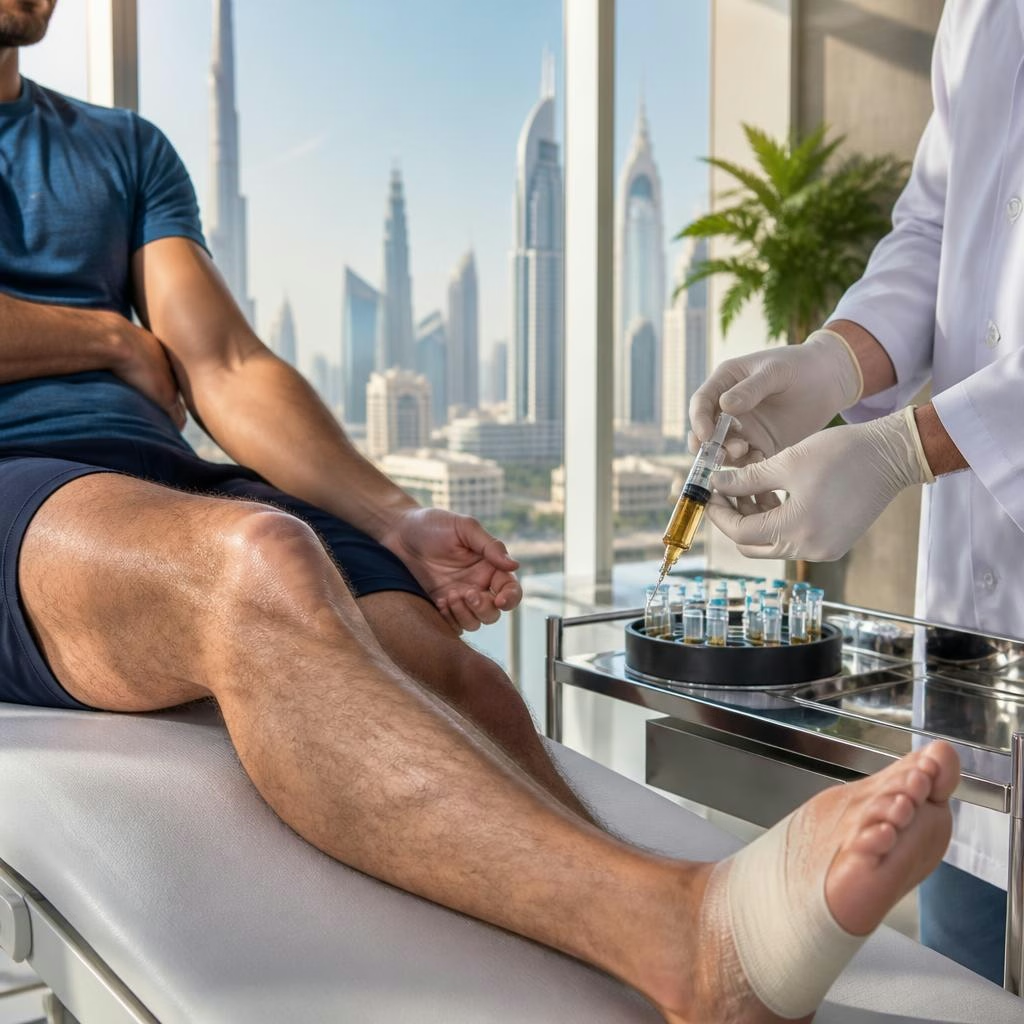
A typical PRP session begins with a focused clinical assessment and imaging review to confirm the diagnosis and target site. Blood is then drawn from the patient, processed in a centrifuge to concentrate platelets, and the resulting PRP is prepared for injection. The injection itself is usually performed under sterile conditions and, when needed, with imaging guidance (ultrasound) to increase accuracy. The whole visit commonly takes one to two hours including preparation; the injection portion is brief. Patients are observed for a short interval afterwards and given specific advice about activity and follow-up.
Which joints and conditions respond best to PRP
Clinical experience and available services suggest PRP is most commonly used for: - Early to moderate knee osteoarthritis to reduce pain and improve function - Tendinopathies such as lateral epicondylitis (tennis elbow), rotator cuff tendinopathy and Achilles tendinitis - Patellar tendon problems and some focal cartilage or soft-tissue injuries PRP tends to be more helpful for soft-tissue tendon problems and early degenerative joint changes than for very advanced osteoarthritis where joint replacement is often the definitive option. Treatment selection should be individualized after clinical and imaging assessment.
Realistic outcomes and expected timeline
Patients can expect a gradual response rather than immediate, dramatic change. For tendinopathies many people report progressive improvement over 6–12 weeks as tendon pain and function improve. For knee osteoarthritis PRP may reduce pain and stiffness and improve activity tolerance, with benefits often emerging over several weeks and sometimes lasting months. Not every patient responds; outcomes depend on the severity of the condition, overall health, activity level and adherence to rehabilitation. Clear discussion with your orthopedic surgeon about realistic goals is essential.
How many sessions are typical and when combinations are used
There is no single universal protocol: some conditions are treated with a single PRP injection, others with a short series of injections spaced weeks apart. In Dubai, combined approaches are also offered — for instance, PRP combined with hyaluronic acid is listed among available treatments — when the provider judges a combined biological and lubricating approach may be beneficial. Your surgeon will recommend the number and timing of injections based on your diagnosis, imaging, and response to initial treatment.
Who is a good candidate — and who may not be
Good candidates are patients with confirmed tendon injuries or early degenerative joint changes who prefer a conservative, tissue-focused option and understand realistic outcomes. Patients with uncontrolled systemic illness, active infection, certain blood disorders, or those taking medications that significantly impair platelet function may not be appropriate candidates; these issues are identified during pre-treatment assessment. A face-to-face consultation with an orthopedic surgeon is the correct way to determine candidacy and to review alternative treatments such as physiotherapy, injections of other agents, or surgical options when indicated.
Safety considerations and common side effects
Because PRP uses the patient’s own blood, the risk of allergic reaction is low. Common short-term effects include injection-site pain, transient inflammation, swelling or mild bruising. Serious complications are uncommon when procedures are done under sterile conditions by trained clinicians. Providers in Dubai offering PRP should explain infection control, use of image guidance where appropriate, and post-injection precautions. If symptoms such as increasing redness, fever, or progressive worsening occur after an injection, patients should seek prompt medical attention.
Rehabilitation and activity after PRP
Post-injection advice varies by condition and clinician: many surgeons recommend short-term relative rest, a staged return to activity, and early commencement of targeted physiotherapy to rebuild strength and control. For tendon problems, structured tendon-loading programs are commonly part of recovery. Adherence to a rehabilitation plan often affects the quality and durability of results, so expect follow-up visits and coordinated physiotherapy where indicated.
Choosing a qualified orthopedic provider in Dubai
When selecting a provider, look for an orthopaedic surgeon experienced in joint and soft-tissue care who performs a clinical assessment, uses imaging to guide decisions, and explains realistic outcomes and alternatives. In local patient feedback, people highlight the value of clear explanations, careful examinations and compassionate follow-up from the clinical team. One patient reported meaningful improvement after a shoulder injection and appreciated thorough communication and follow-up by the surgeon’s team — examples like this emphasize the importance of both technical skill and ongoing patient support when choosing treatment.
Practical steps to prepare for a PRP consultation
Before your appointment bring any recent imaging (X-rays, MRI), a list of current medications, and a summary of prior treatments. Expect the surgeon to review your history, examine the affected area, and discuss whether PRP or an alternative is the best next step. Ask about the specific PRP preparation and protocol used, whether ultrasound guidance is planned, likely timelines for improvement, rehabilitation requirements, costs and any pre- or post-procedure restrictions. If you are receiving care in Dubai, confirm logistics such as location (Dr. Farivar practices in DHCC under the Emirates Hospital Group) and how follow-up will be handled.
Final considerations and how to proceed
PRP can be a useful, minimally invasive option for certain tendon conditions and early joint degeneration, but outcomes vary and candidacy must be determined by a specialist. If you are considering PRP in Dubai, choose an orthopedic surgeon who offers a clear diagnostic process, explains the expected benefits and limitations, and coordinates follow-up care and rehabilitation. For urgent concerns or complications, note that some practices offer around‑the‑clock emergency contact; verify how after-hours care and follow-up are handled when you make arrangements. If you would like to discuss whether PRP is suitable for your knee, shoulder, elbow or Achilles issue, request a consultation so a personalized assessment can guide the next steps.
Customer review


Article by
𝐃𝐫. 𝐅𝐚𝐫𝐢𝐯𝐚𝐫 𝐁𝐚𝐠𝐡𝐞𝐫𝐢
Orthopedic Surgeon & Sports Surgeon in Dubai – Specialized in Knee, Shoulder & Ankle Arthroscopy, Joint Replacement (Knee & Hip), Foot Surgery (Flat Foot & Hallux Valgus), and Trauma Surgery. With over 15 years of experience, practicing in Dubai under the Emirates Hospital Group. 📞 Emergency Line Available 24/7 – Our mobile and WhatsApp number is always active. Emergency cases are accepted anytime, regardless of the clinic schedule.