PRP Injections in Dubai: Who Benefits for Knee, Shoulder and Tendon Problems?
A clear, practical guide to how PRP (platelet‑rich plasma) works, which knee, shoulder and tendon problems are most likely to improve, what patients can expect during treatment and recovery, and how PRP is used alongside physiotherapy or surgery in Dr. Farivar Bagheri’s practice in Dubai Healthcare City.
Why this guide matters
If you’re exploring PRP injections for knee, shoulder or tendon pain, it helps to know what the treatment can — and cannot — do. This article explains the basics of PRP, the types of problems that respond best, how it is typically delivered in clinic, how it complements physiotherapy or surgery, and what local patients have reported after treatment at Emirates Specialty Hospital in Dubai Healthcare City (DHCC).
What is PRP and how does it work?
PRP stands for platelet‑rich plasma: a small sample of the patient’s own blood is processed to concentrate platelets and growth factors that support tissue healing. Injecting this concentrated plasma into a damaged tendon or joint is intended to stimulate the body’s natural repair processes. In plain terms, PRP is a biologic, non‑synthetic therapy aimed at enhancing recovery where inflammation or tissue wear is the primary problem.
Which knee problems are good candidates for PRP
PRP is most useful for knee conditions where tissue degeneration or chronic inflammation, rather than complete structural failure, is the dominant issue. Common examples include early osteoarthritis, persistent tendinopathy around the knee, and degenerative meniscal changes where mechanical instability is limited. For patients with advanced joint destruction or clear surgical indications, joint replacement or other surgical options are usually more appropriate.
When PRP helps shoulder conditions and tendon injuries
Shoulder problems that may respond well to PRP include tendinopathies (for example, chronic rotator cuff tendon degeneration without a large full‑thickness tear), partial tendon tears, and some cases of chronic shoulder pain driven by tendon inflammation. PRP can also be considered for other tendon sites such as the Achilles tendon and lateral elbow (tennis elbow) where conservative measures have not fully resolved symptoms.
Who is less likely to benefit from PRP
PRP is not a universal fix. Patients with complete tendon ruptures requiring surgical repair, severe mechanical joint instability, or end‑stage arthritis that impairs day‑to‑day function are often better served by surgical solutions. PRP is also not a substitute for accurate diagnosis: imaging and clinical assessment are needed to confirm whether PRP is an appropriate option.
What a typical treatment pathway looks like
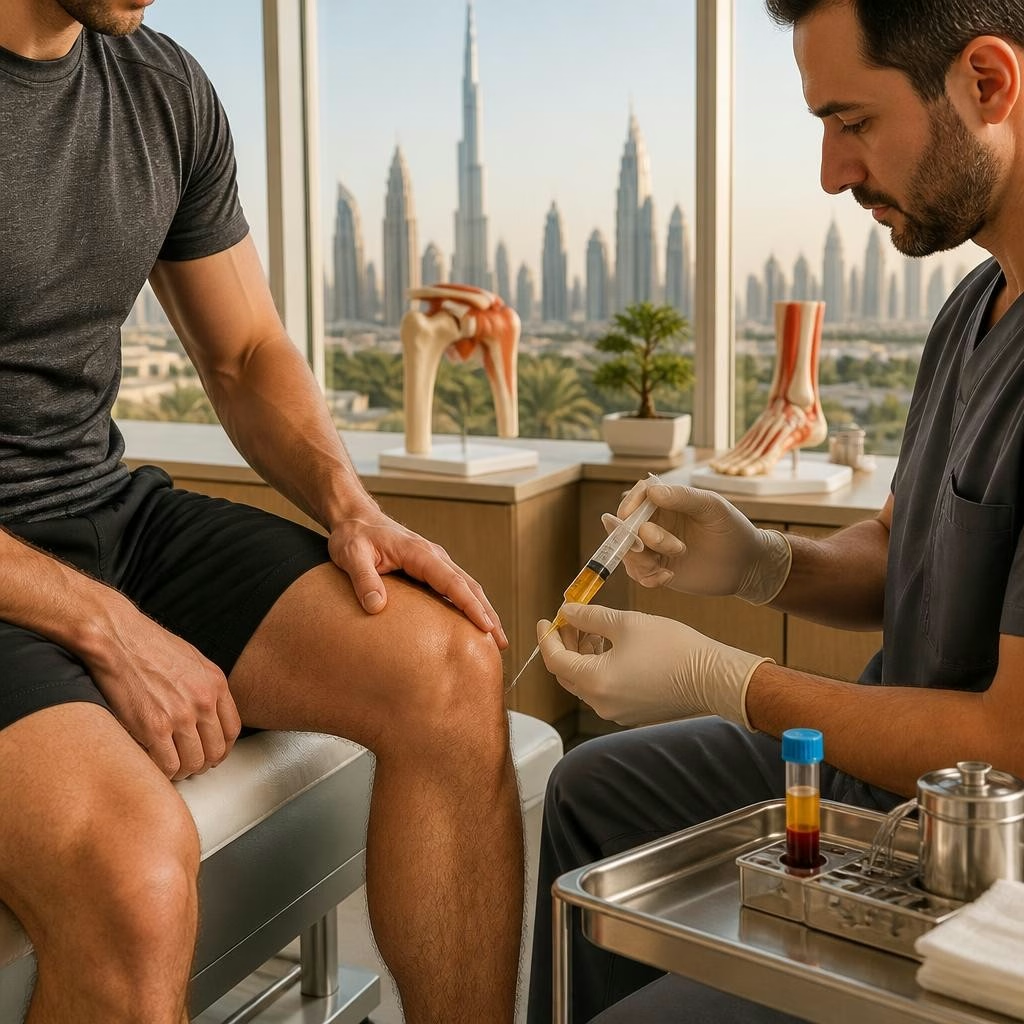
In clinical practice the pathway begins with a detailed consultation and focused assessment (history, physical exam and imaging when needed). If PRP is recommended, the clinic will explain the process, take a small blood sample, prepare the platelet concentrate, and deliver a guided injection into the target area. Follow‑up visits and a rehabilitation plan are usually arranged so progress can be monitored and therapy adjusted if necessary.
How many sessions and the pace of improvement
The number of PRP sessions and the pace of recovery are individualized. Some patients notice meaningful symptom relief after a single injection, while others may need further treatments or a longer rehabilitation period before benefits are clear. Improvement tends to be gradual rather than immediate; many patients report progressive reduction in pain and better function over time as the treated tissue responds and rehabilitation progresses.
Combining PRP with physiotherapy and conservative care
PRP is most effective when integrated into a broader recovery program. Structured physiotherapy restores strength, mobility and movement patterns while PRP supports tissue healing. In many cases clinicians recommend targeted rehabilitation exercises, activity modification, and scheduled follow‑ups to maximise the chances of a sustained result. PRP is often used as part of a conservative pathway before deciding on more invasive surgical options.
How PRP fits with surgical decisions
For some patients PRP can reduce symptoms enough to avoid or delay surgery. For others, PRP may be offered as an adjunct before or after an operation to improve healing. A careful, evidence‑based discussion between patient and surgeon determines the best approach: PRP is one tool among many and is considered alongside imaging findings, symptoms, functional goals and the likely outcomes of surgery.
Local experience and patient feedback
Local patients treated by Dr. Farivar Bagheri at Emirates Specialty Hospital frequently cite clear explanations, close follow‑up and successful outcomes after PRP and related care. One patient who received PRP for persistent knee pain described substantial improvement and praised the team’s guidance and follow‑up care. Across reviews, patients also highlight the clinic’s thorough assessment and the supportive role of the nursing and assistant staff, which many find reassuring when navigating treatment choices.
Preparing for a consultation and next steps
If you are considering PRP, begin with a consultation where your symptoms, prior treatments and imaging are reviewed. Expect a clear discussion of realistic outcomes, alternative options (including physiotherapy and surgery), and a personalised plan. Dr. Farivar practices in DHCC and accepts patients from Dubai, Ajman and Sharjah; the clinic arranges follow‑up and rehabilitation to support recovery. Contact the clinic to book an assessment and discuss whether PRP is appropriate for your specific knee, shoulder or tendon problem.
Customer review


Article by
𝐃𝐫. 𝐅𝐚𝐫𝐢𝐯𝐚𝐫 𝐁𝐚𝐠𝐡𝐞𝐫𝐢
Orthopedic Surgeon & Sports Surgeon in Dubai – Specialized in Knee, Shoulder & Ankle Arthroscopy, Joint Replacement (Knee & Hip), Foot Surgery (Flat Foot & Hallux Valgus), and Trauma Surgery. With over 15 years of experience, practicing in Dubai under the Emirates Hospital Group. 📞 Emergency Line Available 24/7 – Our mobile and WhatsApp number is always active. Emergency cases are accepted anytime, regardless of the clinic schedule.