Recovering After ACL Reconstruction in Dubai: A Week‑by‑Week Guide for the First 90 Days
A practical, rehab‑focused week‑by‑week guide for patients after ACL reconstruction in Dubai, covering pain and swelling control, range of motion and walking goals, early strengthening and sport‑specific progressions, plus tips for working with physiotherapists and communicating with your surgeon.
Why a 90‑day plan matters
The first 90 days after ACL reconstruction set the foundation for long‑term knee stability and a safe return to activity. Early progress focuses on controlling pain and swelling, protecting the graft, restoring walking patterns and range of motion (ROM). After that, rehab shifts toward strength, neuromuscular control and gradual reintroduction of higher‑level activities. This guide outlines common week‑by‑week goals and practical steps to discuss with your surgeon and physiotherapist in Dubai.
Weeks 0–2: Immediate post‑op priorities
In the first two weeks the goals are pain control, limiting swelling, protecting the operated knee and beginning gentle ROM. Typical actions include following the surgeon’s instructions about weight bearing (often partial weight bearing with crutches), using cold therapy and elevation to reduce swelling, wearing any prescribed brace, and doing gentle extension and pain‑limited flexion exercises as directed by your physiotherapist. Expect frequent contact with your surgical team for wound checks and early guidance.
Weeks 3–6: Regain walking and basic motion
Weeks three to six are dedicated to restoring a more normal gait, improving ROM and starting basic strengthening. Under physiotherapy supervision you will work on walking with reduced crutch reliance, achieving near‑full knee extension and progressively increasing flexion, and initiating closed‑chain strengthening (for example, controlled squats or leg presses as appropriate). Continued swelling management and coordinated wound review remain important during this phase.
Weeks 7–12: Building strength and control
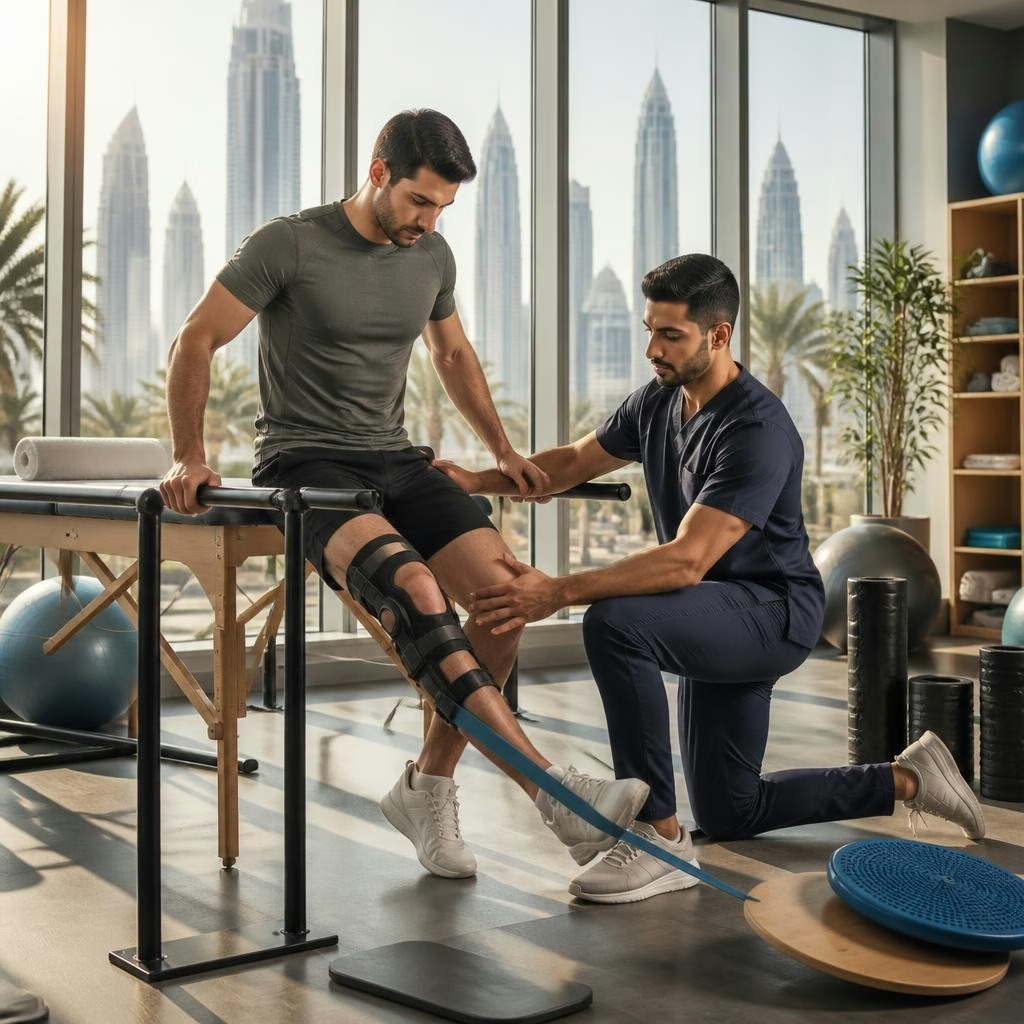
In the second month the focus shifts toward muscle strength, balance and neuromuscular control. Exercises progress to heavier resistance for the quadriceps and hamstrings, single‑leg stability work, and controlled functional movements. Your physiotherapist will add proprioception drills, balance boards and movement pattern correction. Around this time many patients transition from simple walking drills to low‑impact cardio such as stationary cycling; any running or jumping should only begin after clinician clearance.
Weeks 13–16: Introduce sport‑related activities carefully
As you move beyond 12 weeks the rehab emphasis becomes sport specificity: agility, change‑of‑direction drills, plyometrics and progressive running plans when strength and control are adequate. Progression should be criteria‑based (strength symmetry, pain‑free mechanics, clinician‑observed control) rather than strictly time‑based. Your surgeon and physiotherapist will review objective measures and functional tests before signing off on higher‑impact training.
Pain, swelling and cryotherapy: practical measures
Manage pain and swelling early with rest, elevation, regular cold therapy and following prescribed analgesia or anti‑inflammatory instructions from your surgeon. Compression garments or sleeves can help control swelling during the first weeks. Gentle movement and physiotherapy‑led exercises also reduce stiffness and fluid buildup; avoid prolonged immobilisation unless specifically advised by your surgical team.
Red flags and when to contact your surgical team
Contact your surgeon or the emergency line if you experience increasing redness, spreading warmth around the wound, persistent fever, heavy wound drainage, new‑onset severe pain not relieved by medication, or sudden calf swelling and pain. Dr. Farivar Bagheri’s practice provides ongoing follow‑up and an emergency line for urgent concerns, so reach out promptly rather than waiting for a scheduled visit if you have worrying symptoms.
Working with physiotherapists in Dubai: tips for patients
Choose a physiotherapist experienced in post‑ACL rehabilitation and comfortable communicating with your surgeon. Discuss session frequency, home exercise plans and how progress will be measured. Bring surgical notes or the clinic contact to coordinate care, and ask your physiotherapist for demonstration videos or written instructions for home practice. Many patients find that clear explanations and attentive follow‑up from the surgical and physiotherapy teams makes recovery easier—consider this when selecting providers and arranging appointments.
Return to sport: criteria over calendar days
Returning to sport should be based on objective strength and functional benchmarks rather than a fixed timeline. Common criteria include restored quadriceps and hamstring strength compared with the uninjured leg, good single‑leg stability, absence of swelling and pain during sport‑specific drills, and clinician confirmation. Work with your surgeon and physiotherapist to design a staged return that begins with controlled training, advances to non‑contact practice, and only progresses to full participation after passing agreed criteria.
Practical local considerations and closing reassurance
If you are recovering in Dubai or nearby emirates, plan your rehabilitation early: confirm physiotherapy availability, check insurance authorisations and coordinate follow‑up appointments with your surgical team. Use the clinic’s contact pathway for questions about wound care, medication or scheduling. Many patients report that clear explanations and ongoing follow‑up from their surgeon and support staff make a real difference in confidence during recovery; keep open communication with your care team and expect steady, measurable progress over the first 90 days.
Customer review


Article by
𝐃𝐫. 𝐅𝐚𝐫𝐢𝐯𝐚𝐫 𝐁𝐚𝐠𝐡𝐞𝐫𝐢
Orthopedic Surgeon & Sports Surgeon in Dubai – Specialized in Knee, Shoulder & Ankle Arthroscopy, Joint Replacement (Knee & Hip), Foot Surgery (Flat Foot & Hallux Valgus), and Trauma Surgery. With over 15 years of experience, practicing in Dubai under the Emirates Hospital Group. 📞 Emergency Line Available 24/7 – Our mobile and WhatsApp number is always active. Emergency cases are accepted anytime, regardless of the clinic schedule.