Shoulder Arthroscopy in Dubai: From First MRI to a Realistic Recovery Timeline
A step-by-step guide for patients in Dubai advised to have shoulder arthroscopy—who benefits, how to prepare, what to expect at DHCC, pain control and rehab milestones, and realistic timeframes for driving, work, and sports.
Overview: What this guide covers
This article walks you through the shoulder arthroscopy pathway used by an experienced orthopedic and sports surgeon practicing in Dubai Healthcare City. It explains who is likely to need arthroscopy, what imaging and tests are helpful (including MRI), how to prepare for surgery, typical hospital stay at DHCC, pain management strategies, staged physiotherapy milestones, and sensible timelines for returning to driving, work, and sport. The advice is practical and intended to set realistic expectations while recognising each patient’s recovery is individual.
Who truly needs shoulder arthroscopy?
Shoulder arthroscopy is a minimally invasive surgery commonly recommended for problems such as rotator cuff tears, persistent impingement, unstable shoulders, calcific tendinitis not responding to conservative care, and some cases of frozen shoulder where arthroscopic release is appropriate. The decision is based on clinical assessment, symptoms (pain, weakness, loss of function), response to non-surgical treatments, and imaging findings. Your surgeon will advise arthroscopy only when they believe the procedure is likely to relieve pain and restore function more reliably than continued conservative care.
Getting the right imaging: MRI and additional tests
An MRI is the key test before arthroscopy because it shows tendon tears, labral injuries, muscle quality, and joint cartilage. Standard shoulder X-rays are also useful to assess arthritis or bone spurs. Where indicated, ultrasound can evaluate tendons dynamically. The surgeon integrates imaging with the physical exam and your symptoms to form a clear treatment plan. Expect a discussion of MRI findings and how they relate to your daily activities and goals before any decision on surgery is final.
Pre-surgery preparation and planning
Preparation begins with a preoperative consultation that covers the planned procedure, anaesthesia options, expected hospital stay, and the rehabilitation plan. Routine blood tests, ECG, and medical clearance may be requested depending on age and medical history. Arrange practical support for the first few days at home (help with personal care and household tasks), prepare clothes that are easy to put on, and plan transport from the hospital. The team will also review medications—some blood-thinning agents or supplements may need to be stopped before surgery.
Day of surgery and hospital stay at DHCC
At Emirates Specialty Hospital in Dubai Healthcare City patients typically arrive on the morning of surgery unless otherwise instructed. Arthroscopy is commonly performed as a day-case or with an overnight stay, depending on the complexity and your overall health. You will meet the anaesthetist, nursing team, and physiotherapist. Regional nerve blocks are often used to reduce immediate postoperative pain. The clinical team will give clear discharge instructions if you go home the same day, or provide inpatient recovery protocols if an overnight stay is needed.
What the arthroscopy procedure involves
Shoulder arthroscopy uses small incisions and a camera to inspect and treat internal structures—repairing a torn rotator cuff, removing calcium deposits, addressing impingement, or stabilising the joint. Because it is minimally invasive, tissue trauma and scarring are reduced compared with open surgery. The exact procedure and any implants or anchors used will be explained by your surgeon beforehand. Operative notes and postoperative imaging, when relevant, help guide rehabilitation.
Pain control and early recovery (first 2 weeks)
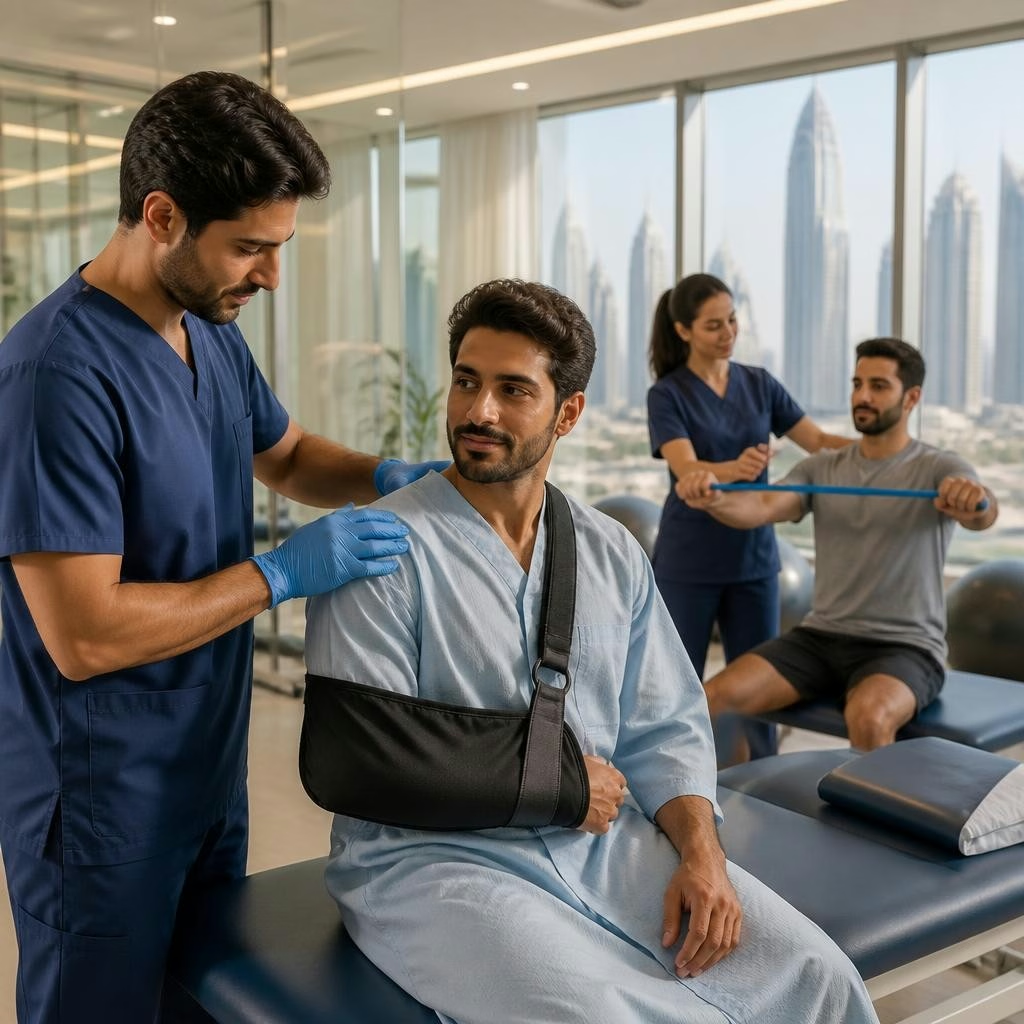
Pain control commonly combines a regional nerve block given during surgery, short-term oral analgesics, and targeted anti-inflammatories as appropriate. Expect some pain and swelling in the first 48–72 hours, which usually settles rapidly with ice, elevation where possible, and prescribed medication. A sling is often used for comfort and protection for the first few days to weeks—how long depends on the repair performed. Early passive range-of-motion exercises are typically started under physiotherapist guidance to maintain mobility while protecting the repair.
Physiotherapy milestones: weeks to months
Rehabilitation follows staged goals. Weeks 0–6: focus on pain control, tissue healing, and gentle passive or assisted range of motion to prevent stiffness. Weeks 6–12: progress to active range of motion and introduce light strengthening exercises as tolerated. Months 3–6: build strength, endurance, and functional training tailored to your activities. By approximately 3 months many patients notice significant improvement in pain and daily function; stronger repairs and return to demanding activities typically require 4–6 months or longer. The exact pace depends on the pathology treated, the quality of tissues, and adherence to the program.
Realistic timeframes for driving, work, and sport
Driving: most patients can consider driving once they can control the vehicle safely and are off sedating pain medication—often 1–2 weeks for light procedures but longer when shoulder strength is limited. Work: desk-based or sedentary work may be resumed within 1–3 weeks depending on pain and employer flexibility; manual or overhead jobs usually require 6–12 weeks or more. Sports: non-contact and light recreational activities may begin around 8–12 weeks with progressive loading; return to contact or overhead sports (tennis, swimming, weightlifting) often needs 4–6 months and may be later for competitive athletes. These are typical ranges; your surgeon and physiotherapist will advise a personalised plan.
Team support, follow-up and what patients say
Good outcomes depend on surgical expertise and coordinated follow-up. Patients frequently comment on clear explanations, attentive nursing support, and consistent rehabilitation follow-up—elements that reduce anxiety and improve adherence to rehab. One patient who had calcific tendinitis and underwent shoulder arthroscopy described a smooth recovery and effective postoperative physiotherapy under the care of the surgical team. The clinic’s coordinated approach, including responsive nursing support during pre- and post-op stages, is repeatedly cited by patients as a key part of their positive experience.
Customer review


Article by
𝐃𝐫. 𝐅𝐚𝐫𝐢𝐯𝐚𝐫 𝐁𝐚𝐠𝐡𝐞𝐫𝐢
Orthopedic Surgeon & Sports Surgeon in Dubai – Specialized in Knee, Shoulder & Ankle Arthroscopy, Joint Replacement (Knee & Hip), Foot Surgery (Flat Foot & Hallux Valgus), and Trauma Surgery. With over 15 years of experience, practicing in Dubai under the Emirates Hospital Group. 📞 Emergency Line Available 24/7 – Our mobile and WhatsApp number is always active. Emergency cases are accepted anytime, regardless of the clinic schedule.