Spine Injections vs. Painkillers: Choosing Safer Long‑Term Relief for Back and Neck Pain in Dubai
A practical guide for people with degenerative disc disease or herniated discs that explains when image‑guided spine injections (epidural, nerve‑root, facet) are often preferable to long‑term oral painkillers, what to expect during a procedure at DHCC, and how injections fit into a broader, safer spine pain management plan.

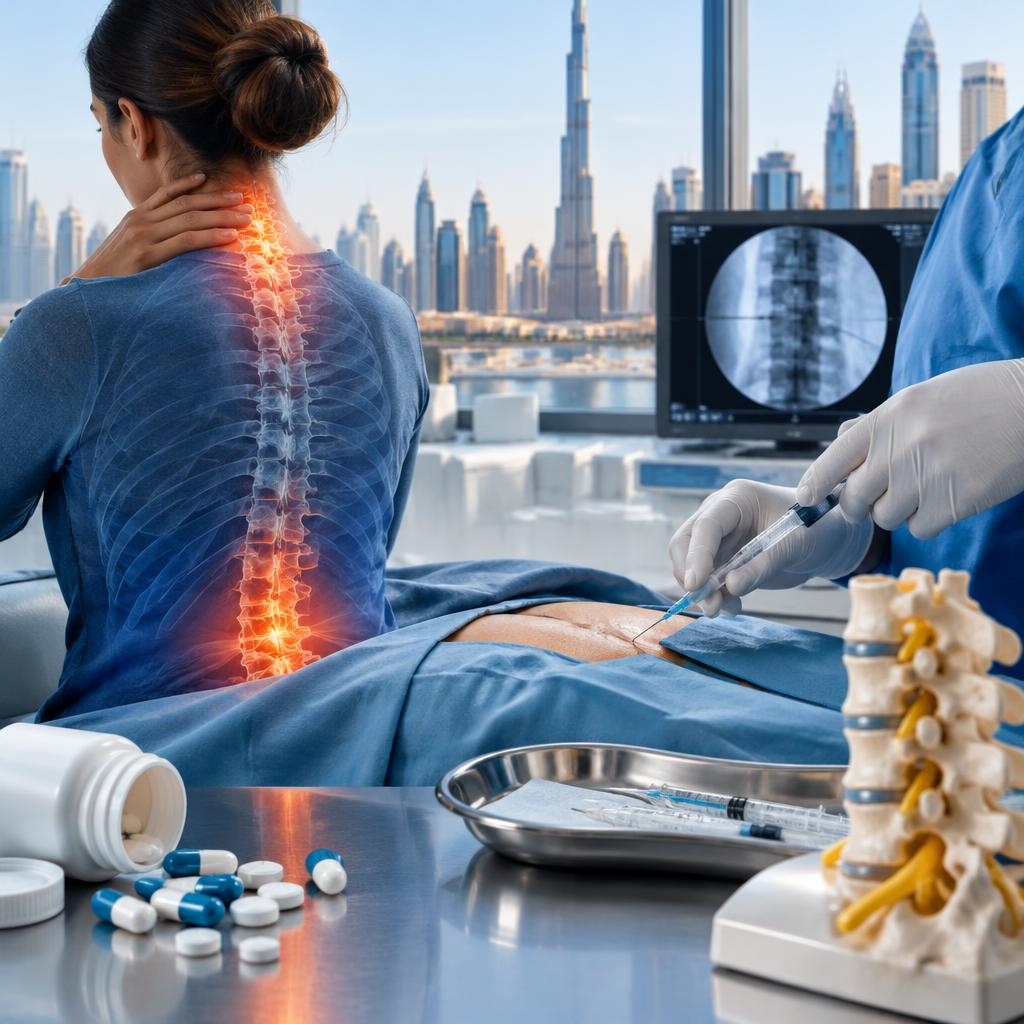
Why this topic matters
Many people with chronic neck or low back pain face a choice: manage symptoms with long‑term oral medications or consider targeted, image‑guided injections. Each option has a role, but understanding the differences—how injections work, their benefits and risks, and how they fit into a wider treatment plan—helps patients in Dubai make safer, more informed decisions with their orthopedic specialist.
Common problems that prompt this question
Degenerative disc disease, herniated (slipped) discs and nerve‑root compression are frequent causes of radicular pain, numbness or weakness down an arm or leg. These conditions can cause persistent pain that is managed temporarily with tablets, yet tablets do not always address local inflammation or nerve irritation at the spinal level. When symptoms are focal, persistent, or limit daily activities despite conservative care, a targeted injection is often considered as the next step.
How long‑term tablets compare with image‑guided injections
Oral pain medicines (paracetamol, NSAIDs and, in some situations, short courses of stronger analgesia) can provide symptomatic relief and are easy to use. However, long‑term reliance on tablets can have downsides such as stomach, kidney, blood‑pressure or other systemic effects depending on the drug class and individual health. Image‑guided injections deliver an anti‑inflammatory medication close to the affected nerve or joint, aiming to reduce local inflammation and pain while minimising systemic exposure. In many patients this approach reduces pain enough to engage actively in rehabilitation, potentially avoiding or delaying more invasive treatments.
Types of image‑guided spine injections
Common injection types used for degenerative or herniated disc pain include: epidural steroid injections (ESI) that bathe the inflamed nerve roots, selective nerve‑root (transforaminal) injections that target a single irritated nerve, and facet joint or medial branch injections for pain from the small stabilising joints of the spine. These procedures are typically image‑guided (fluoroscopy or ultrasound) to ensure accurate placement of the needle and medication.
Who may benefit from injections instead of long‑term tablets
Patients most likely to benefit are those with focal radicular pain or clear imaging-to‑symptom correlation who have not improved enough with initial conservative measures (rest, activity modification, physiotherapy and short medication courses). Injections are also considered when systemic risks from long‑term tablets are a concern, or when faster pain relief is needed to enable rehabilitation. Final suitability requires clinical assessment and review of imaging by an orthopedic or spine specialist.
What happens step‑by‑step during an injection at DHCC
At Emirates Specialty Hospital in DHCC, the typical sequence begins with a clinical review and explanation of options. On the day of the procedure you undergo a short pre‑procedure check, informed consent and positioning on the procedure table. The skin is cleaned and local anaesthetic is used at the needle entry site. Under live imaging the doctor advances a fine needle to the intended target (epidural space, nerve foramen or facet joint) and injects a small volume of local anaesthetic and a corticosteroid. Patients are then observed briefly before going home the same day. The exact steps and imaging modality will be explained and tailored to each patient during the consultation.
Risks, side effects and realistic expectations
Image‑guided spine injections are generally low‑risk when performed by experienced specialists, but no procedure is risk‑free. Possible side effects include transient pain at the injection site, temporary numbness, headache, or a short‑lived rise in blood sugar for patients with diabetes. Rare but more serious complications can occur; that is why accurate imaging guidance and sterile technique are essential. Pain relief may be immediate in some patients or develop over days to weeks, and results vary—some people experience lasting benefit, others shorter relief that supports further therapy.
How injections fit into a broader spine pain management plan
Injections are a tool within a multi‑modal plan that often includes physiotherapy, graded activity, weight control, ergonomic changes, and when appropriate, regenerative options such as PRP or consideration of surgery. The primary goal of an injection is frequently to reduce inflammation enough to allow effective rehabilitation. A personalised plan, coordinated by the treating orthopedic specialist, helps translate short‑term symptom control into longer‑term improvement in function.
Recovering after an injection: practical advice
After an injection most patients can go home the same day with simple precautions: avoid heavy lifting for 24–48 hours, monitor the injection site for excessive redness or swelling, and keep a symptom diary to track pain changes. Follow‑up with your specialist or physiotherapist is important so the team can adjust the rehabilitation plan or consider further treatment if relief is incomplete. If new fever, severe worsening neurological symptoms or uncontrolled pain occurs, seek urgent medical attention.
Choosing care in Dubai: questions to ask and what patients report
When selecting a provider ask about the specialist’s experience with spinal injections, the imaging methods used, the clinic’s infection control and post‑procedure follow‑up. Patients of Dr. Farivar Bagheri consistently highlight clear explanations, careful technique and attentive follow‑up from the doctor and nursing team. One patient reported very rapid relief after an epidural injection, and many reviewers note the team’s responsiveness and support during recovery. If you live in Dubai, Ajman or Sharjah and are considering options, discuss both the short‑ and long‑term goals with your orthopedic specialist—there is rarely a one‑size‑fits‑all answer, and personalised care leads to safer, more sustainable outcomes.
Customer review


Article by
𝐃𝐫. 𝐅𝐚𝐫𝐢𝐯𝐚𝐫 𝐁𝐚𝐠𝐡𝐞𝐫𝐢
Orthopedic Surgeon & Sports Surgeon in Dubai – Specialized in Knee, Shoulder & Ankle Arthroscopy, Joint Replacement (Knee & Hip), Foot Surgery (Flat Foot & Hallux Valgus), and Trauma Surgery. With over 15 years of experience, practicing in Dubai under the Emirates Hospital Group. 📞 Emergency Line Available 24/7 – Our mobile and WhatsApp number is always active. Emergency cases are accepted anytime, regardless of the clinic schedule.