Spine Pain Management in Dubai: How Image-Guided Injections Can Reduce the Need for Major Surgery
A practical guide for Dubai residents explaining what image-guided spine injections are, who may benefit, how they are performed, typical outcomes and limitations, and how these procedures fit into a broader rehabilitation plan at a specialist orthopedic practice.

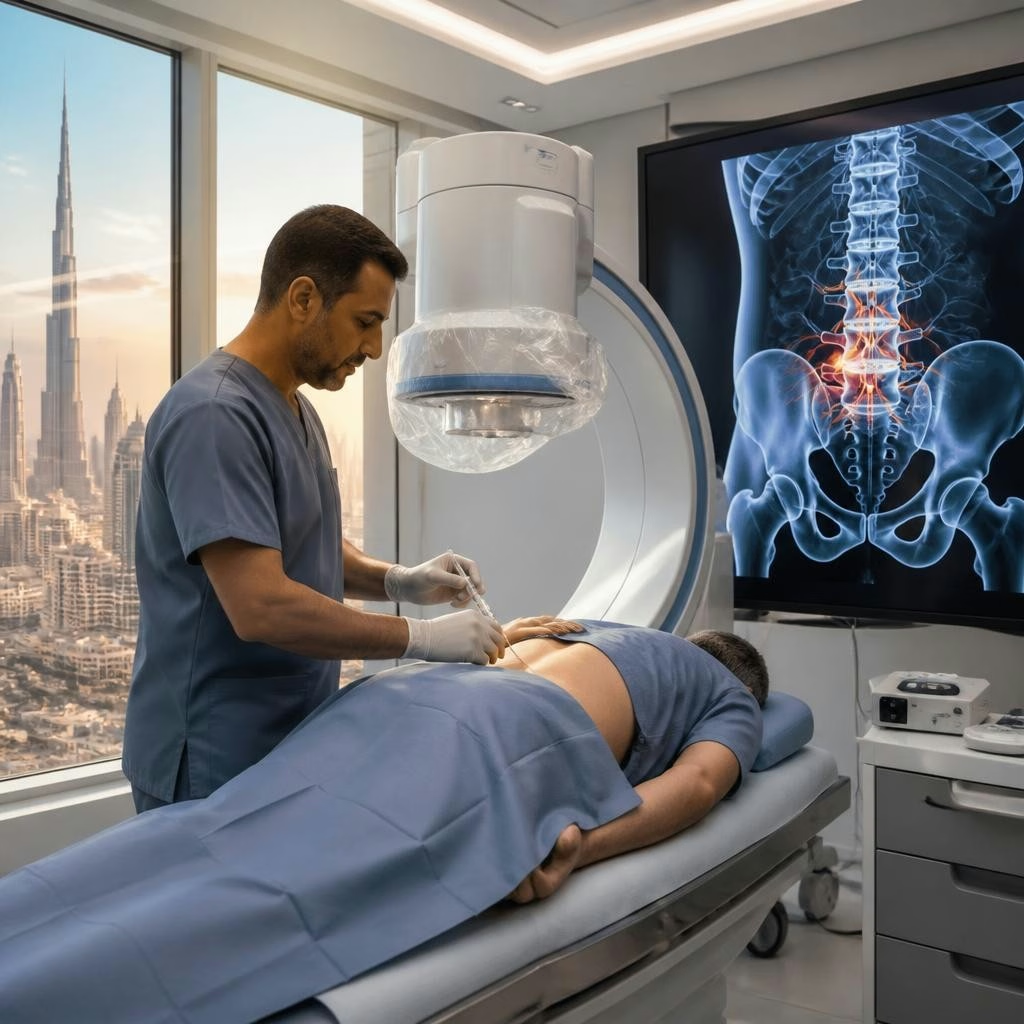
Why consider image-guided injections for spine pain?
Chronic neck or back pain affects daily life and can come from multiple sources—herniated discs, irritated nerve roots, facet joint arthritis or degenerative disc disease. Image-guided injections provide a minimally invasive way to deliver medication precisely where inflammation or nerve irritation is occurring. For many patients this targeted approach reduces pain and inflammation, improves function and creates a window of opportunity for rehabilitation that can delay or in some cases help avoid major surgery.
Common types of image-guided spinal injections
Two of the most commonly used procedures are epidural injections (targeting inflammation around nerve roots) and facet joint injections (targeting painful spinal joints). Other targeted nerve root blocks and medial branch injections may be offered when clinically appropriate. At an interventional orthopedic practice these procedures are performed under image guidance so the physician can place medication precisely into the intended space.
How the procedure is performed
An initial consultation reviews your symptoms and imaging (MRI or CT). On the day of the procedure, the site is cleaned and numbed and the injection is delivered while using live imaging to confirm correct placement. These injections are typically outpatient procedures done under local anaesthesia with optional light sedation. Most patients are observed briefly after the injection and can usually go home the same day with aftercare instructions.
Who is most likely to benefit?
Patients whose pain is driven by local inflammation or nerve irritation—for example sciatica from a contained disc herniation, facet joint pain, or pain from degenerative changes—are often good candidates. Image-guided injections can be particularly useful when conservative care (physiotherapy, medication) has not provided sufficient relief, when diagnostic clarity is required, or when pain is preventing participation in rehabilitation.
Typical outcomes and how long relief may last
Response varies by individual and by diagnosis. Some patients experience rapid, even near-immediate, pain relief; others notice gradual improvement over days. Relief can range from weeks to several months. In many cases an injection reduces pain enough to allow a focused rehabilitation program; some patients need a repeat injection or a different interventional approach. Injections are symptom-relieving and supportive—not always curative of the underlying structural issue.
How injections fit into a broader rehabilitation plan
Interventional procedures are most effective when paired with a structured recovery plan: guided physiotherapy, progressive strengthening and conditioning, activity modification, ergonomics, and sensible use of analgesics. The goal is to reduce pain, restore function and address contributing factors so that reliance on injections or surgery is minimised. Your specialist should outline measurable goals and a timeline for reassessment.
Limitations and when surgery remains necessary
While injections can postpone or prevent surgery for many patients, they are not a universal substitute. Surgery is usually considered when there is progressive neurological deficit (for example new or worsening weakness), severe structural instability, or ongoing severe pain that does not respond to multiple conservative and interventional therapies. Your specialist will explain when surgery is the safer or more durable option.
What to bring and questions to ask before an injection
Bring prior imaging studies (MRI/CT), a list of current medications and any relevant medical history. Useful questions include: what is the exact diagnostic goal of the injection, what medication will be used, what image guidance will be employed, what are the expected benefits and risks, how long relief is likely to last, and what the next steps will be if symptoms persist. Clear explanations and time for discussion are important aspects of quality care.
Choosing a spine pain specialist in Dubai
Look for a specialist with experience in interventional orthopedic care and a practice that offers coordinated follow-up and rehabilitation. Patients of the Emirates Hospital Group clinic in DHCC frequently note clear explanations, careful diagnosis and supportive follow-up from the medical and nursing team—qualities that matter when deciding about injections versus more invasive options. The clinic also maintains an emergency line for urgent issues outside scheduled hours.
Practical next steps and contact guidance
If chronic neck or back pain limits your activities, request a specialist consultation and bring recent imaging. A careful assessment will determine whether an image-guided injection is appropriate as part of a tailored plan to reduce pain and support rehabilitation. For urgent new neurological symptoms seek immediate evaluation. For routine or emergency enquiries, use the clinic’s DHCC location and the available 24/7 mobile/WhatsApp contact to arrange assessment and next steps.
Customer review


Article by
𝐃𝐫. 𝐅𝐚𝐫𝐢𝐯𝐚𝐫 𝐁𝐚𝐠𝐡𝐞𝐫𝐢
Orthopedic Surgeon & Sports Surgeon in Dubai – Specialized in Knee, Shoulder & Ankle Arthroscopy, Joint Replacement (Knee & Hip), Foot Surgery (Flat Foot & Hallux Valgus), and Trauma Surgery. With over 15 years of experience, practicing in Dubai under the Emirates Hospital Group. 📞 Emergency Line Available 24/7 – Our mobile and WhatsApp number is always active. Emergency cases are accepted anytime, regardless of the clinic schedule.