Tailbone (Coccyx) Pain in Dubai: Causes, Home Adjustments, and Modern Treatments
A practical guide for office workers, drivers, and postpartum patients explaining common causes of coccyx pain, ergonomic seating changes and cushions, simple home measures, and when to seek specialist assessment and targeted treatments in DHCC.

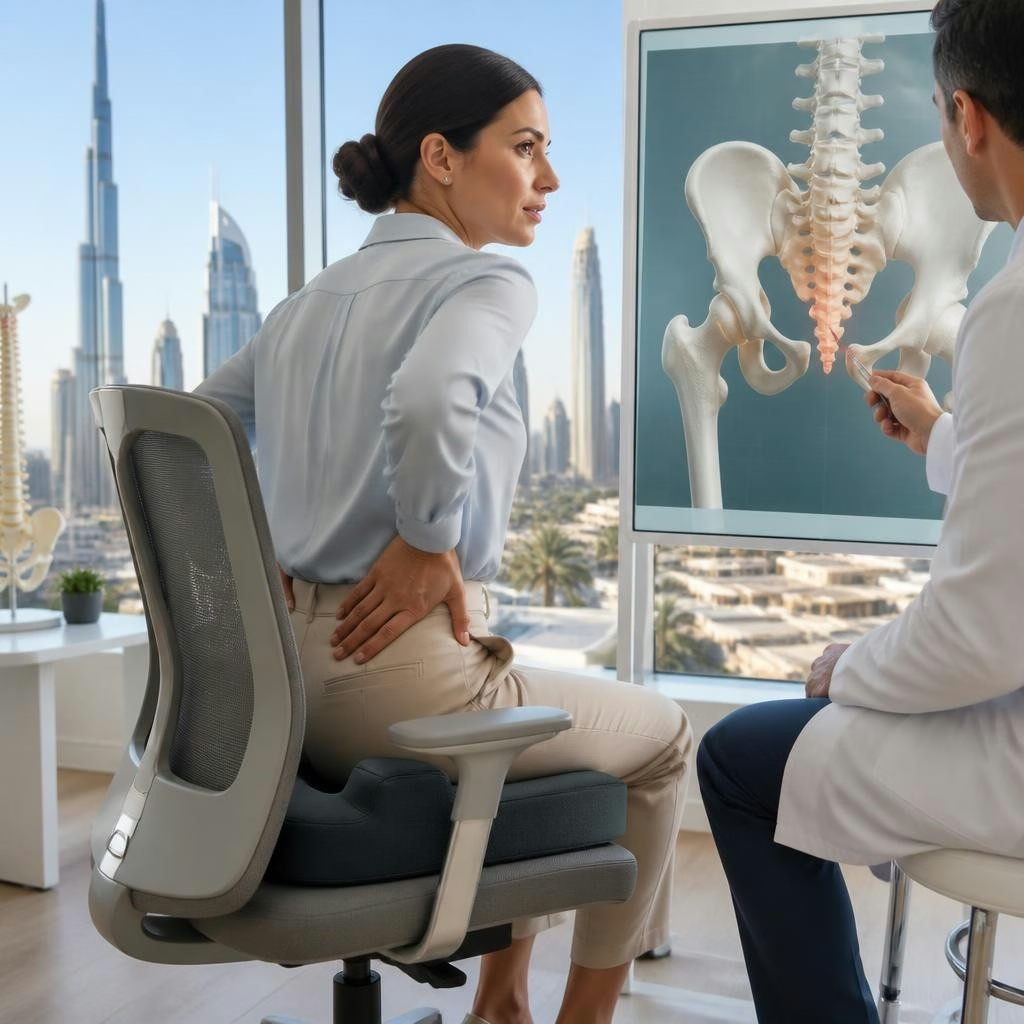
What is coccyx (tailbone) pain?
Coccyx pain—often called coccydynia—refers to discomfort at the very bottom of the spine where the small tailbone (coccyx) sits. Pain is typically worse when sitting, rising from a seated position, leaning back, or during activities that put pressure on the area. Understanding the location and typical triggers helps distinguish tailbone pain from other causes of low back or pelvic pain.
Who commonly experiences tailbone pain?
Certain groups are more likely to develop coccyx pain: people who sit for long periods (office workers, call-centre staff), professional or long-distance drivers, individuals who had a fall or direct blow to the buttocks, and many women after childbirth. Symptoms can also arise from prolonged poor posture, repetitive strain, or nearby spine and pelvic conditions that refer pain to the coccyx.
Frequent causes to consider
Common causes include acute trauma (a fall or impact), prolonged pressure from sitting on hard surfaces, childbirth-related strain or bruising, and inflammatory or degenerative changes at the coccyx joints. Less commonly, pain can be referred from lower lumbar discs, the sacroiliac joint, or pelvic floor dysfunction. A careful clinical assessment helps pinpoint the most likely source.
Symptoms and warning signs that need prompt attention
Typical symptoms are localized tailbone pain with activities described earlier, sometimes radiating to the buttocks. Seek urgent assessment if you have severe neurological signs (numbness or weakness in the legs), loss of bowel or bladder control, high fever, unexplained weight loss, or progressive worsening despite basic measures—these can indicate conditions that require immediate investigation.
Simple home measures that often help
Start with conservative self-care: avoid prolonged sitting on hard surfaces, use brief standing breaks every 20–30 minutes, and alternate positions. Apply ice for the first 48 hours after an acute injury, then switch to heat to relax tense muscles. Over-the-counter analgesics can be used as directed. Gentle walking and avoiding heavy lifting usually aid recovery, but stop painful movements and consult a specialist if pain persists.
Choosing the right cushion and sitting posture
A well‑chosen cushion can make a big difference. Donut-style cushions with a cut-out under the coccyx or wedge cushions that shift weight forward reduce direct pressure. Sit with hips and knees at roughly the same height; use lumbar support to maintain a slight forward pelvic tilt, and adjust seat height so feet rest flat on the floor. For drivers, add a thin cushion and take regular breaks to stand, stretch, and walk.
Postpartum considerations and pelvic health
Coccyx pain after childbirth is common and often responds to the same conservative measures: posture adjustments, cushions, activity modification, and graded walking. Pelvic floor physiotherapy can be particularly helpful when pain coexists with pelvic floor tension or dysfunction. If pain does not improve within a few weeks or limits daily caregiving, seek specialist review to plan tailored treatment.
Non-surgical and minimally invasive treatments available in Dubai
When conservative care is insufficient, targeted non‑surgical options can be effective. These include guided injections—such as peri‑coccygeal, intra-articular, or image-guided epidural injections—to reduce inflammation and pain, and interventional orthopedic procedures when indicated. Local services also offer physiotherapy, pelvic rehabilitation, and regenerative options in selected cases. One patient report from the clinic noted rapid pain relief after a targeted epidural injection, illustrating how interventional treatment can provide meaningful benefit for some individuals.
When imaging and specialist assessment in DHCC are appropriate
If pain persists beyond several weeks despite self-care, follows a direct trauma, or is accompanied by concerning symptoms, specialist assessment in Dubai Healthcare City (DHCC) is advisable. A specialist may order plain X-rays to check for fractures or coccygeal alignment, and MRI when soft-tissue, disc, or neurological causes are suspected. Imaging helps guide whether injections, specialised physiotherapy, or other interventions are needed.
What to expect from a specialist consultation and follow-up
A specialist consultation includes a focused history and physical exam, assessment of pelvic and spinal contributions to pain, and a personalised treatment plan. The clinic in DHCC emphasises clear explanation, coordinated care, and follow-up—patients report thorough consultations and attentive post‑treatment monitoring. If needed, the team can arrange interventional procedures, rehabilitation, and ongoing support; emergency contact lines are available 24/7 for urgent issues.
Practical next steps and when to make an appointment
If your tailbone pain is new, try the home measures described above for up to a few weeks. If pain limits work, driving, sleep, or caregiving; follows a fall; or shows red-flag symptoms, arrange specialist review sooner. When booking, mention your symptoms, any recent trauma or childbirth, and prior treatments—this helps the specialist prioritise assessments and investigations for an efficient plan of care.
Customer review


Article by
𝐃𝐫. 𝐅𝐚𝐫𝐢𝐯𝐚𝐫 𝐁𝐚𝐠𝐡𝐞𝐫𝐢
Orthopedic Surgeon & Sports Surgeon in Dubai – Specialized in Knee, Shoulder & Ankle Arthroscopy, Joint Replacement (Knee & Hip), Foot Surgery (Flat Foot & Hallux Valgus), and Trauma Surgery. With over 15 years of experience, practicing in Dubai under the Emirates Hospital Group. 📞 Emergency Line Available 24/7 – Our mobile and WhatsApp number is always active. Emergency cases are accepted anytime, regardless of the clinic schedule.