Echocardiogram in Kollam: Why Your Doctor Recommends It and How to Read the Results
A clear, patient-friendly guide to what an echocardiogram (echo) is, why your cardiologist may recommend one, how it is performed at Dr. Sujay's Heart Care Clinic in Kollam, how to prepare, and how to understand common terms in an echo report.

What an echocardiogram is and why doctors order it
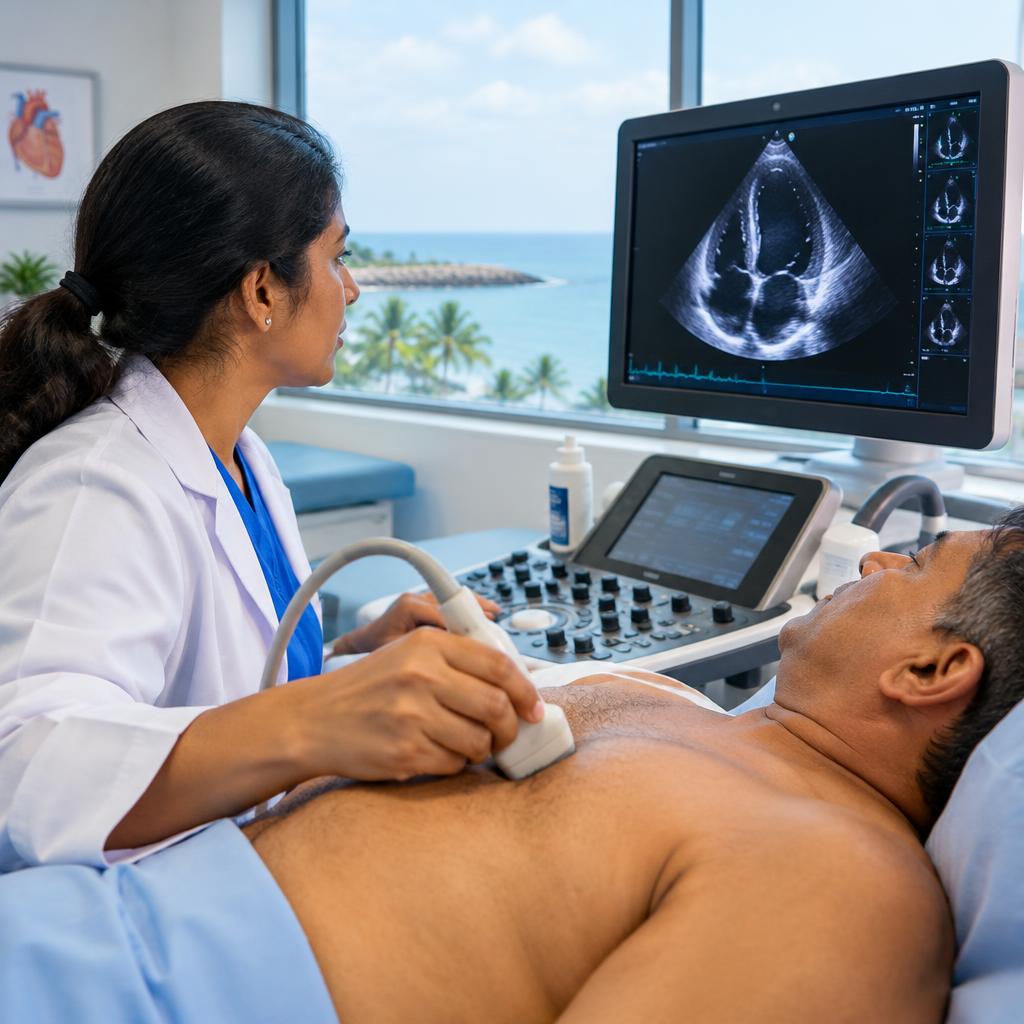
An echocardiogram (often called an echo) is a non-invasive ultrasound scan that shows the heart’s structure and how well it pumps. Cardiologists order an echo to investigate symptoms such as shortness of breath, chest discomfort, a new heart murmur, or unexplained fatigue. It is also commonly used when doctors suspect valve problems, heart muscle weakness, or heart failure, and to monitor known heart conditions over time.
How an echo is done at Dr. Sujay’s Heart Care Clinic
At this clinic in Kollam an echocardiogram is performed using standard ultrasound equipment and is reported by a senior cardiologist, ensuring the images and findings are assessed by a specialist. During the test you lie on an examination couch while a sonographer or cardiology technician applies gel and moves a small probe across your chest to capture images. The procedure is non‑invasive and typically comfortable. The clinic also offers complementary cardiac tests such as ECG and Holter monitoring when the cardiologist needs more information.
How to prepare and what to bring
Preparation for a transthoracic echo is usually simple: wear loose, comfortable clothing and bring any current medicines and previous cardiac test reports (ECG, prior echos, blood work) if you have them. Fasting is not generally required, but follow any specific instructions given when you make the appointment. Arrive a little early to complete registration and bring a list of questions so you can make the most of the doctor’s explanation after the scan.
How to interpret common phrases in an echo report — and what to ask your doctor
Echo reports use terms to describe structure and function. Common phrases include references to chamber sizes (normal, enlarged), valve findings (regurgitation or stenosis described as mild/moderate/severe), and pumping ability (often reported as preserved/normal or reduced). You may also see mention of wall motion abnormalities (areas of the heart that do not move well), left ventricular hypertrophy (thickened heart muscle), or pericardial effusion (fluid around the heart). These terms describe observations, not prescriptions. A report may conclude with recommendations for follow‑up tests, lifestyle measures, or treatment options. Ask your cardiologist to explain what each finding means for your symptoms and daily life, and whether medicines or further testing are needed. Many patients at this clinic note clear explanations from the doctor and that medications are prescribed only when appropriate, so don’t hesitate to request a plain‑language summary of your results.
Next steps after your echo
Keep a copy of the echo report and any images for your records and follow the cardiologist’s advice about monitoring or treatment. If you need an echo in Kollam, Dr. Sujay’s Heart Care Clinic on Anjili Road performs and reports echocardiograms locally and can coordinate further testing with affiliated hospitals if required. If anything in your report is unclear or concerning, arrange a follow‑up discussion with the cardiologist—understanding the findings is the first step toward appropriate care.
Customer review


Article by
Dr.Sujay's Heart Care Clinic
Dr. Sujay's Heart Care Clinic is a professional cardiology practice specialising in a comprehensive health care approach. We focus on disease prevention, cardiac rehabilitation, patient education, and scientific medical care. All cardiac diagnostic testing can be performed in our clinic or one of our affiliated hospitals.