Blood Pressure Monitoring at Home: Correct Technique and Tracking Tips for Kollam Families
Practical guidance for choosing a home BP monitor, taking accurate measurements, keeping a useful BP log, avoiding common mistakes, and sharing readings with your Kollam cardiologist during OP or review visits.
Why home blood pressure monitoring matters
Regular home blood pressure monitoring helps you and your cardiologist see patterns that a single clinic reading can miss. For families in Kollam, routine measurements can guide lifestyle choices and medication adjustments, and provide reassurance between visits. Many patients who visit Dr. Sujay Renga’s clinic report feeling confident and well supported; the clinic’s staff are noted for being responsive and efficient, which makes sharing and reviewing home readings straightforward during OP consultations and review appointments.
How to choose the right BP machine
Choose an automatic, upper-arm blood pressure monitor with a cuff that fits your arm. Upper-arm monitors are generally more reliable than wrist models for most adults. Look for a device with a clear display and memory or the ability to export readings to a phone or paper log. Make sure the cuff size is appropriate — most devices include a range for arm circumference. If you are unsure which model or cuff size to buy, bring the device to your clinic visit so staff can verify fit and demonstrate correct use.
Preparing to measure: simple steps for reliable readings
To reduce variability, follow a consistent routine each time you measure: sit quietly for 5 minutes with your back supported; place both feet flat on the floor; avoid caffeine, smoking and heavy activity for 30 minutes beforehand; and empty your bladder if needed. Take measurements at the same times each day (for example, first thing in the morning before medication and in the evening). Consistency in timing and conditions makes it easier for your cardiologist to interpret trends.
Correct measurement technique
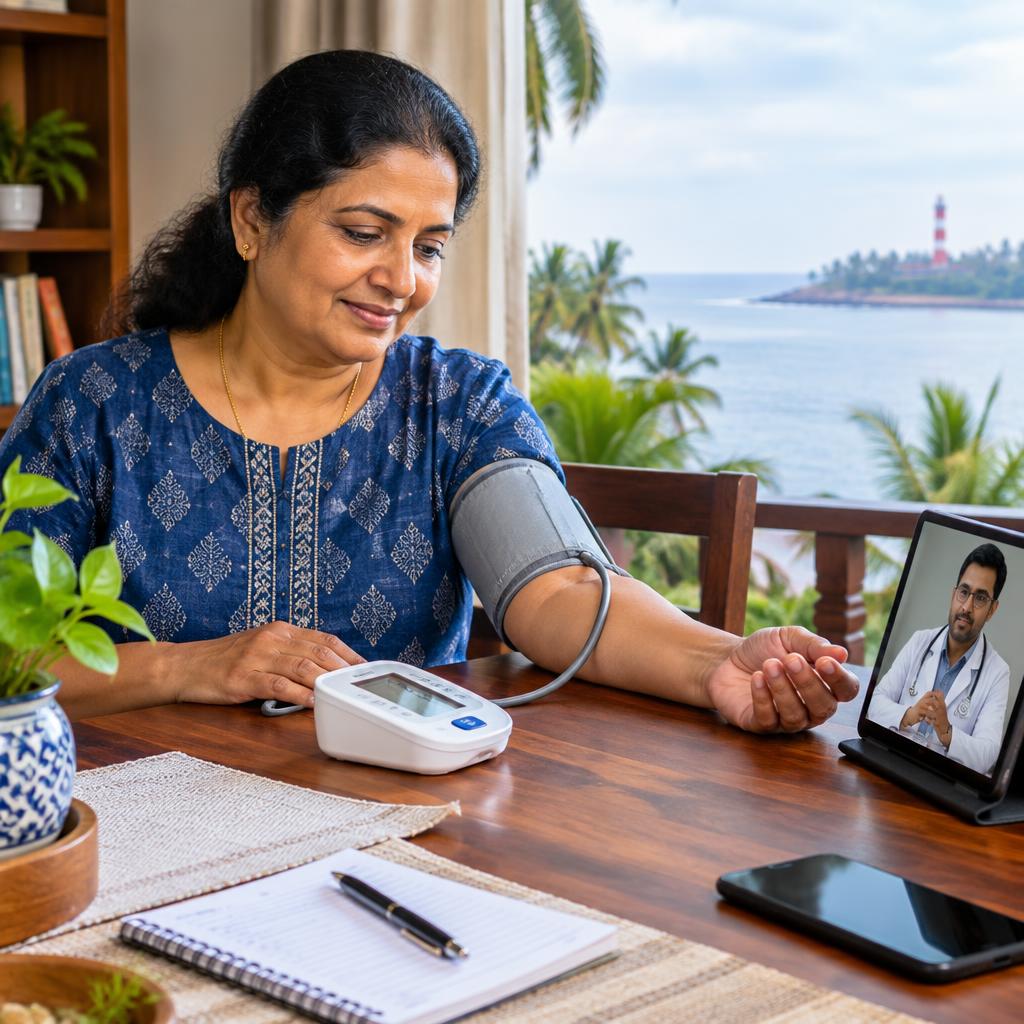
Place the cuff on a bare upper arm about 2–3 cm above the elbow crease and ensure it’s snug but not overly tight. Rest your arm on a table so the cuff is at heart level. Sit quietly and do not talk during the reading. Take two measurements, one minute apart, and record both values; if they differ substantially, take a third and note which readings you used. Always follow the manufacturer’s instructions for your specific device.
Keeping a useful BP log
Record each reading with date, time, which arm was used, and any relevant notes (symptoms, medication taken, recent activity). A simple paper notebook, spreadsheet or a smartphone app can work — choose what you’ll use consistently. When you come for an OP consultation or review at the clinic, bring the log so the cardiologist can see daily patterns, morning versus evening differences, and any symptomatic episodes. A clear log helps guide treatment decisions more effectively than isolated numbers.
Common mistakes to avoid
Avoid measuring over clothing, using a cuff that's too small or too large, and taking readings while standing or with the arm unsupported. Don’t rely on a single reading to judge control — trends matter. Measuring immediately after exercise, caffeine, or heavy meals can give misleadingly high values. Wrist monitors can be convenient but are more prone to error unless properly validated and used exactly as instructed. If you’re unsure about technique or your device’s accuracy, the clinic staff can help check your method and the cuff fit during a visit.
Sharing readings with your Kollam cardiologist
When you visit for an OP consultation or review, bring your BP log and a list of current medications and doses. Point out any patterns or days when you felt unwell. If home readings are inconsistent or symptoms suggest masked or white-coat hypertension, your cardiologist may discuss ambulatory BP monitoring (a service available at the clinic) or adjust follow-up plans. Clear, consistent logs and open communication make appointments more productive and help the care team tailor advice to your situation.
Customer review


Article by
Dr.Sujay Renga
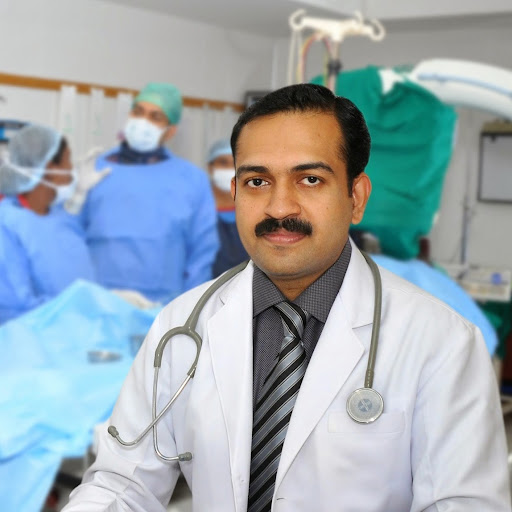
Dr. Sujay Renga is a Senior Interventional Cardiologist at NS Memorial Institute of Medical Sciences, a 500-bed multispecialty tertiary care centre in Kollam, Kerala. In addition he runs his own clinic at the heart of Kollam city. Dr. Renga holds an MD in Internal Medicine from Government Medical College, Thiruvananthapuram, and a DM in Cardiology from the Post Graduate Institute of Medical Education and Research (PGIMER), Chandigarh. He has also done postgraduate diploma in medico legal systems and quality in healthcare from Symbiosis university, Pune. He is a fellow of American College of Cardiology (FACC), European Society of Cardiology (FESC) and Scociety for Cadiovascular Angiography and Interventions (FSCAI).