ECG vs HOLTER vs Ambulatory BP Monitoring: Which Heart Test Do You Really Need?
A clear, practical guide to what ECG, HOLTER and ambulatory blood pressure monitoring show, who typically needs each test, how long they take, and how these tests are used in everyday practice at Dr. Sujay Renga’s cardiology clinic in Kollam.

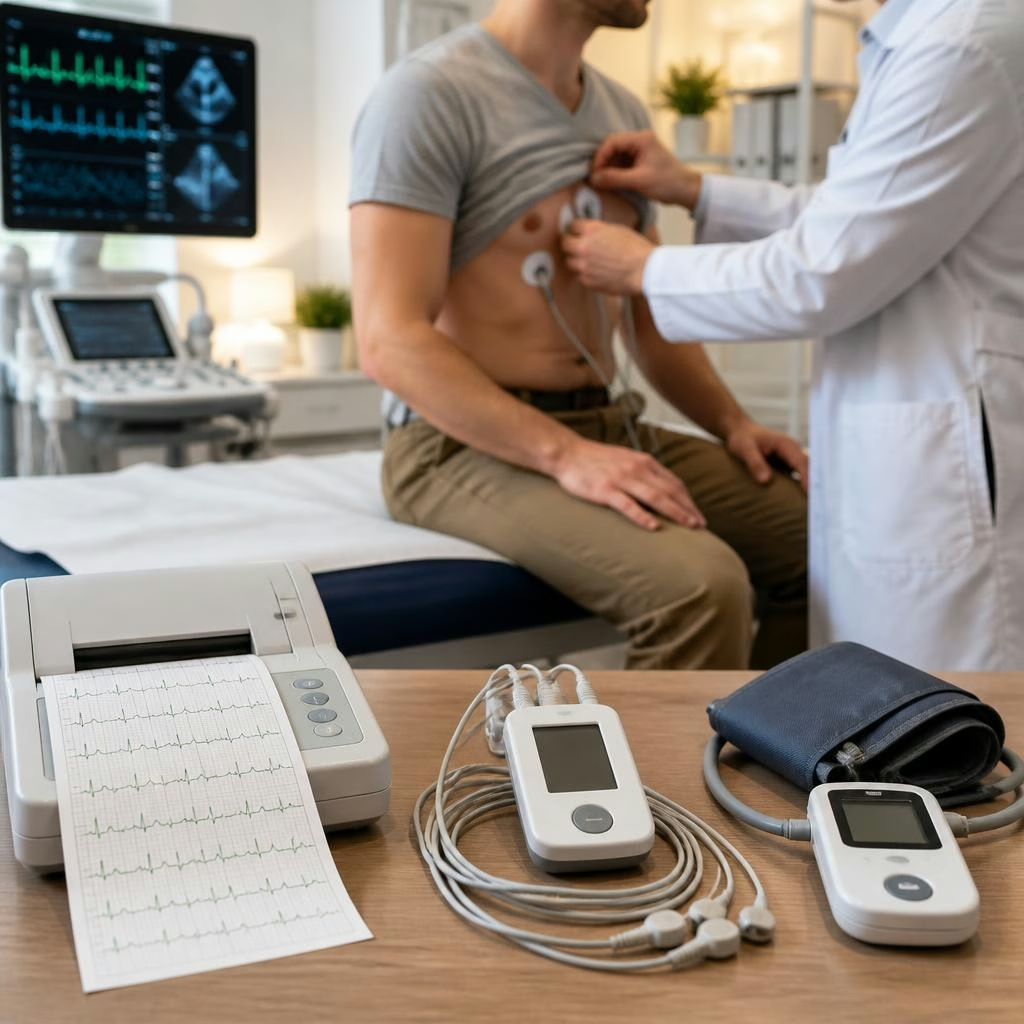
Introduction: choosing the right test for your heart
When you or a family member has palpitations, dizziness, chest discomfort or concerns about blood pressure, your cardiologist will decide which diagnostic test will give the clearest answer. Three commonly used outpatient tests are the resting ECG, the HOLTER monitor and ambulatory blood pressure monitoring. Each serves a different purpose: the ECG captures a brief snapshot of the heart’s electrical activity, the HOLTER records continuous rhythm over a day or more, and ambulatory BP monitoring tracks blood pressure over a 24‑hour period to reveal patterns missed at a single clinic reading.
Quick comparison — what to expect from each test
ECG: A short, painless recording (often under 10 minutes) that shows heart rhythm and electrical changes. Best for immediate assessment when symptoms are present during the visit. HOLTER: A portable ECG recorder worn continuously, typically for 24–48 hours, to detect intermittent arrhythmias or symptoms that don't occur during a clinic visit. Ambulatory BP monitoring: A cuff and recorder worn for 24 hours that measures blood pressure at regular intervals to identify sustained hypertension, white‑coat effects, or nighttime blood pressure patterns. Each test complements the others rather than replacing them.
ECG: what it shows, how long it takes, and who needs it
A standard ECG (electrocardiogram) records the heart’s electrical activity using surface electrodes. It helps detect common problems such as abnormal rhythms, heart rate issues, and signs that suggest prior or acute changes in the heart. Because it is quick, noninvasive and widely available, an ECG is the first-line test for new chest pain, palpitations during the visit, fainting, or routine pre‑operative checks. At Dr. Sujay’s clinic an ECG is commonly done during the initial outpatient consultation when there are active symptoms or to complement a clinical exam.
HOLTER monitoring: spotting intermittent rhythm problems
A HOLTER monitor is a continuous ambulatory ECG recorder usually worn for 24 to 48 hours (occasionally longer when clinically indicated). It is useful when symptoms are intermittent — for example, brief palpitations, unexplained lightheadedness or suspected pauses that a resting ECG missed. The HOLTER can quantify the frequency and type of arrhythmias and correlate them with a symptom diary. Patients should carry on with normal daily activities while wearing the device; the clinic interprets the recording and discusses any significant findings during follow‑up.
Ambulatory BP monitoring: detecting patterns a single reading can miss
Ambulatory blood pressure monitoring (ABPM) measures blood pressure at regular intervals over 24 hours and produces a profile of daytime and nighttime pressures. ABPM is recommended when a single clinic reading is inconsistent with symptoms, when white‑coat hypertension (elevated readings only in clinical settings) is suspected, or when assessing the effectiveness of medication and nocturnal blood pressure control. This test provides a more reliable estimate of average blood pressure than isolated measurements and helps guide treatment decisions.
How these tests are used together in everyday cardiology practice
In routine practice at a cardiac clinic in Kollam, these tests are selected based on the clinical question. An ECG is the immediate, low‑burden first step. If rhythm symptoms are episodic, a HOLTER is arranged to capture events during normal life. If there is uncertainty about true hypertension or treatment response, ABPM gives a full 24‑hour view. Often the clinician combines results — for example, a normal resting ECG but an abnormal HOLTER tracing, or high average ABPM readings prompting medication adjustment. The goal is targeted testing: use the least invasive test that will reliably answer the clinical question.
Preparing for your test and what to expect at the clinic
Preparation is straightforward. For ECG and HOLTER: wear comfortable clothing and tell staff about any implanted devices or skin allergies; avoid applying creams to electrode sites. For ABPM: wear loose clothing so the cuff can inflate, and keep a brief diary of activities and sleep. Tests are supervised by trained staff and followed by a review with the cardiologist. Patients who have visited Dr. Sujay’s clinic commonly note clear explanations, attentive listening and responsive staff, and some specifically highlight the clinic as a trusted place for blood pressure and cardiac checkups — feedback that reflects the clinic’s routine use of these tests to reach accurate, confidence‑building diagnoses.
Customer review


Article by
Dr.Sujay Renga
Dr. Sujay Renga is a Senior Interventional Cardiologist at NS Memorial Institute of Medical Sciences, a 500-bed multispecialty tertiary care centre in Kollam, Kerala. In addition he runs his own clinic at the heart of Kollam city. Dr. Renga holds an MD in Internal Medicine from Government Medical College, Thiruvananthapuram, and a DM in Cardiology from the Post Graduate Institute of Medical Education and Research (PGIMER), Chandigarh. He has also done postgraduate diploma in medico legal systems and quality in healthcare from Symbiosis university, Pune. He is a fellow of American College of Cardiology (FACC), European Society of Cardiology (FESC) and Scociety for Cadiovascular Angiography and Interventions (FSCAI).