Echocardiogram in Kollam: Purpose, Procedure, and How to Read Your Report at Dr. Sujay Renga’s Clinic
A clear, practical guide to why a cardiologist orders an echocardiogram, how the test is done at Dr. Sujay Renga’s clinic in Kollam, what to bring, and how to understand common findings so you can discuss results confidently with your doctor.
What an echocardiogram is and why it matters
An echocardiogram (often shortened to “echo”) is an ultrasound of the heart that shows its structure and motion. Cardiologists use echo images to evaluate heart muscle function, chamber size, valve appearance and blood flow patterns. For patients in Kollam seeking cardiac care, an echo is a key, non‑invasive tool to help diagnose causes of breathlessness, chest discomfort, palpitations, or to monitor known heart conditions.
When your cardiologist will recommend an echo
Your doctor may order an echocardiogram when symptoms, a physical exam, or other tests such as an ECG suggest a potential heart problem. Common reasons include checking heart function after a heart attack, investigating suspected valve disease, assessing long‑term high blood pressure effects on the heart, or following up on previously diagnosed cardiac conditions. At Dr. Sujay Renga’s clinic these decisions are made in the context of a clinical examination and any prior test results.
How the test is performed at the clinic
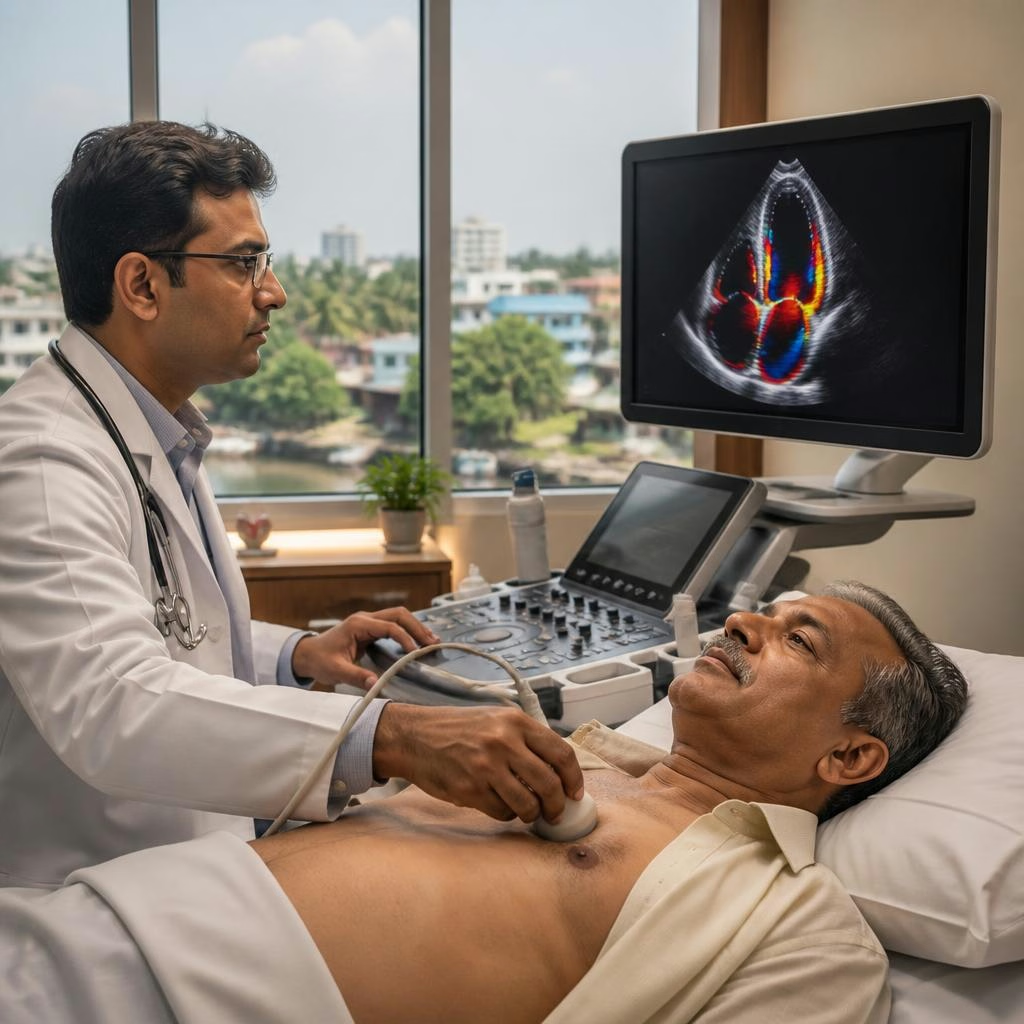
A standard transthoracic echocardiogram is a simple, non‑invasive scan performed by placing a probe (transducer) on the chest. Gel is used to improve contact and the sonographer moves the probe to obtain images from different angles. The test is comfortable for most people and does not involve needles or radiation. Depending on clinical need, your cardiologist may also use the clinic’s other tests—ECG, Holter monitoring, ambulatory blood pressure monitoring or blood tests—to build a fuller picture alongside the echo images.
Preparing for your echocardiogram
Preparation for a standard transthoracic echo is minimal. Wear clothing that is easy to remove from the upper body or layers that can be adjusted for access to the chest. Bring previous cardiac reports and imaging if you have them. If your cardiologist recommends a specialized form of echo or an additional procedure, the clinic staff will give specific instructions—always follow those for the safest and most accurate testing.
What to expect during and after the scan
During the scan you will lie on an examination couch while the technician captures images. You may be asked to change position or hold your breath briefly to get clearer views. After the scan the images are reviewed by the cardiologist, who integrates echo findings with your symptoms, examination and any other tests. The clinic team aims to communicate results clearly and to plan any follow‑up or treatment together with you.
How cardiologists use echo results to plan treatment
Echo reports describe the heart’s pumping function, valve appearance and blood flow. Cardiologists use these findings to determine whether medical treatment, monitoring, lifestyle changes or further testing are needed. For example, an echo can guide decisions about medications for heart failure, timing of specialist procedures for valve disease, or the need for closer ambulatory monitoring. Your cardiologist will explain how the echo findings influence next steps in your specific case.
Reading common terms on an echo report — what to ask
Echo reports include terms such as chamber size, valve function, and measures of heart pumping. Rather than focusing on unfamiliar words, ask your doctor: what do the main findings mean for my symptoms, is treatment needed now, and what should we monitor going forward? Bring the report and any prior tests to your consultation. Many patients at the clinic note that the doctor takes time to examine each patient personally and explains results clearly, which helps them feel informed and reassured.
Practical checklist and next steps
Before your appointment: bring ID, a list of medications, prior cardiac reports and any recent test results. During the consultation: request that the cardiologist explain the echo findings in plain language and how they affect treatment options. After the visit: follow the recommended plan—whether it is lifestyle advice, medication changes, further tests such as Holter monitoring, or a scheduled follow‑up. If you have questions when you get home, contact the clinic staff; patients frequently report helpful, coordinated support from the clinic team at Dr. Sujay’s Heart Care Clinic in Kollam.
Customer review


Article by
Dr.Sujay Renga
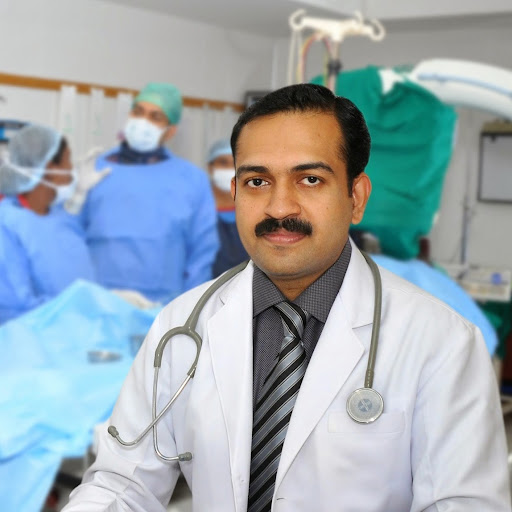
Dr. Sujay Renga is a Senior Interventional Cardiologist at NS Memorial Institute of Medical Sciences, a 500-bed multispecialty tertiary care centre in Kollam, Kerala. In addition he runs his own clinic at the heart of Kollam city. Dr. Renga holds an MD in Internal Medicine from Government Medical College, Thiruvananthapuram, and a DM in Cardiology from the Post Graduate Institute of Medical Education and Research (PGIMER), Chandigarh. He has also done postgraduate diploma in medico legal systems and quality in healthcare from Symbiosis university, Pune. He is a fellow of American College of Cardiology (FACC), European Society of Cardiology (FESC) and Scociety for Cadiovascular Angiography and Interventions (FSCAI).