Heart Attack vs. Gastric Pain: How People in Kollam Can Tell the Difference and When to Rush to Hospital
A clear, practical guide to telling cardiac chest pain apart from common gas or acidity symptoms, the warning signs that need immediate attention, and where to seek urgent cardiology help in Kollam.
Why this matters
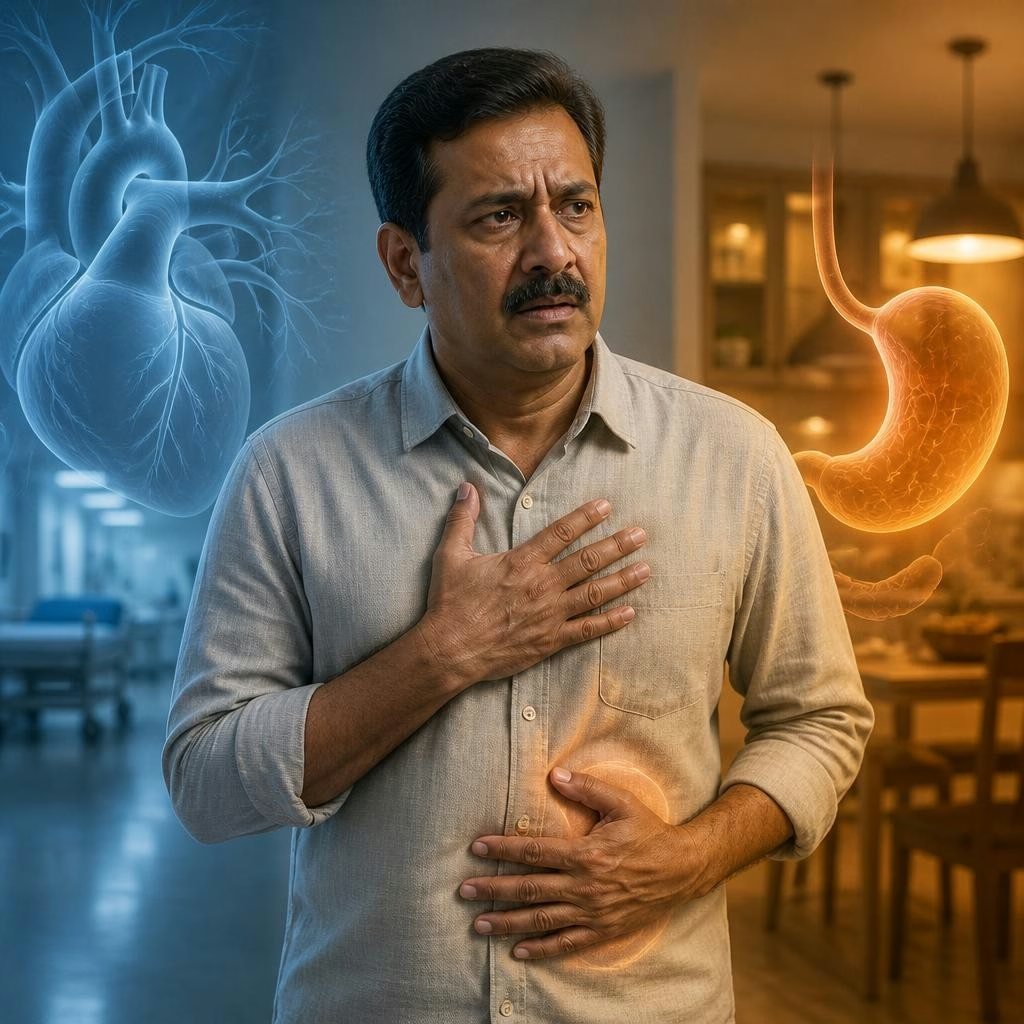
Chest or upper abdominal discomfort can come from the heart or from the stomach and nearby structures. Because some symptoms overlap, it can be hard to decide whether to wait, see a doctor, or go straight to the hospital. This article explains practical differences between cardiac pain and gastric pain, lists warning signs that should never be ignored, and outlines what local evaluation in Kollam typically involves.
Why heart and gastric pain can feel similar
Both heart-related pain and acidity or gas can present as pressure, burning, or discomfort in the chest or upper abdomen. Shared nerve pathways and the proximity of the esophagus, stomach and heart mean pain may be referred or felt in similar areas. Stress, heavy meals, or exertion can trigger either condition, so context and the pattern of symptoms are important to identify the cause.
Features that suggest cardiac (heart) pain
Pain more likely to be cardiac often feels like a heavy pressure, squeezing or tightness across the centre of the chest. It may come on with physical exertion or emotional stress, and can last several minutes or recur. Typical accompanying signs include breathlessness, sweating, nausea, lightheadedness, or pain that radiates to the jaw, neck, shoulder or down the left arm. Sudden collapse or fainting with chest discomfort is especially concerning.
Features that suggest gastric or acid-related pain
Pain from acid reflux, gastritis or trapped gas is often described as a burning sensation, sharp localized pain, or bloating and may improve after antacids or belching. It commonly occurs soon after meals and is more likely to be linked to particular foods, lying down or bending forward. Nausea, burping and an acidic taste in the mouth are more typical for upper gastrointestinal causes than for heart attacks.
Red flags — when to go straight to the emergency department
Seek immediate emergency care (call local emergency services or go to the nearest hospital) if chest pain is sudden, severe, or accompanied by any of the following: shortness of breath, profuse sweating, fainting or weakness, persistent pain radiating to jaw/neck/arm, sudden vomiting together with chest pain, or rapid/irregular heartbeat. If there is any doubt and the symptoms are worrying or progressing, treat it as an emergency — prompt evaluation saves lives.
How chest pain is evaluated in Kollam
Initial assessment for possible cardiac pain usually involves a clinical exam plus an ECG, which can be done quickly in an emergency department or a cardiology clinic. Further evaluation may include blood tests, an echocardiogram to assess heart function, ambulatory monitoring for rhythm or blood pressure issues, and specialist consultation. Dr. Sujay Renga practices in Kollam (Dr. Sujay’s Heart Care Clinic, Opp. Sankers Hospital) and is also affiliated with the NS Memorial Institute of Medical Sciences; routine tests listed by the clinic include ECG, echocardiogram, HOLTER monitoring, ambulatory BP monitoring and blood test packages suitable for cardiac assessment.
Practical steps to take now and afterward
If you have mild, clearly digestive symptoms that respond to antacids and are stable, monitor at home and seek outpatient review if symptoms persist. If symptoms are severe or match any red flag, call emergency services immediately. For non-emergent but urgent advice during clinic hours, you may contact a cardiologist in Kollam to arrange rapid assessment. Many patients appreciate clear explanations and calm reassurance from their cardiologist and staff when deciding next steps — that supportive approach can help families make the right decision quickly.
Customer review


Article by
Dr.Sujay Renga
Dr. Sujay Renga is a Senior Interventional Cardiologist at NS Memorial Institute of Medical Sciences, a 500-bed multispecialty tertiary care centre in Kollam, Kerala. In addition he runs his own clinic at the heart of Kollam city. Dr. Renga holds an MD in Internal Medicine from Government Medical College, Thiruvananthapuram, and a DM in Cardiology from the Post Graduate Institute of Medical Education and Research (PGIMER), Chandigarh. He has also done postgraduate diploma in medico legal systems and quality in healthcare from Symbiosis university, Pune. He is a fellow of American College of Cardiology (FACC), European Society of Cardiology (FESC) and Scociety for Cadiovascular Angiography and Interventions (FSCAI).