Palpitations, Skipped Beats, and Fast Heart Rate: When to Seek a Cardiologist in Kollam
A practical guide to common causes of palpitations, simple home checks, warning signs that need prompt cardiology review, and how tests such as ECG and Holter at a Kollam clinic can help identify the cause.
Understanding Palpitations and When They Happen
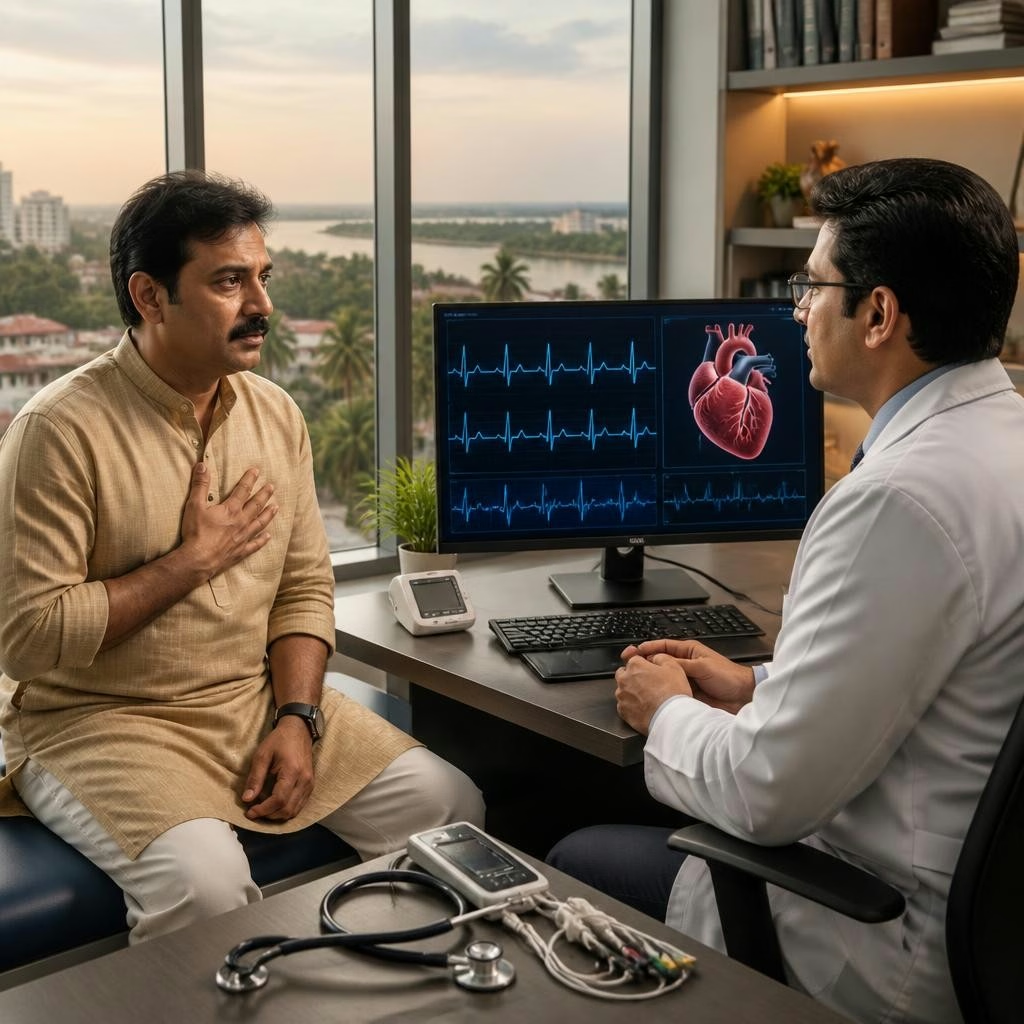
Palpitations are the sensation of your heart beating irregularly, skipping, fluttering, or racing. Many people experience them occasionally and they can be caused by temporary triggers such as stress, caffeine, lack of sleep, or exercise. While most palpitations are benign, recurrent, prolonged, or symptom-associated palpitations merit medical evaluation to rule out an underlying cardiac condition.
Common Causes to Consider
There are several potential contributors to palpitations and fast heart rate. These include rhythm disturbances (arrhythmias), high or fluctuating blood pressure, metabolic or hormonal issues, side effects of some medications or stimulants, dehydration, and anxiety. Structural heart problems or prior cardiac disease can also produce palpitations. A careful clinical assessment helps prioritise which causes are more likely in an individual patient.
Simple Checks You Can Do at Home
If you feel palpitations, note when they occur, how long they last, and any accompanying symptoms such as chest discomfort, breathlessness, dizziness, sweating or fainting. Try to identify triggers (for example, caffeine, heavy meals, alcohol, or stressful events). Check your pulse at rest and during symptoms if possible, and record whether the rhythm feels regular or irregular. Keeping a short diary of episodes—date, time, activity, and related symptoms—can be very helpful for a cardiology appointment.
Warning Signs That Need Prompt Cardiology Review
Seek urgent medical attention if palpitations are accompanied by chest pain, fainting or near-fainting, sudden severe breathlessness, weakness, or a prolonged sensation of a very fast heartbeat. New or worsening symptoms in someone with known heart disease, or palpitations that limit daily activities, should prompt a timely cardiology evaluation rather than waiting for a routine visit.
How ECG, Holter and Other Tests Help Find the Cause
Initial evaluation commonly starts with an ECG, which records the heart’s electrical activity at the time of the test and can identify many rhythm abnormalities. If symptoms are intermittent, ambulatory monitoring such as a Holter (continuous 24–48 hour recording) or longer event monitors can capture irregularities that a single ECG may miss. An echocardiogram evaluates heart structure and function and can detect conditions that predispose to arrhythmia. Ambulatory blood pressure monitoring and appropriate blood tests can identify contributing issues such as blood pressure variability or metabolic causes. Your cardiologist will recommend the combination of tests that best fits the pattern of your symptoms.
Why Choose a Local Cardiologist in Kollam and What to Expect
Dr. Sujay Renga practises at Dr. Sujay’s Heart Care Clinic in central Kollam and is also a Senior Interventional Cardiologist associated with NS Memorial Institute of Medical Sciences. The clinic offers OP consultations, ECG, Holter monitoring, echocardiography, ambulatory blood pressure monitoring and blood test packages that support a focused, local evaluation. Patients commonly report that clear explanations, a compassionate approach and coordinated staff help them feel reassured during assessment and testing.
Preparing for an Appointment and Practical Next Steps
Before your visit, bring a list of symptoms with timing and triggers, a current medication list, and any prior test results if available. Avoid excessive caffeine or stimulants before monitoring starts, and follow any specific instructions given when a Holter or ambulatory monitor is prescribed. If you experience any urgent warning signs, seek immediate care. For non-urgent but persistent palpitations, book an OP consultation to discuss testing options and a plan tailored to your situation.
Article by
Dr.Sujay Renga
Dr. Sujay Renga is a Senior Interventional Cardiologist at NS Memorial Institute of Medical Sciences, a 500-bed multispecialty tertiary care centre in Kollam, Kerala. In addition he runs his own clinic at the heart of Kollam city. Dr. Renga holds an MD in Internal Medicine from Government Medical College, Thiruvananthapuram, and a DM in Cardiology from the Post Graduate Institute of Medical Education and Research (PGIMER), Chandigarh. He has also done postgraduate diploma in medico legal systems and quality in healthcare from Symbiosis university, Pune. He is a fellow of American College of Cardiology (FACC), European Society of Cardiology (FESC) and Scociety for Cadiovascular Angiography and Interventions (FSCAI).