When to See a Heart Specialist in Kollam for High Blood Pressure — Beyond Just Changing Tablets
Practical guidance for people in Kollam on when high blood pressure needs a cardiology review, what a cardiologist evaluates, and how tests such as ambulatory blood pressure monitoring help fine‑tune treatment.

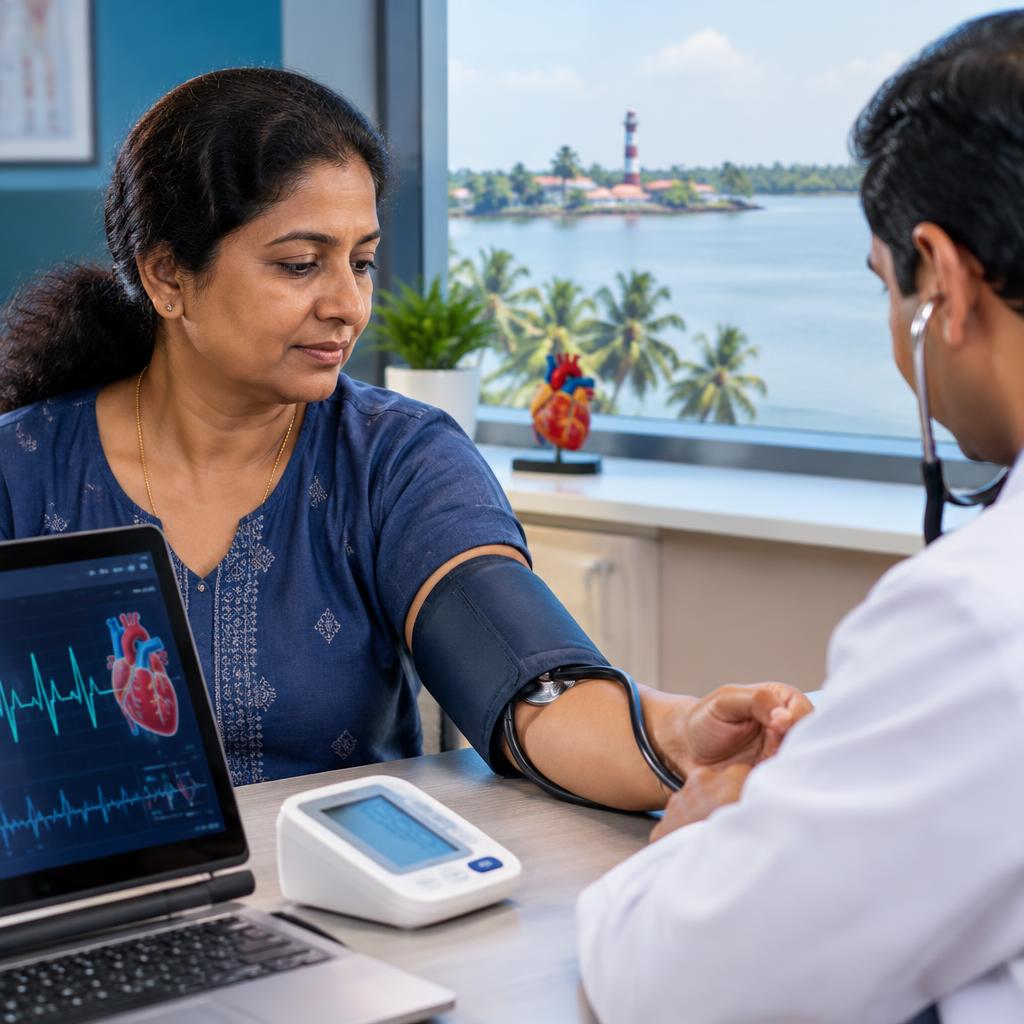
Why a cardiology opinion matters for some cases of high blood pressure
Many people manage high blood pressure successfully with lifestyle measures and primary‑care medications. However, when blood pressure remains uncontrolled despite treatment, or when readings are unpredictable, a cardiology review can identify underlying reasons, assess risk to the heart, and recommend an individualized plan rather than simply swapping tablets at random.
Signs that suggest you should see a heart specialist instead of only changing medication
Consider a cardiology appointment if you or your doctor notice: consistently high home or clinic readings despite taking prescribed drugs; large day‑to‑day variation in readings; troubling symptoms such as chest discomfort, breathlessness, fainting, worsening palpitations, or unexplained fatigue; or if routine tests suggest strain on the heart. Also seek specialist input when blood pressure is difficult to control on two or more medicines, which may indicate a need for further evaluation.
What a cardiology blood‑pressure evaluation typically involves
A cardiologist will take a detailed medical and medication history, perform a focused cardiac examination, and use targeted tests to look for heart‑related causes or consequences. Common tests available at Dr. Sujay’s clinic and the associated centre include ECG, echocardiogram, ambulatory BP monitoring, Holter monitoring, and relevant blood tests. These investigations help determine whether the problem is primary hypertension, a secondary cause, or heart involvement that requires a different approach.
How ambulatory blood pressure monitoring helps fine‑tune treatment
Ambulatory blood pressure monitoring (ABPM) records readings over 24 hours during normal daily activities and sleep. ABPM distinguishes white‑coat elevations (high clinic readings but normal daily pressure), masked hypertension (normal clinic readings but high during daily life), and patterns such as nocturnal hypertension. That information is useful to decide whether to adjust dosing times, change medications, or investigate further.
How test findings can change the treatment plan
Results from ECG, echo, Holter and ABPM allow a cardiologist to personalise care: that may mean adjusting medication type or timing, recommending additional tests to look for secondary causes, focusing on treating any heart structure or rhythm problems found, or advising closer follow‑up. The goal is targeted, evidence‑based change rather than repeated empirical switching of tablets.
What to expect at Dr. Sujay’s Heart Care Clinic in Kollam
Patients visiting the clinic can expect a structured OP consultation (new or review) supported by staffed services for ECG, echocardiogram, Holter, ambulatory BP monitoring and routine blood tests. Local patients have described feeling safe, well informed and supported by both the doctor and the clinic team, noting clear explanations and attentive staff. Dr. Sujay Renga is a senior interventional cardiologist with tertiary‑level training and experience; at the clinic the focus is on careful assessment and patient‑centred communication.
Practical next steps: when to seek urgent care and how to prepare for a cardiology visit
If you experience sudden severe chest pain, marked breathlessness, fainting, or other alarming symptoms, seek emergency care immediately. For routine cardiology evaluation of difficult‑to‑control blood pressure, bring a record of home BP readings, a list of current medicines and doses, and any recent test results. Make an appointment for a structured OP consultation so the cardiologist can recommend the right tests (for example ABPM or an echocardiogram) and a clear, personalised follow‑up plan.
Customer review


Article by
Dr.Sujay Renga
Dr. Sujay Renga is a Senior Interventional Cardiologist at NS Memorial Institute of Medical Sciences, a 500-bed multispecialty tertiary care centre in Kollam, Kerala. In addition he runs his own clinic at the heart of Kollam city. Dr. Renga holds an MD in Internal Medicine from Government Medical College, Thiruvananthapuram, and a DM in Cardiology from the Post Graduate Institute of Medical Education and Research (PGIMER), Chandigarh. He has also done postgraduate diploma in medico legal systems and quality in healthcare from Symbiosis university, Pune. He is a fellow of American College of Cardiology (FACC), European Society of Cardiology (FESC) and Scociety for Cadiovascular Angiography and Interventions (FSCAI).