How to Check Solar Panel Quality Before You Buy
A practical guide to the visual checks, technical specifications, certifications, testing and after‑sales questions to ask so you can pick reliable solar panels with confidence.

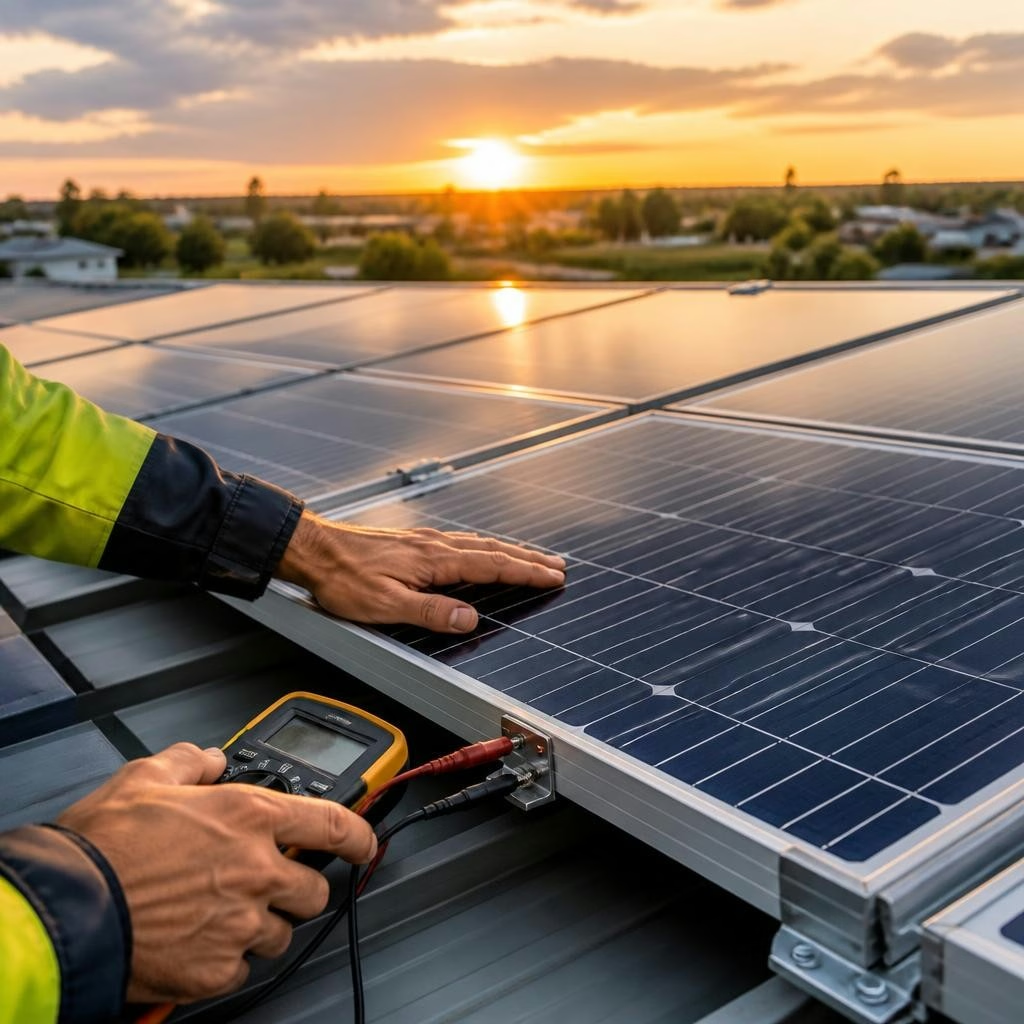
Why checking panel quality matters
Buying solar panels is an investment in long‑term energy production and reduced running costs. Quality impacts real energy yield, safety, warranty fulfillment and the total return on investment. Customer feedback for manufacturers often shows both satisfied owners who praise product durability and service, and unhappy customers who faced recurring faults or slow support—so validating quality before purchase reduces the risk of future problems.
Start with a careful visual and build inspection
A simple visual check can reveal manufacturing attention to detail. Inspect the frame and corners for uniform welds and corrosion‑resistant finish, check the glass for chips or waves, and look for even encapsulation with no bubbles or delamination. Examine the backsheet for consistent printing and secure sealing around the junction box. Good soldering, straight busbars and neat cell alignment are signs of consistent production practices.
Read the datasheet: key specifications to verify
Request the module datasheet and compare its rated power, Isc/Isc/Imp/Vmp values, and rated efficiency against what the seller quotes. Important technical items to confirm include power tolerance, temperature coefficient, and the module’s NOCT or operating temperature parameters—these affect real‑world output. Also check the declared power under STC and whether the manufacturer provides factory flash test reports for the specific batch you will receive.
Check certifications and regulatory listings
Certifications show modules have passed independent tests. Look for internationally recognized standards such as IEC certification and national approvals where applicable; in India these include BIS certification and any required listings for subsidy or procurement schemes. For buyers seeking government incentives, verify eligibility through the appropriate program lists or the Approved List of Models and Manufacturers (ALMM) where relevant.
Understand cell and module technologies
Cell technology affects efficiency and long‑term degradation. Mono PERC modules are widely used for good efficiency at competitive cost; newer technologies such as TOPCon typically offer higher efficiency and potentially better degradation characteristics, while bifacial modules can produce extra yield from reflected light in suitable installations. Ask the supplier which cell technology is used, and request comparative datasheets when evaluating different module types.
Ask about factory and field testing
Beyond certifications, request evidence of factory quality control and testing: flash test reports, EL (electroluminescence) inspection results, and any PID or salt/fog/cycle test outcomes. For larger purchases, ask whether the manufacturer provides batch‑level IV curve tests and whether they perform random sample audits. Post‑installation performance monitoring or initial commissioning reports help confirm expected on‑site output.
Warranty, service and after‑sales support
Confirm both the product warranty (covering defects and physical integrity) and the performance warranty (the guaranteed power retention over time). Ask how warranty claims are handled: local service network, turnaround time, replacement vs repair policies, and whether claim processes are handled directly by the manufacturer or through a dealer. Customer experiences vary—some report smooth warranty handling and responsive teams, while others note delays—so get written service commitments and contact channels before you buy.
Practical pre‑purchase checklist
Before signing: get the module datasheet and batch test reports; verify IEC/BIS or country‑specific certifications and any scheme eligibility; confirm cell technology and expected degradation rate; check warranty terms and the local service process; inspect a sample module visually or request high‑resolution photos; and ask for recent customer references or performance data for similar installations. These steps let you compare suppliers on facts rather than promises and increase the likelihood of a trouble‑free system.
Article by
ECE (India) Energies Limited
ECE (India) Energies Private Limited Now known as ECE India Energies Limited was established to provide fruitful services to the stakeholders through value addition with an eye for quality, a clean environment, and safe life. Though the region of Vidarbha, Maharashtra, India is lacking industrial environment and employment, ECE has managed to become an employment creator starting from a handful of people in 2010. Manufacturing of Solar panels & Road Safety based products formed the initial base of the company, which later on went on to become a multi-faceted enterprise of green and solar energy products as well as services.