How to Choose the Right Inverter and Batteries for Your Solar System in India
Practical guidance for Indian homeowners and businesses to pick the right inverter and battery for their solar system, covering load assessment, inverter types and sizing, battery chemistry and capacity, compatibility checks, and a simple purchase checklist.

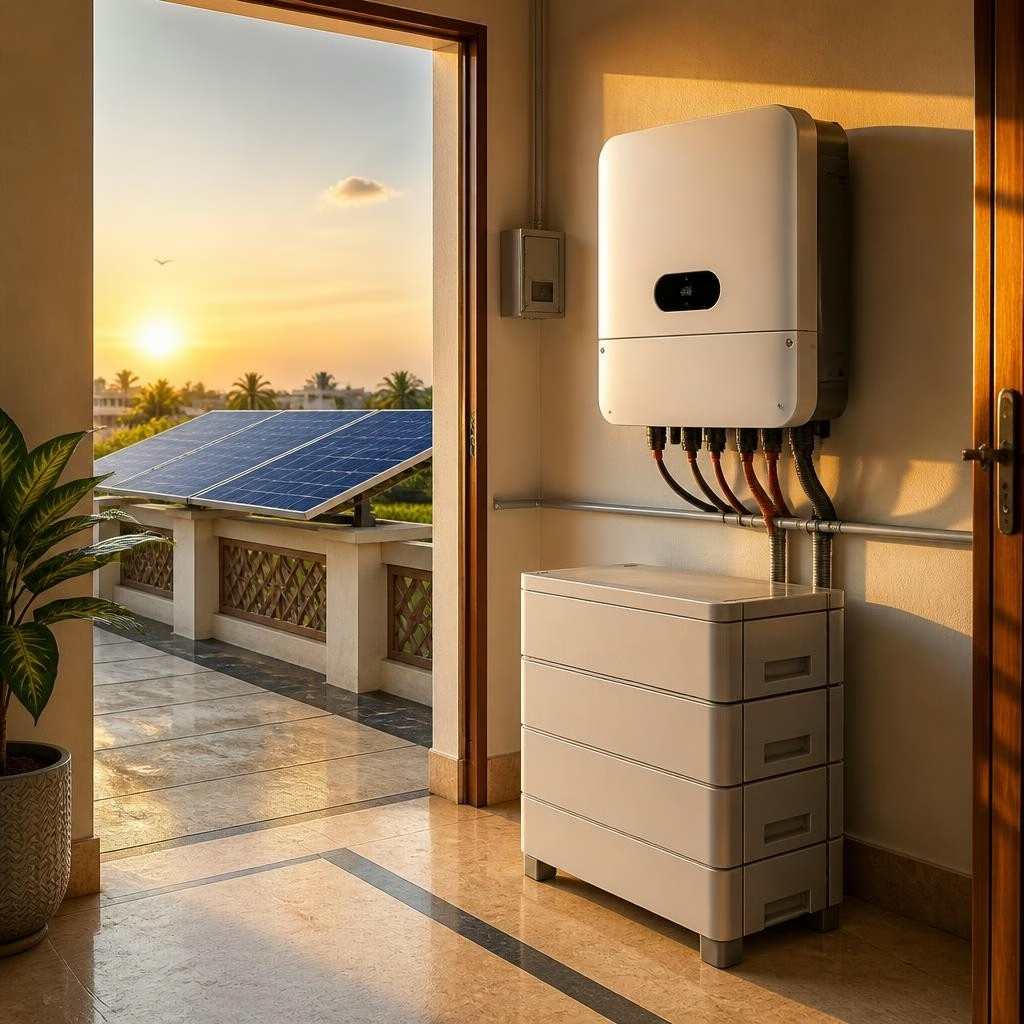
Why the right inverter and battery matter
An inverter and, where required, a battery together determine how efficiently your solar panels turn sunlight into usable power and how reliable that power is during grid interruptions. The right choices affect daily energy yield, backup duration, system longevity and ultimately the return on investment. In India’s varied grid conditions and frequent power interruptions in some areas, selecting components that match your consumption pattern and reliability expectations is especially important.
Start by assessing your energy needs
Begin with a clear estimate of your average daily energy use (in kWh) and which circuits you want backed up during outages. Distinguish between full-house backup and essential loads (lights, fans, a fridge, router). For battery systems calculate desired autonomy in hours or days for those essential loads. Also note your planned PV array size—modern solar panels range from about 340 Wp to 650 Wp—because array size affects how much energy is available for charging batteries and meeting loads.
Choose the inverter type that fits your goals
Common inverter types are: grid-tie (no battery, exports/imports with net metering), hybrid (integrates PV, battery and grid, manages charging/discharging) and off-grid (for standalone systems without grid connection). Microinverters and power optimizers offer module-level control and shading resilience for complex roofs. For customers who want backup during outages plus net-metering benefits, hybrid inverters are often the practical choice; pure grid-tie inverters suit systems focused on daytime self-consumption and export.
Basic rules for inverter sizing
Size the inverter to handle your expected peak AC load—choose an inverter rated at or slightly above the highest simultaneous load you expect to run. Another consideration is the DC-to-AC ratio (how PV array DC capacity compares to inverter AC rating); many systems intentionally install more DC capacity than inverter rating to maximise generation during low-light hours, but this should be specified by your designer. Also confirm the inverter is compatible with Indian grid standards and net-metering rules in your state.
Selecting a battery: chemistry, capacity and performance
Battery choice is primarily about chemistry (lead-acid vs lithium variants like LiFePO4), usable capacity (kWh), depth of discharge (DoD), round‑trip efficiency and cycle life. Lithium batteries generally allow deeper usable capacity, higher cycle life and better efficiency but come at higher upfront cost; lead-acid is cheaper initially but heavier, larger and typically has shorter life. Specify battery capacity in kWh based on the loads and autonomy you calculated, and prefer systems that state usable kWh (after DoD) rather than only nominal Ah values.
Compatibility, controls and monitoring
Ensure the inverter and battery are designed to work together: check supported battery voltages, charging algorithms, communication protocols and safety features. Modern hybrid inverters offer built-in battery management, seamless switching, and remote monitoring—features that help diagnose issues quickly and optimise battery life. Ask whether the system supports software updates and remote troubleshooting, which can reduce downtime.
Quality signals and after‑sales considerations to verify
Look for equipment that meets recognised standards and has clear warranty terms. In India, customers often check compliance with national or international standards (for example, BIS/IEC where applicable) and inclusion in government procurement lists when relevant. Equally important is after‑sales support: reviews of suppliers often praise helpful, explanatory sales teams, but other customers report slow or unsatisfactory service. Before you buy, request details on local service availability, response times, warranty claim processes and whether on‑site replacement is offered for critical components.
A practical checklist before you commit
1) Record your monthly kWh and identify essential backup loads. 2) Decide on inverter type (grid-tie, hybrid or off-grid) based on net metering and backup needs. 3) Size inverter for peak load and confirm DC:AC planning with your designer. 4) Choose battery chemistry and capacity in kWh for required autonomy and lifecycle expectations. 5) Verify compatibility, monitoring and remote support options. 6) Check standards compliance, warranty coverage and local service network. 7) Ask for a simple ROI estimate including expected energy savings and any available subsidies or net‑metering benefits. Finally, speak with suppliers who explain system behavior clearly and respond reliably—many customers value clear explanations from the vendor during purchase and after installation.
Customer review


Article by
ECE (India) Energies Limited
ECE (India) Energies Private Limited Now known as ECE India Energies Limited was established to provide fruitful services to the stakeholders through value addition with an eye for quality, a clean environment, and safe life. Though the region of Vidarbha, Maharashtra, India is lacking industrial environment and employment, ECE has managed to become an employment creator starting from a handful of people in 2010. Manufacturing of Solar panels & Road Safety based products formed the initial base of the company, which later on went on to become a multi-faceted enterprise of green and solar energy products as well as services.