Monsoon Maintenance Checklist for Solar Panel Owners in India
A practical, season-specific checklist for protecting solar panels during the Indian monsoon — what to inspect, cleaning best practices, recommended check frequency, and clear signs that it’s time to call a service engineer.

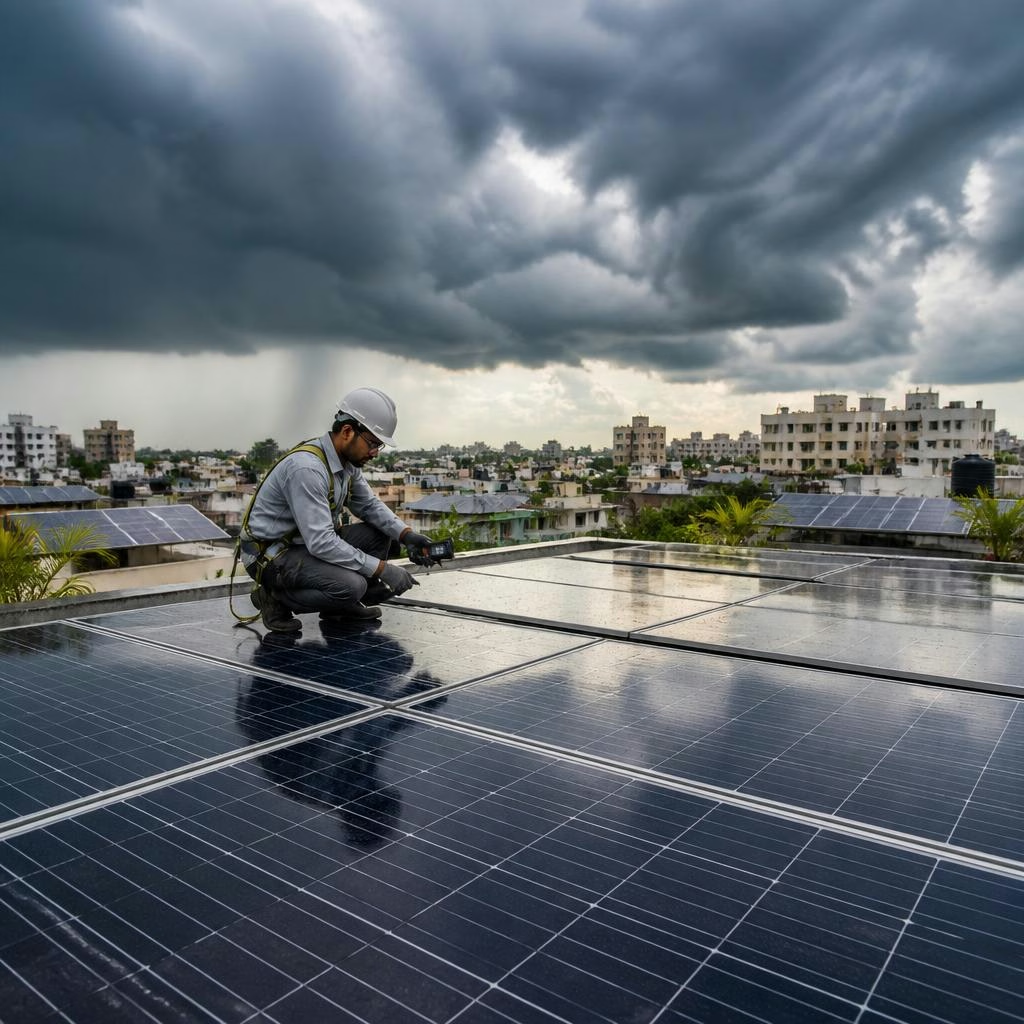
Why monsoon maintenance matters
The monsoon brings heavy rain, strong winds, increased humidity and vegetation growth — conditions that can reduce system performance and accelerate wear if left unaddressed. Water pooling, debris, biological growth (algae, moss, bird nests) and temporary shading all reduce energy yield. Regular seasonal care preserves generation, extends equipment life and reduces the chance of electrical faults caused by moisture or loose connections.
Start with a pre-monsoon inspection
Before the heavy rains arrive, perform a thorough visual inspection. Check that mounting rails and module frames are secure and corrosion-free, bolts and nuts are tight, cable clips and conduits are intact, and junction boxes and plugs show no signs of cracking or seal failure. Ensure roof drainage and gutters are clear so rainwater cannot pool beneath or around the array. If panels sit low over flat roofs, confirm there is adequate slope or drainage to avoid standing water.
Routine visual checks during monsoon
During the season carry out simple visual checks after major storms or strong winds. Look for loose or damaged modules, dislodged clamps, debris accumulated on panels, signs of water ingress around junction boxes, and new shading from overgrown trees. Also inspect inverter and battery housings for water exposure and ensure ventilation pathways remain unobstructed.
Cleaning: timing and best practices
Monsoon cleaning strategy should balance safety, effectiveness and the local weather pattern. Avoid cleaning while it is raining heavily; instead choose a dry period shortly after rainfall to remove persistent dirt, mud splashes and organic residue. Use soft brushes or microfiber squeegees and clean water (preferably deionized or soft water) to avoid mineral deposits. Do not use high-pressure washers or abrasive tools, and never step on panels. For large or rooftop arrays, engage trained cleaners who follow electrical safety protocols.
Electrical safety and monitoring
Always isolate the system electrically before attempting any maintenance near electrical components. Do not open inverters or junction boxes unless qualified to work on PV systems. Make use of system monitoring (if available) to detect sudden drops in generation or irregular behavior. Keep records of generation and inverter error messages so patterns are easier to diagnose after the monsoon.
When to call a service engineer
Contact a qualified service engineer if you observe any of the following: persistent unexplained drop in energy output after cleaning and inspection; recurring inverter alarms or frequent tripping; visible signs of water entry into electrical enclosures or inverter; burn marks, melted connectors or unusual smells; cracked or delaminated modules; or loose wiring. For safety-critical faults or anything involving exposed DC wiring, arrange professional assistance immediately rather than attempting repairs yourself.
Document issues and keep warranty information handy
Photograph any damage, log dates and details of observed faults, and retain service records and warranty documents. Clear, dated records speed up troubleshooting and support claims with manufacturers or installers. Many customers value responsive post-sale support; keeping documentation ready helps service teams assess and resolve problems more quickly.
Seasonal maintenance plan — a quick checklist
Follow these practical steps: (1) Pre-monsoon: schedule a professional inspection and tighten hardware; (2) During monsoon: perform visual checks after storms, remove debris and clear drainage; (3) Cleaning: clean panels during dry intervals using soft tools and clean water; (4) Monitoring: watch generation and inverter indicators and document any anomalies; (5) Call a service engineer promptly for electrical faults or persistent underperformance. Manufacturers and installers who supply and service systems across India advise proactive seasonal care to protect performance and longevity.
Customer review


Article by
ECE (India) Energies Limited
ECE (India) Energies Private Limited Now known as ECE India Energies Limited was established to provide fruitful services to the stakeholders through value addition with an eye for quality, a clean environment, and safe life. Though the region of Vidarbha, Maharashtra, India is lacking industrial environment and employment, ECE has managed to become an employment creator starting from a handful of people in 2010. Manufacturing of Solar panels & Road Safety based products formed the initial base of the company, which later on went on to become a multi-faceted enterprise of green and solar energy products as well as services.