Monsoon-Ready Solar Panels: Why Strong Encapsulation, Frames, and Certifications Matter
This article explains how robust frames, reliable encapsulation, and the right certifications help solar panels survive heavy monsoon rains, what to look for when buying, and practical maintenance steps to keep systems performing through wet seasons.

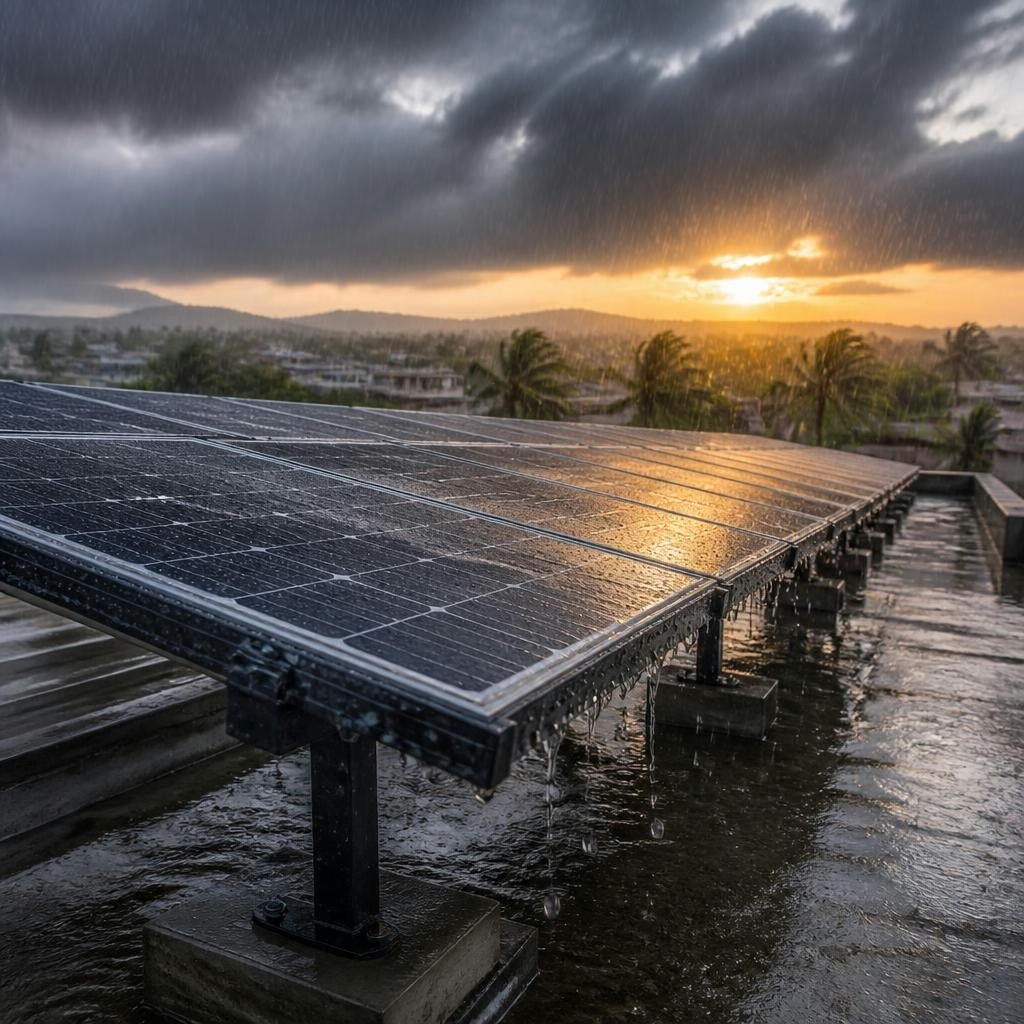
Why monsoon weather changes what you should look for
Heavy seasonal rains and high humidity place extra demands on a rooftop or ground-mounted solar installation. Water, salt, wind-driven debris and thermal cycling can accelerate corrosion, promote moisture ingress, and stress mechanical connections. For buyers in regions with significant monsoon activity, panel durability is as important as electrical performance: a well-built module will keep producing reliably year after year with fewer warranty claims and less downtime.
The role of the frame: mechanical strength and corrosion resistance
A module’s aluminum frame is the first line of defense against wind loads and standing water. Look for frames designed with good rigidity and engineered drainage (channels or gaps that let water escape), strong mounting points, and surface finishes that resist corrosion. Sturdy frames reduce cell and glass stress during heavy wind gusts and prevent bending that can break solder joints or cracks. Ask manufacturers about frame section thickness, corner reinforcements and corrosion protection rather than relying on appearance alone.
Encapsulation and edge-sealing: keeping moisture out
Encapsulants (the layers between glass and cells) and edge seals prevent moisture from reaching the solar cells and interconnections. Quality panels use proven encapsulant materials and reliable edge-sealing processes to limit delamination and yellowing over time. When seals fail, moisture leads to hotspots, PID (potential-induced degradation) risk and loss of output. Buyers should request manufacturer information on encapsulation materials and accelerated ageing test results to confirm long-term resistance to humidity and thermal cycling.
Certifications and lab testing you should verify
Certifications give independent evidence that a module meets minimum durability and safety standards. Key items to request or check on datasheets include BIS and IEC certification (for design and safety), and reference to standardized tests such as salt mist, ammonia and damp heat where relevant to your environment. Look for IEC 61215/61730 compliance and any additional test reports the manufacturer can provide. These documents help you compare modules objectively on how they perform under moisture, dust and electrical stress.
Real-world signals: what customers report about monsoon performance
Customer feedback can provide practical insight beyond datasheets. Many system owners report panels that continue delivering reliably through heavy rains when frames and encapsulation are robust and the modules carry recognized certifications. Smooth warranty processes and clear documentation also make it easier to resolve issues that do occur. At the same time, some buyers experience inconsistent after-sales responsiveness, so confirm service and escalation procedures before purchase.
Checklist for buyers: questions to ask before you buy
Before selecting panels, ask the manufacturer or supplier for: current datasheets specifying power range and cell type (for example, 340 Wp–650 Wp options and technologies such as Mono PERC, TOPCon, bifacial or polycrystalline), copies of BIS/IEC certificates and accelerated test reports, details on frame design and corrosion protection, information on encapsulant and edge-seal processes, junction box IP rating and bypass diode arrangement, standard warranty terms and local service procedures, and evidence of manufacturing quality (factory or QC visit, if available). Keep written records of all claims and factory test reports for future reference.
Maintenance tips to keep panels monsoon-ready
Proper maintenance reduces the chance of moisture-related failures: ensure panels are mounted with adequate tilt and drainage so water and debris do not pool, inspect seals and mounting hardware after major storms, keep glass clean enough for good performance but avoid abrasive cleaning during wet conditions, and monitor system output to spot sudden drops early. Maintain clear documentation of installation details and warranty certificates and confirm who to contact for support — responsiveness matters when repairs or replacements are needed.
Article by
ECE (India) Energies Limited
ECE (India) Energies Private Limited Now known as ECE India Energies Limited was established to provide fruitful services to the stakeholders through value addition with an eye for quality, a clean environment, and safe life. Though the region of Vidarbha, Maharashtra, India is lacking industrial environment and employment, ECE has managed to become an employment creator starting from a handful of people in 2010. Manufacturing of Solar panels & Road Safety based products formed the initial base of the company, which later on went on to become a multi-faceted enterprise of green and solar energy products as well as services.