On-Grid vs Off-Grid vs Hybrid Solar Systems in India: Which Is Right for You?
A clear, practical guide comparing on-grid, off-grid, and hybrid solar systems for Indian homes, farms and small industries, with factors to consider and questions to ask a manufacturer or supplier.

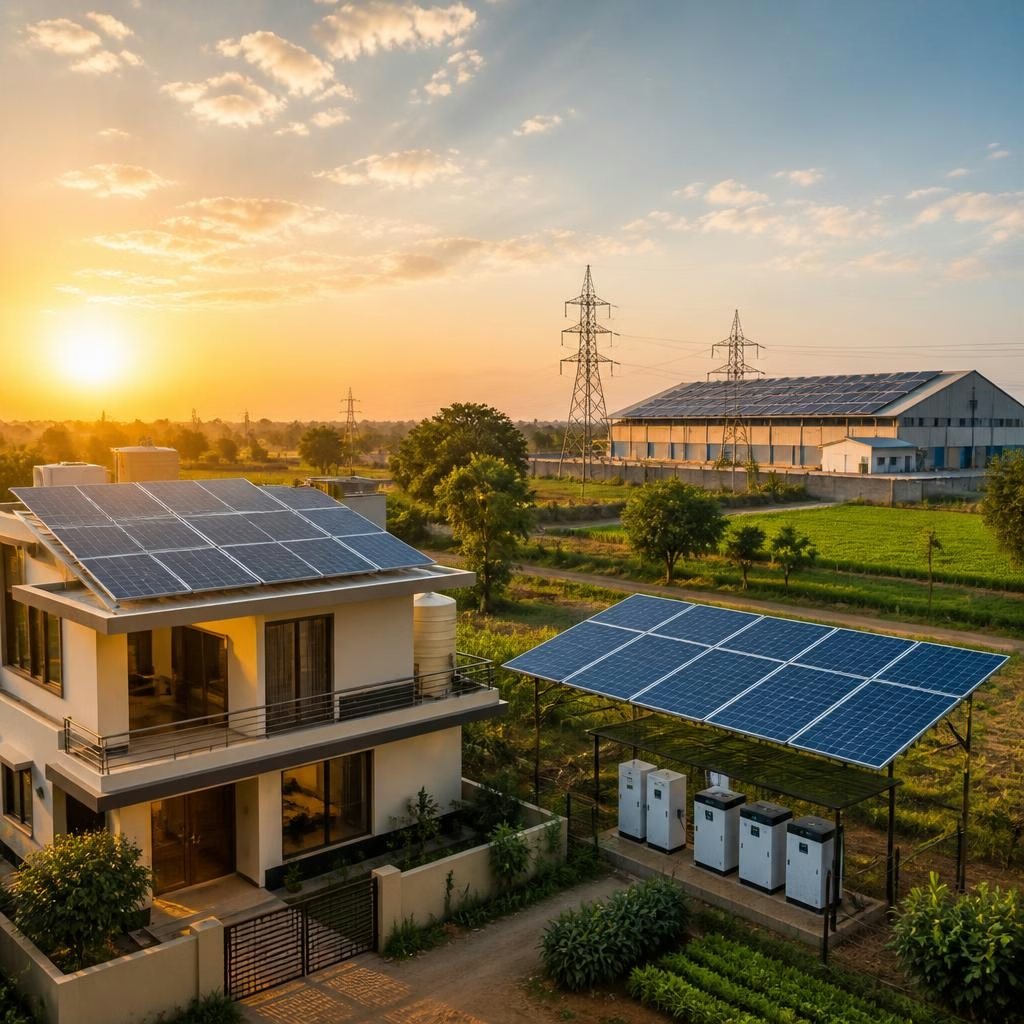
Why choosing the right solar system matters
Selecting between on-grid, off-grid and hybrid solar systems determines how you use and store energy, the upfront and operating costs you’ll face, and how reliable your electricity will be. Different sites — urban homes, rural farms or small industries — have different grid reliability, daytime loads, and priorities (cost savings, backup power, or full independence). This article explains the practical pros and cons of each system type and outlines the key factors you should weigh before you request quotes or a site survey.
What each system means in simple terms
On-grid systems generate solar electricity and feed surplus energy into the public grid; they rely on the grid for power when solar isn’t available. Off-grid systems combine solar generation with energy storage (batteries) and do not depend on the utility grid, so they must meet all energy needs independently. Hybrid systems blend the two: they produce and store solar energy, use the grid as needed, and can both draw from and send power to the grid depending on configuration and controls.
On-grid systems — advantages, limitations and typical uses
On-grid installations typically offer simpler design and lower upfront cost than battery-backed systems because they don’t require large energy storage. They are well suited to homes and small industries in areas with reliable grid connections and net-metering policies, where exporting surplus generation can offset bills. Limitations include no power during grid outages (unless paired with backup equipment) and dependence on local utility rules for export and compensation. If your primary goal is maximizing daytime savings and you have a dependable grid, on-grid is often the most economical choice.
Off-grid systems — advantages, limitations and typical uses
Off-grid systems are designed for energy independence and are commonly chosen where grid access is unavailable or extremely unreliable. Because they must supply all energy needs, they require careful load planning and substantial battery capacity, which increases cost and maintenance. Off-grid systems are a strong match for remote homes, agricultural pumps, or isolated facilities where continuous power is essential and grid extension isn’t feasible. Expect higher upfront investment and ongoing attention to battery health and system balance.
Hybrid systems — advantages, limitations and typical uses
Hybrid systems offer a middle path: they allow on-site energy storage for backup and load shifting while keeping grid connectivity for reliability and potential exports. They are particularly useful where the grid is intermittent or where users want both bill savings and uninterrupted power during outages. Hybrid solutions are more complex and costlier upfront than simple on-grid setups, but they can reduce battery size versus fully off-grid systems and provide greater operational flexibility for homes and small industries.
Key factors to decide which system suits you
Decide based on your electricity needs, grid reliability, budget, available roof or ground area, and tolerance for maintenance. Consider: whether you need backup during outages; whether you can take advantage of net-metering or other state incentives; long-term operating costs vs upfront investment; and whether you prefer a simpler system or one with more control and resilience. Local policies, permissions and subsidy availability vary by state, so check those before finalizing a design.
What to ask a manufacturer or supplier before buying
Request a site visit and written system proposal showing expected energy production and the components specified. Ask about panel technology and warranty, inverter compatibility, battery chemistry and warranty (if included), expected performance degradation, monitoring options, installation quality standards, commissioning tests, and planned maintenance. Equally important is after‑sales support: ask for service response times, local service partners, and how warranty claims are handled. Customer feedback often highlights product quality and support as decisive factors, so verify references and documented service procedures.
Next steps and working with a PAN‑India manufacturer
Begin by documenting your typical daily loads and the hours you need power. Arrange multiple site assessments and compare technical proposals and warranties rather than just price. If you choose to work with a manufacturer or national supplier, confirm they can provide installation support and timely after‑sales service across India. Many customers report satisfaction with strong product quality and responsive teams, though some have also raised concerns about after‑sales responsiveness; it’s prudent to confirm service commitments in writing before you proceed.
Customer review


Article by
ECE (India) Energies Limited
ECE (India) Energies Private Limited Now known as ECE India Energies Limited was established to provide fruitful services to the stakeholders through value addition with an eye for quality, a clean environment, and safe life. Though the region of Vidarbha, Maharashtra, India is lacking industrial environment and employment, ECE has managed to become an employment creator starting from a handful of people in 2010. Manufacturing of Solar panels & Road Safety based products formed the initial base of the company, which later on went on to become a multi-faceted enterprise of green and solar energy products as well as services.