Planning a Solar System for Small Towns and Rural Areas in Vidarbha: A Practical Guide
Practical steps for farmers, shop owners, and rural households to size and design solar systems that handle frequent power cuts and voltage fluctuations, and guidance on working with a nearby manufacturer–installer.

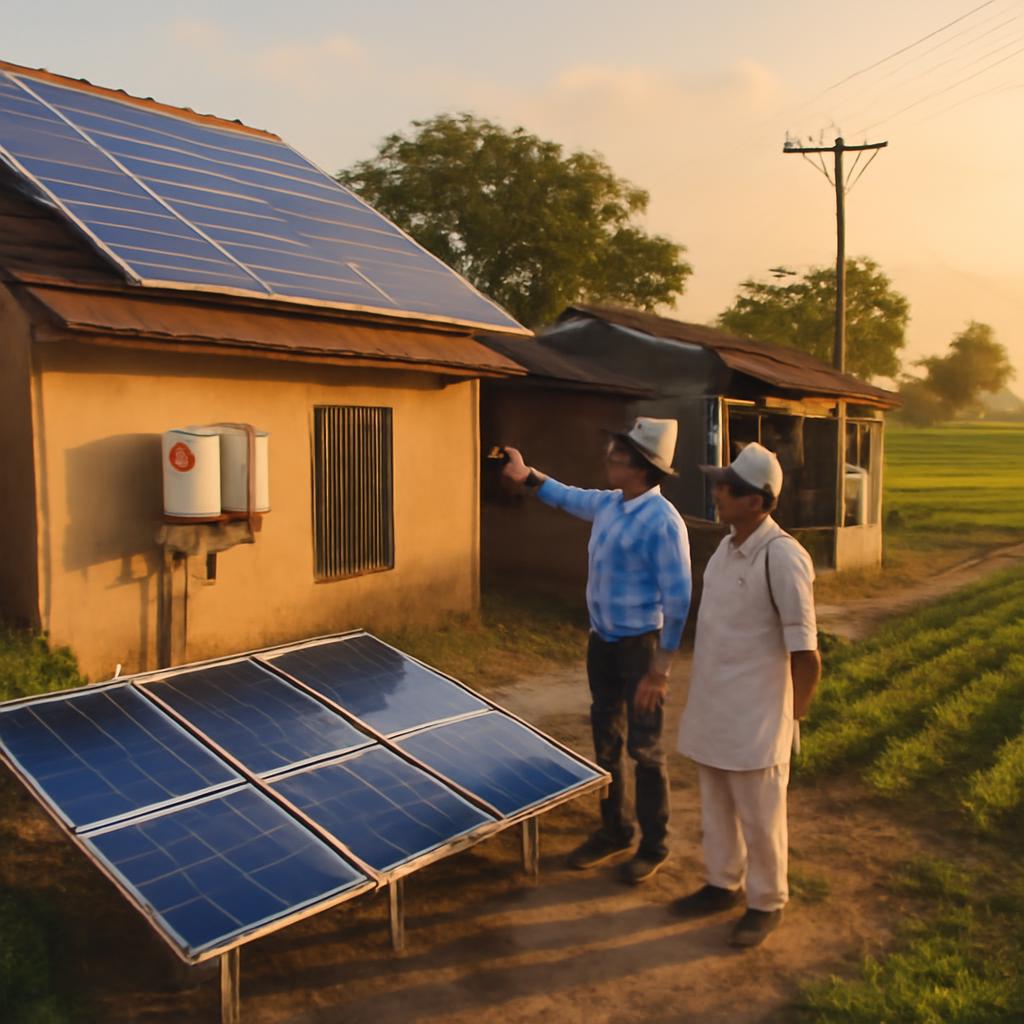
Why solar is a practical choice for small towns and rural households
Frequent power cuts and unstable voltage are common challenges in many parts of Vidarbha. Solar systems can reduce dependence on unreliable grid supply, lower running costs for diesel generators, and provide more predictable power for essential loads such as pumps, refrigeration, lighting and small machinery. For many rural households and small businesses, the goal is not simply maximum generation but reliable, cost-effective power during outages and protection against voltage-related damage.
Start with a clear load assessment
Before choosing panels or batteries, list the appliances you need to run during outages and estimate daily energy use in kilowatt-hours (kWh). Separate “always-on” critical loads (water pump, refrigerator) from occasional ones (TV, shop lights). Note starting/peak loads for motors and pumps, and estimate hours of operation per day. A careful load assessment lets you size the solar array and battery to meet real needs rather than overspending on unnecessary capacity.
Sizing systems where outages and voltage fluctuation are frequent
If you experience regular blackouts, consider a hybrid approach: a grid-tied system with battery backup or a standalone off-grid system depending on grid reliability. For short outages, a smaller battery (providing a few hours of autonomy) plus an automatic transfer switch may suffice. For longer outages, size batteries to provide required autonomy (e.g., number of hours), and factor in battery depth-of-discharge and temperature derating. When voltage fluctuates, choose inverters and charge controllers rated for wide input ranges and include surge protection to protect sensitive equipment.
Choosing panel technology for rural conditions
Panel type affects energy yield, performance in high temperatures, and soiling tolerance. Monocrystalline modules typically offer higher efficiency in limited roof or ground space. TOPCon and other advanced cell technologies can deliver improved performance and long-term degradation rates, while bifacial panels capture reflected light from the ground and may boost yield where mounting allows. Consider local site conditions — dust, shading, roof angle, and wind — and ask manufacturers for independent test reports, temperature-coefficient specifications, and IEC/BIS compliance details to compare long-term performance.
Inverters, controllers and protecting against voltage issues
Inverter selection is critical in unstable grids. Look for smart hybrid inverters or inverters with built‑in battery management and wide voltage tolerance. MPPT charge controllers maximize energy harvest from the panels; anti-islanding protection is required for grid-connected systems. Include surge arrestors and proper earthing to protect equipment from spikes caused by grid instability. For motor loads such as agricultural pumps, ensure the inverter or starter can handle high inrush currents or retain a separate starter where appropriate.
Working with a nearby manufacturer–installer: advantages and questions to ask
A nearby manufacturer–installer can shorten lead times for spare parts, enable plant visits, and simplify warranty or service visits. Many customers value informative factory visits and clear explanations from local teams when deciding on a system. At the same time, service experience can vary; ask prospective partners about local service networks, expected response times, warranty replacement processes, and escalation contacts. Request documentation of quality tests and production practices so you can verify product consistency and after-sales support commitments.
Subsidies, net metering and return on investment (ROI)
Check current state and central schemes that may apply to households and farmers and, where relevant, programs targeting rooftop installations. Net metering rules differ by state and utility: confirm eligibility, application steps and any limits on export. When estimating ROI, include system cost, expected annual generation, electricity tariff or diesel savings, maintenance costs, and any available subsidies. Simple monitoring and record-keeping of generation and usage will clarify actual payback over time.
Operation, maintenance and next steps
Plan for routine maintenance: periodic cleaning, visual inspections for loose connections or mounting issues, and monitoring panel output for underperformance. Keep a maintenance checklist and ask your installer for a monitoring solution so you can detect problems early. Before signing a contract, request site-specific proposals, ask for performance guarantees and test reports, and confirm the installation timeline and local support arrangements. A measured, documented approach will help ensure a solar system that meets the realities of rural power supply and delivers reliable benefits to your home, farm or small business.
Article by
ECE (India) Energies Limited
ECE (India) Energies Private Limited Now known as ECE India Energies Limited was established to provide fruitful services to the stakeholders through value addition with an eye for quality, a clean environment, and safe life. Though the region of Vidarbha, Maharashtra, India is lacking industrial environment and employment, ECE has managed to become an employment creator starting from a handful of people in 2010. Manufacturing of Solar panels & Road Safety based products formed the initial base of the company, which later on went on to become a multi-faceted enterprise of green and solar energy products as well as services.