Solar Subsidies and Government Schemes for Residents of India: A Practical Guide
A concise, practical overview of central and state-level solar subsidy schemes for Indian residents, with a step-by-step outline of the typical application and disbursement process and tips for working with manufacturers and installers.

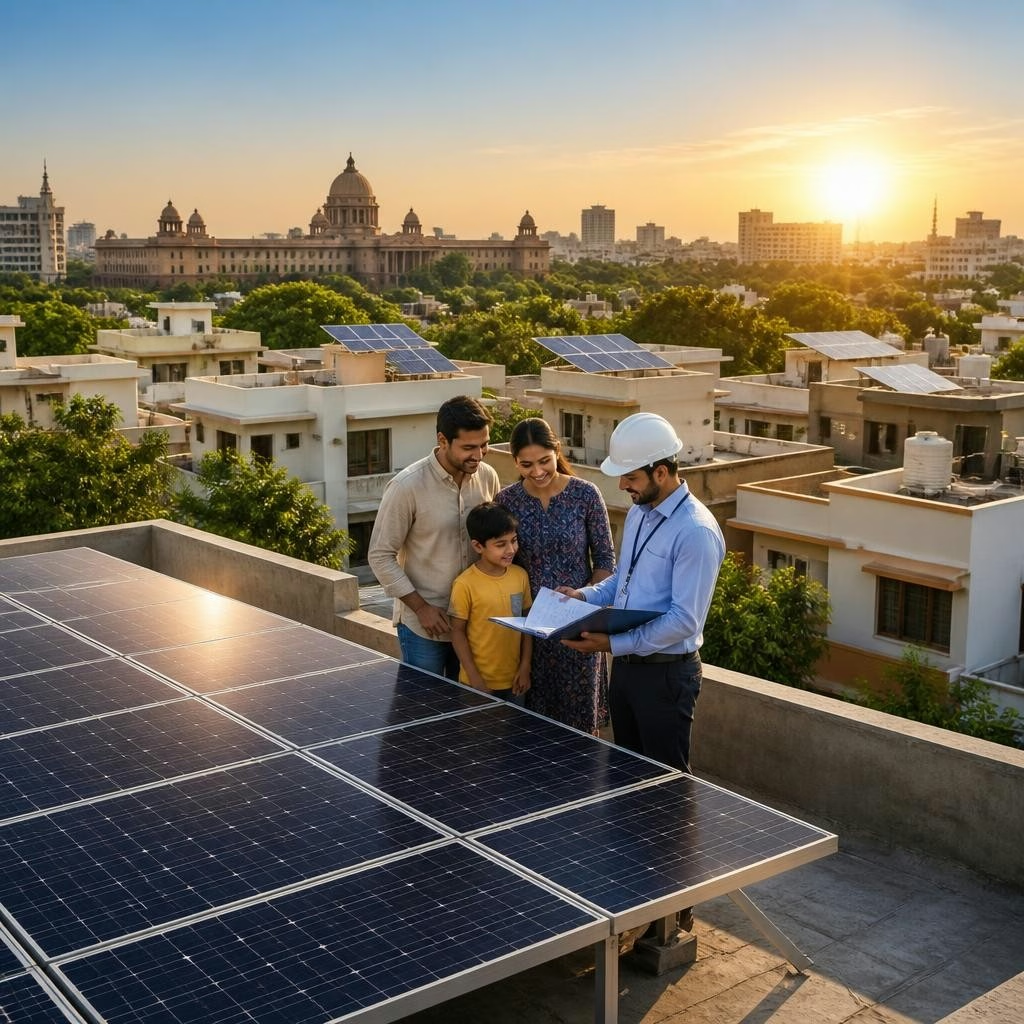
Why government schemes matter for household and small-scale solar
Government subsidy programs and scheme-enabled incentives reduce upfront costs, speed payback periods, and increase access to rooftop and small ground-mounted solar systems. For residents considering solar, understanding both central (national) schemes and your state or utility rules is essential: central schemes set broad priorities and eligibility while states and distribution companies (DISCOMs) handle on-the-ground processes such as application portals and net‑metering approvals.
Central-level schemes to be aware of
At the national level, schemes typically support rooftop solar, renewable energy adoption in households and agriculture, and targeted programmes for low-income or vulnerable groups. Common central initiatives to look for include rooftop-support programmes (MNRE-aligned), farmer-focused programmes such as canal or pump electrification schemes, and technology-promotion efforts that encourage certified panels and inverters. These programmes often set eligibility rules, technical standards and an overall framework for subsidy disbursement, while implementation is delegated to ministries, state nodal agencies or DISCOMs.
How state governments and DISCOMs fit in
Most residents receive subsidy approvals, net-metering connections and final disbursements through state processes or their local DISCOM. Each state may have its own incentive top-ups, concessional tariffs, or specific application portals and documentation requirements. Before applying, check your state nodal agency or DISCOM website for the latest scheme details, permitted product lists, timelines and application steps—these local rules determine how quickly subsidies are processed and whether an additional state-level subsidy is available on top of central support.
Recognised programmes to search for (including PM Surya Ghar)
Look up central and state programmes by name—examples of central initiatives include national rooftop schemes and the PM Surya Ghar programme (targeting household solar adoption). For agricultural and irrigation uses, schemes under farmer-support umbrellas may apply. When researching any programme, verify the scheme’s current status, the authorised application route (online portals, nodal agencies or approved vendors), and whether the scheme requires pre-approved materials (such as panels listed on ALMM) or certified components meeting BIS/IEC standards.
Typical step-by-step application and disbursement process
1) Initial check: confirm eligibility, scheme availability in your state and whether your project size qualifies. 2) Site survey and estimate: an installer or vendor performs a technical survey and provides a quotation aligned with subsidy rules. 3) Vendor selection and pre-approval: some schemes require use of authorised vendors or pre-registration; submit an application on the state/DISCOM portal if required. 4) Installation and commissioning: system is installed and commissioned following technical standards. 5) Inspection and verification: the nodal agency or DISCOM inspects the installation and verifies documents. 6) Subsidy approval and disbursement: after verification the subsidy is approved—many schemes reimburse the beneficiary or route payment to the installer; timing varies across states. 7) Net‑metering: apply separately or concurrently for net‑metering connection through your DISCOM. Keep copies of every submission and acknowledgement.
Documents and practical tips to speed approval
Typical documentation includes identity proof, proof of residence, sanctioned electricity connection details, quotations/invoices, site survey reports, the installer’s certificates and component datasheets (panel/inverter BIS/IEC compliance and any ALMM listing). Practical tips: choose equipment that meets BIS/IEC and any local approved‑product lists; confirm whether the scheme requires a specific warranty or performance guarantee; upload clear, complete documents to online portals to avoid delays; and track application status regularly. Expect timelines to vary—some approvals are quick, others take weeks or months depending on inspection schedules and workflow at the nodal agency.
Choosing products and working with manufacturers and installers
When planning a subsidised solar installation, align equipment choices with scheme requirements (ALMM listings, BIS and IEC standards) and with long-term performance goals. As a manufacturer and pan‑India supplier of solar panels, ECE (India) Energies focuses on product quality and supply across the country; many customers also report positive experiences with product performance and support. If you plan to apply for a subsidy, coordinate early with your chosen installer or EPC: they usually handle application submission, net‑metering requests and post‑commissioning follow-up. Keep a clear record of all service interactions and subsidy paperwork so you can track disbursement and warranty claims if needed.
Customer review


Article by
ECE (India) Energies Limited
ECE (India) Energies Private Limited Now known as ECE India Energies Limited was established to provide fruitful services to the stakeholders through value addition with an eye for quality, a clean environment, and safe life. Though the region of Vidarbha, Maharashtra, India is lacking industrial environment and employment, ECE has managed to become an employment creator starting from a handful of people in 2010. Manufacturing of Solar panels & Road Safety based products formed the initial base of the company, which later on went on to become a multi-faceted enterprise of green and solar energy products as well as services.