Understanding Solar Warranties and After‑Sales Support: A Guide for Indian Consumers
A practical, plain‑language guide explaining common solar product and performance warranties, how warranty claims and service support typically work in India, signs of good after‑sales care, and steps you can take to protect your investment.

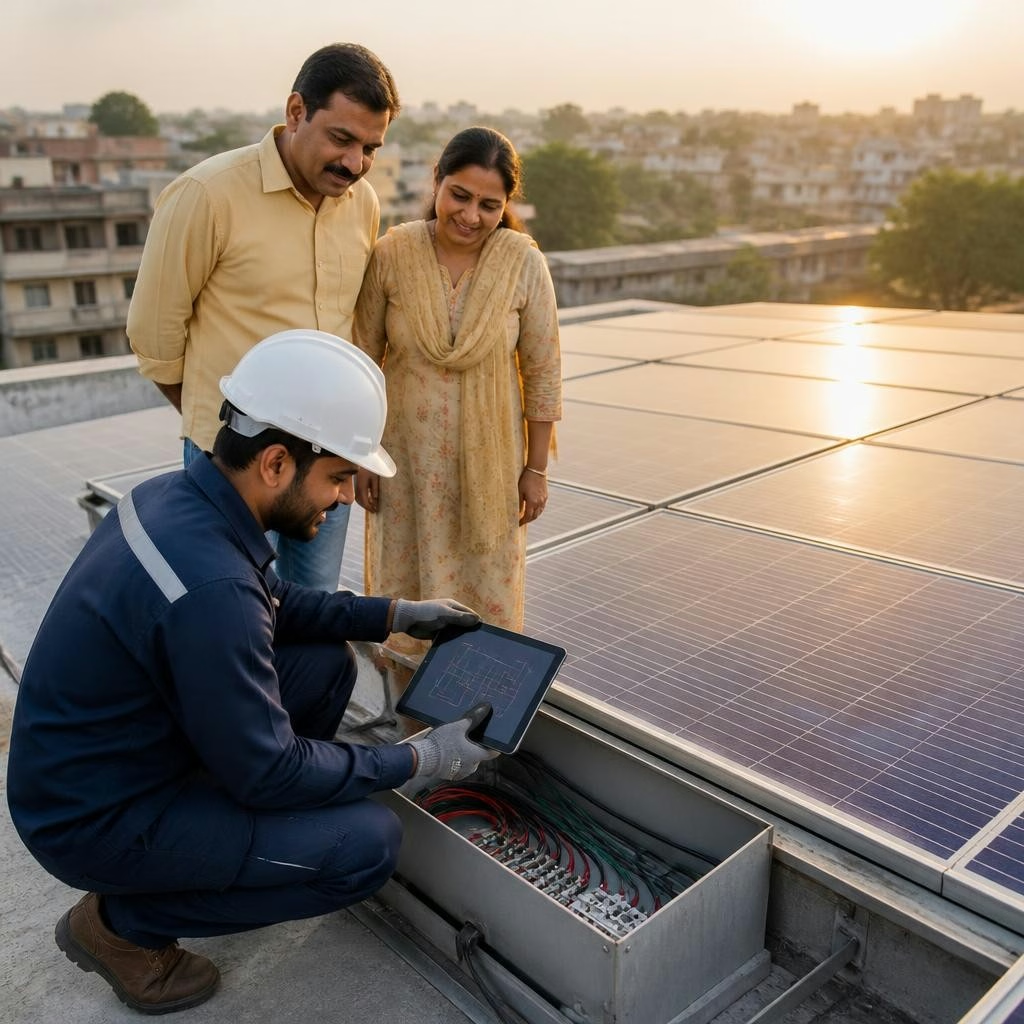
Why warranties and service support matter for solar buyers
Solar installations are multi‑component systems: panels, inverters, mounting, wiring and sometimes batteries. Warranties and reliable after‑sales support protect your energy yield and return on investment by ensuring defects are fixed, degraded performance is addressed, and replacement parts are available. When evaluating a supplier, the warranty terms and the quality of service are as important as the panel’s technical specifications.
Common types of solar warranties
There are several warranty types you will encounter: (1) Product or materials warranty covering defective workmanship or materials in panels and components; (2) Performance warranty guaranteeing a minimum power output over time (i.e., addressing long‑term degradation); (3) Inverter warranty, which is usually separate from the panel warranty; and (4) Workmanship or installation warranty provided by the installer for errors in mounting, cabling or commissioning. Each covers different risks and may be provided by different parties (manufacturer vs installer).
What warranties typically cover — and what they usually exclude
Warranties commonly cover manufacturing defects and excessive power loss beyond stipulated degradation rates, and faulty components if the failure is traced to production. Typical exclusions include damage from improper installation, unauthorized modifications, external events (extreme weather, fire, theft), and lack of maintenance. Read warranty documents carefully to see whether coverage is limited to repair, replacement, or pro‑rata compensation for reduced output.
How to read warranty terms effectively
When comparing offers, look for clear language on: who issues the warranty (manufacturer or installer), what is covered, how long each warranty lasts, whether the warranty is transferable, and whether replacement is full or pro‑rata. Note any requirements you must meet to keep the warranty valid — for example, product registration, periodic maintenance, or professional installation. Keep all serial numbers, invoices, and commissioning reports; these are commonly required to validate claims.
A practical step‑by‑step claim process
A typical claim flow is: (1) Contact your installer or the manufacturer’s service desk with purchase documents and serial numbers; (2) Arrange an inspection or remote diagnosis where the fault is identified; (3) Manufacturer/installer confirms whether the issue is covered and recommends repair or replacement; (4) Authorized service team performs repair or arranges replacement parts; (5) If unresolved, escalate through the supplier’s grievance or escalation channels. Ask for written acknowledgment of your complaint and an estimated timeline for resolution.
What good after‑sales service looks like
Reliable after‑sales support is responsive, transparent, and traceable. Key elements include a reachable service desk, local authorized technicians for prompt site visits, clear diagnosis and documentation, timely availability of spare parts, and a defined escalation path if initial responses are unsatisfactory. Good providers will also assist with related paperwork such as net‑metering connections or subsidy documentation when applicable. Several customers report positive experiences with product quality and supportive service teams, which is an important consideration when choosing a supplier.
Red flags and common customer complaints to watch for
Be cautious if a supplier is slow to respond, avoids documenting complaints, or refuses to provide serial numbers and registration details. Frequent causes of customer dissatisfaction include long system downtime, delays in replacement under warranty, unclear or undocumented warranty terms, and unresponsiveness on subsidy or net‑metering follow‑up. Ask prospective suppliers how they handle emergency repairs and what local service coverage they maintain in your region.
Practical tips for buyers before and after installation
Before purchase, request full warranty documents and ask for details about on‑site support, spare part inventory and escalation contacts. Insist on professional installation and a commissioning report. After installation, register products online if required, keep invoices and commissioning certificates, photograph serial numbers, and schedule periodic maintenance checks. If you experience a problem, raise it formally with documentation and use the supplier’s escalation chain if the initial response is inadequate. As a manufacturer with nationwide reach, suppliers are judged both on product quality and how they resolve after‑sales issues — so prioritize transparency and documented commitments when making your choice.
Customer review


Article by
ECE (India) Energies Limited
ECE (India) Energies Private Limited Now known as ECE India Energies Limited was established to provide fruitful services to the stakeholders through value addition with an eye for quality, a clean environment, and safe life. Though the region of Vidarbha, Maharashtra, India is lacking industrial environment and employment, ECE has managed to become an employment creator starting from a handful of people in 2010. Manufacturing of Solar panels & Road Safety based products formed the initial base of the company, which later on went on to become a multi-faceted enterprise of green and solar energy products as well as services.