Behaviour Modification Therapy for Gurgaon Families: Practical Ways to Manage Tantrums, Aggression, Non‑Compliance and Screen Overuse at Home
Simple, practical guidance on how behaviour modification works for common challenges like tantrums, aggression, non‑compliance and screen overuse — plus Gurgaon‑relevant examples and parent coaching tips you can try at home.

Why behaviour challenges are common — and why structured help helps
Many families in Gurgaon notice behaviour patterns — tantrums, refusal to follow instructions, aggressive outbursts or excessive screen time — that make daily life harder. Behaviour modification therapy breaks those patterns into small, manageable pieces. Instead of focusing on blame, it looks at what triggers a behaviour, what keeps it happening, and how small, consistent changes at home can produce better cooperation and calmer routines.
What behaviour modification therapy actually does
At its core this approach teaches skills and adjusts the environment. Therapists start by observing and defining specific behaviours (for example, “child screams when asked to stop playing a tablet”). Then they identify triggers, teach alternative skills, and set up consistent responses — rewards for wanted behaviour and predictable, non‑harmful consequences for unwanted behaviour. The team at a multidisciplinary centre can combine this with occupational or speech supports when needed.
Managing tantrums: identify triggers and teach a calmer option
For tantrums you want to spot patterns: time of day, transitions, hunger or sensory overload. Simple, practical steps include preventing obvious triggers when possible, offering a short warning before transitions, teaching a calming strategy (deep breaths, a quiet chair, a squeeze toy) and using brief, consistent praise when the child uses the calmer option. Ignore attention-seeking parts of a tantrum safely when the child is not at risk; give attention immediately when they regain control so calm behaviour is reinforced.
Responding to aggression: safety first, then replacement behaviours
If aggression happens, safety is the priority. Remove others from harm’s way and keep your response calm and brief. After the episode, therapists work with families to teach safer ways to express feelings (using words, asking for help or using an escape strategy). Role‑play, social stories and gradual practice with reinforcement help children replace hitting or biting with these alternatives.
Turning non‑compliance into cooperation with clear expectations
Non‑compliance often comes from unclear expectations or a child feeling overwhelmed. Make instructions short and specific, give one step at a time, and pair requests with a simple visual or a choice ("Put your shoes on or bring them to the door"), so the child feels some control. Use consistent, immediate rewards for following instructions — a sticker, a short game or a small privilege — so cooperation becomes more rewarding than refusal.
Practical tips for screen overuse that fit busy Gurgaon homes
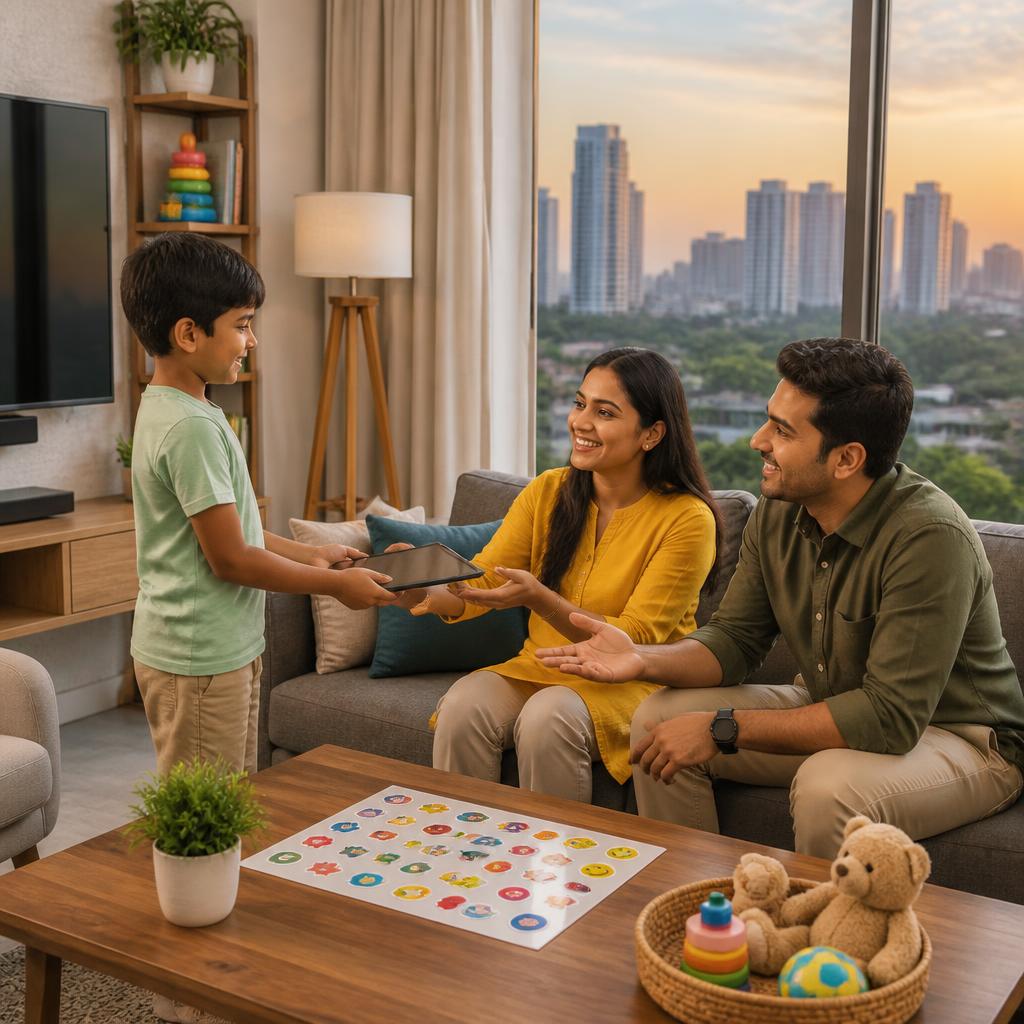
Many parents use screens during hectic mornings or long commutes; that’s understandable, but unchecked use can increase tantrums and resistance to other activities. Swap open‑ended screen time for structured screen time: set a timer, offer clear alternatives (play, craft, outdoor time) and use visual schedules showing when devices are allowed. Replace bargaining with consistent routines — for example, homework or play before screen time — and reward adherence to the routine.
How therapists coach parents — real‑life support, not just advice
Therapists at centres like Rainbow Child Development Center work alongside families: they observe interactions, model strategies, and give step‑by‑step home programs. Parents routinely report that therapists explain goals clearly and provide activities to practice at home, making small daily changes that add up. One parent described notable improvements in communication and behaviour after following the centre’s guidance, highlighting how ongoing support and clear direction help families stay consistent.
Small steps parents can start today
You don’t need a complete plan to begin. Try these doable moves: (1) Pick one behaviour to work on, and define it clearly. (2) Make a simple visual schedule and a two‑choice offer for demands. (3) Use a 1–2 minute reward routine for compliance (praise, sticker, play). (4) Create a calm‑down spot with a few comforting items. (5) Keep responses predictable — the same consequence each time — so the child learns what to expect.
What progress looks like and why consistency matters
Progress tends to be gradual and varies by child. The most reliable factor is consistent, everyday practice by caregivers combined with therapist support. When parents use the same language, expectations and rewards across settings — home, grandparents’ house or school — children learn faster. Multidisciplinary input (speech, occupational therapy, ABA or special education) can speed progress when behaviours are tied to communication or sensory needs.
Getting started in Gurgaon: assessment, planning and next steps
If behaviour is disrupting family life, start with an assessment so a therapist can observe patterns and suggest a tailored plan. Rainbow Child Development Center in Gurugram offers behaviour modification and parental counselling as part of its services, and families often begin by sharing everyday examples (timing, triggers, what happens after an episode). A practical first step is to keep a short behaviour log for a few days — noting when the behaviour happens and what precedes it — then bring that to your first session to create a focused plan.
Customer review


Article by
Rainbow Child Development Center | Occupational Therapy in Gurugram | Speech Therapy | ABA Therapy | Special Educator
Rainbow Child Development Centre in Gurgaon, Haryana, provides specialized care for children through occupational therapy, speech and hearing therapy, ABA, special education, and child psychiatry. As a leading occupational therapy centre in Gurgaon, we enhance motor skills, sensory processing, and independence. We also offer expert speech therapy in Gurgaon to improve communication and language. Renowned for effective autism treatment in Gurgaon, we deliver personalized programs, making us a trusted autism centre in Gurgaon. Our skilled special educators in Gurgaon provide tailored learning plans, positioning us among the top special schools in Gurgaon, special education schools in Gurgaon, and centers for comprehensive therapy in Gurgaon.