Feeding and Swallowing Difficulties in Young Children: A Gurgaon Parent’s Guide
A practical, parent-friendly guide for recognising feeding and swallowing (dysphagia) concerns in young children, learning when to seek help in Gurgaon, and understanding what a safe, child‑friendly therapy plan looks like.
Why feeding and swallowing matter
Mealtime is about more than nutrition — it’s where children learn to chew, breathe, communicate and feel secure. When a child struggles with feeding or swallowing (sometimes called dysphagia), it can affect growth, health and family routines. Getting early guidance helps reduce worry, keeps meals safer and supports better long‑term progress.
Common signs to watch for
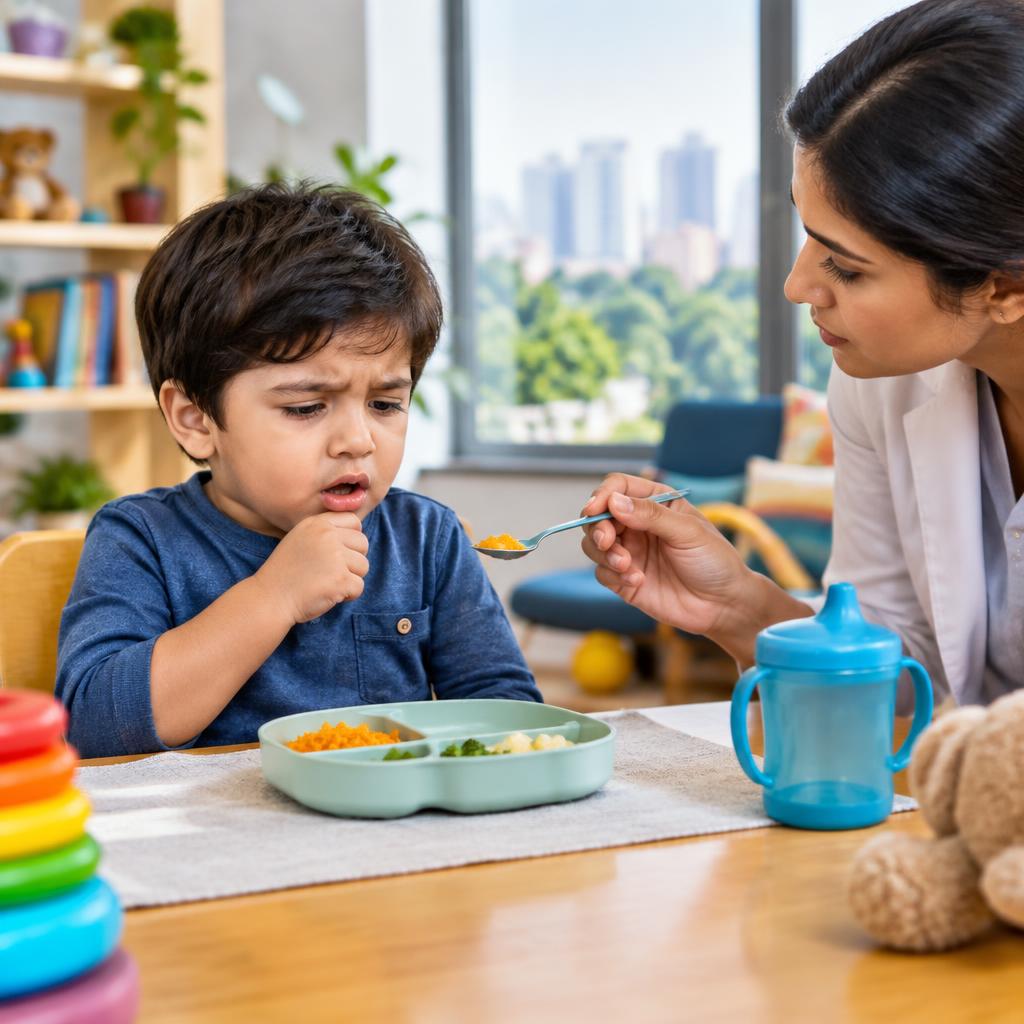
Signs of feeding or swallowing difficulty vary, but common ones include coughing, choking or throat clearing during or after eating or drinking; wet, gurgly or breathy voice after meals; frequent drooling; refusing certain textures; taking a very long time to finish a meal; pocketing food in the mouth; difficulty chewing; recurrent chest infections; or poor weight gain compared with peers. Even subtle changes — such as increased fussiness around mealtimes or persistent gagging — are worth noting.
Red flags: when to seek help urgently
Some situations need immediate medical attention: choking that doesn’t clear, sudden difficulty breathing, persistent bluish skin or lips, or signs of severe dehydration. If your child has repeated or severe coughing/choking during feeds, frequent pneumonia, or rapid weight loss, contact your paediatrician or seek urgent care before arranging therapy evaluations.
When to consult a feeding or swallowing therapist
If everyday mealtimes are stressful, your child avoids most foods or textures, mealtime length is steadily increasing, or you notice breathing changes during feeds, consult a speech‑language pathologist or occupational therapist who specialises in feeding. Early assessment is particularly helpful for infants with poor latch or weak suck, children with developmental delays, or those with known medical conditions that can affect swallowing.
How therapists evaluate feeding and swallowing
A clinical evaluation usually starts with a detailed history: birth and medical background, eating milestones, current feeding routine and any concerning episodes. Therapists observe the child during meals to assess posture, oral motor skills (lip, tongue and jaw movement), breathing and how they handle different food textures. Based on findings, therapists work with your paediatrician to decide if any medical tests or specialist referrals are needed before or during therapy.
What a safe, child‑friendly therapy plan looks like
Good feeding therapy is individualised, play‑based and family centred. Plans commonly include oral‑motor exercises, sensory strategies for texture tolerance, gradual introduction of new food textures, positioning and self‑feeding practice, and caregiver training. Sessions should be delivered in a calm, child‑friendly way that makes mealtimes predictable and positive. Therapists often set small, measurable goals and share practical home activities so progress continues between sessions.
Practical strategies parents can try right away
Simple adjustments can improve safety and cooperation at mealtimes: keep your child upright during feeds and for a short time after, offer smaller bites and sips, reduce distractions, create a consistent routine, model eating calmly, and use child‑sized utensils to encourage independent feeding. Avoid forcing food — instead, offer gentle exposure and praise small successes. If you’re unsure about texture changes or pacing, ask a therapist before trying new approaches.
How multidisciplinary care helps in Gurgaon
Feeding issues often cross speech, occupational, medical and nutritional areas. Centres that offer speech and occupational therapy alongside special education and parent counselling can coordinate care so goals align and families receive clear, consistent guidance. Many local parents appreciate when therapists provide regular updates and practical home programs, which makes day‑to‑day routines easier to follow.
In‑home support and school considerations
If clinic visits are difficult, in‑home therapy can help therapists observe real mealtime dynamics and tailor strategies to your environment. As children grow and join preschool or school, therapists and special educators can support mealtime plans, recommend safe seating or utensils, and advise teachers or caregivers on how to follow the feeding plan consistently.
Common parent questions, answered briefly
Q: Will feeding therapy ‘fix’ the problem? A: Progress varies — many children improve with consistent, targeted therapy and caregiver involvement, but timelines differ. Q: How long are sessions? A: Frequency and duration depend on needs; therapists will recommend a plan based on assessment. Q: Can I try home strategies first? A: Yes — basic safety and routine tips are safe to try, but get professional advice before changing textures or introducing exercises.
Next steps for Gurgaon families
If you’re worried about your child’s feeding or swallowing, start with a clinical assessment by a speech‑language pathologist or occupational therapist who has experience with paediatric feeding. At Rainbow Child Development Centre in Gurugram, therapists offer feeding and swallowing therapy, oral placement and sensory integration approaches, parental counselling and coordinated assessments. You can visit the centre at H.No 56, Basement House, Gurugram, Haryana, to discuss an evaluation and a family‑centred plan. Early steps make mealtimes safer and more enjoyable for both children and parents.
Article by
Rainbow Child Development Center | Occupational Therapy in Gurugram | Speech Therapy | ABA Therapy | Special Educator
Rainbow Child Development Centre in Gurgaon, Haryana, provides specialized care for children through occupational therapy, speech and hearing therapy, ABA, special education, and child psychiatry. As a leading occupational therapy centre in Gurgaon, we enhance motor skills, sensory processing, and independence. We also offer expert speech therapy in Gurgaon to improve communication and language. Renowned for effective autism treatment in Gurgaon, we deliver personalized programs, making us a trusted autism centre in Gurgaon. Our skilled special educators in Gurgaon provide tailored learning plans, positioning us among the top special schools in Gurgaon, special education schools in Gurgaon, and centers for comprehensive therapy in Gurgaon.