From First Assessment to Visible Progress: A 6‑Month Therapy Roadmap at Rainbow Child Development Centre, Gurugram
A clear, parent-friendly walk‑through of what a typical six‑month therapy journey looks like at Rainbow CDC in Gurugram — from initial assessments and goal setting to the kinds of improvements families commonly notice and how parents can support progress at home.
Overview: What this six‑month guide covers
Starting therapy for your child can feel overwhelming. This article breaks a typical six‑month path into manageable stages — assessment, goal setting, therapy routines, progress checks, and planning next steps. It’s based on the services Rainbow Child Development Centre offers in Gurugram (speech, occupational therapy, ABA, special education, psychological assessment and counselling) and on common patterns parents describe after regular attendance.
Month 0–1: First assessment and building a baseline
The first visits are usually assessment‑focused. Expect a combination of speech and language assessments, occupational therapy (motor and sensory) checks, behavioural observations, and any recommended psychological evaluation. The goal is to create a clear picture of strengths and areas to target. Assessments help the team recommend which therapies to prioritise — for example, speech therapy for communication delays or sensory integration work for regulation and motor planning.
Month 1: Goal‑setting and a personalised plan
After assessment, therapists set short‑term, measurable goals together with you. Plans at Rainbow CDC are reported to be child‑friendly and tailored: goals might include clearer single words, improved attention during a 10–15 minute activity, safer mealtime routines, or practising a new fine‑motor task. Importantly, parents are given concrete home activities and simple do’s-and‑don’ts so therapy continues outside the centre.
Months 1–3: Consistent therapy and building routines
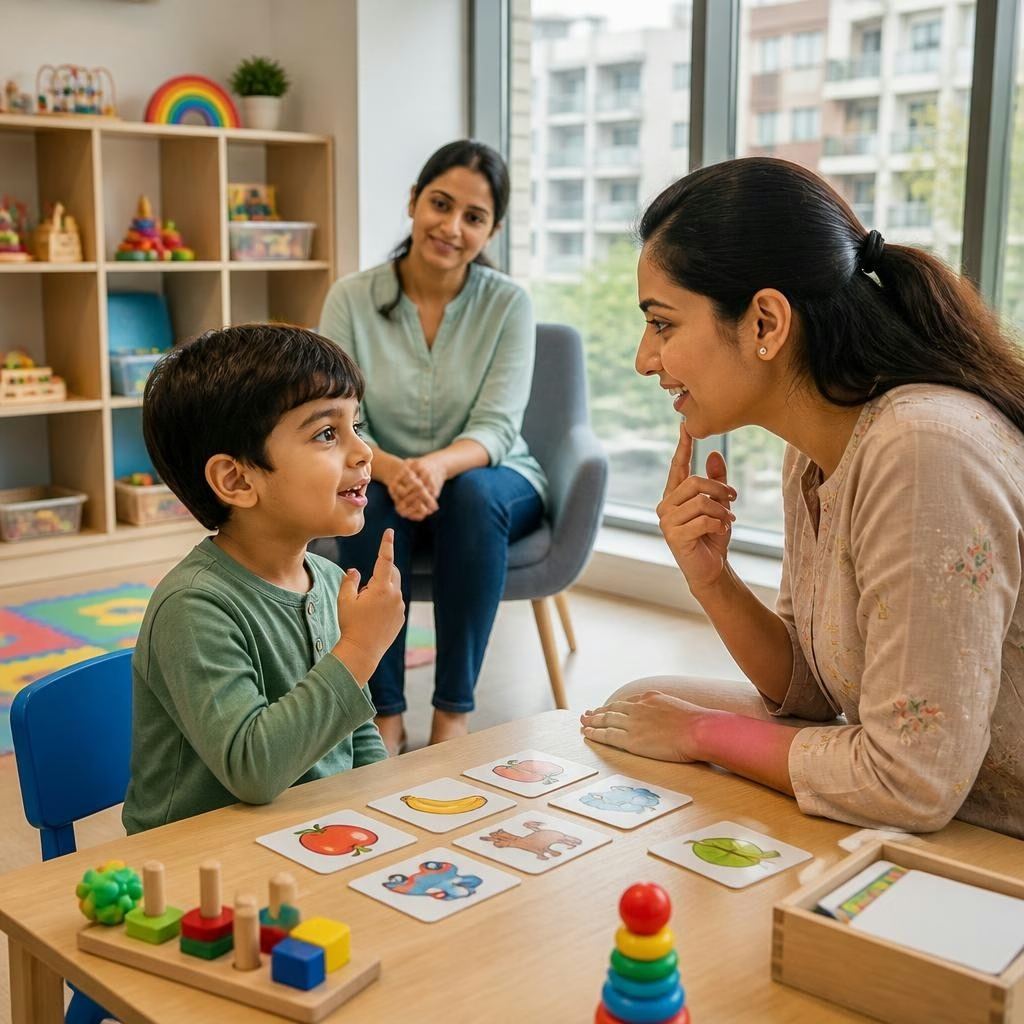
In the first three months the focus is on consistent, routine work. Sessions may target foundational skills: oral‑motor practice and articulation in speech therapy, sensory activities and coordination in occupational therapy, and structured learning or behaviour strategies in ABA or special education. Therapists typically use playful, child‑centred techniques so children stay engaged while practising new skills.
Month 3: Early signs of progress many families notice
Around the third month, families commonly report small but meaningful changes: more attempts to communicate, increased eye contact or responsiveness, better participation in play, or reduced meltdowns when routines are followed. For example, one parent whose child had both autism and attention difficulties described noticeable improvements in communication and behaviour after regular therapy — a pattern echoed by many other families.
Months 3–5: Consolidation and generalisation
After early gains, the next step is consolidation — helping skills appear across settings. Therapists and special educators work on transferring progress from clinic activities to home and preschool situations. This stage often centres on repetition with variation (practising a skill in different contexts), parent coaching to maintain consistency, and beginning school‑readiness tasks when appropriate.
Month 5–6: Reassessment and planning the next phase
Towards the sixth month the team reviews progress against the initial goals. This may include formal reassessment or practical demonstrations of what the child can do now. Based on results, therapists adjust goals: intensify a current target, introduce new skills, or reduce session frequency while increasing home practice. Clear communication and transparency about next steps are commonly mentioned strengths by families at Rainbow CDC.
How progress is measured and communicated
Progress is typically tracked through a mix of objective notes, informal video or activity examples, and regular parent feedback. Parents at Rainbow CDC report helpful, transparent explanations from therapists and regular guidance on what to practise at home. Regular updates make it easier to see whether a goal has been met or needs modification, and they help families stay involved in the process.
Simple, practical ways parents can support therapy at home
Small daily routines make a big difference: short play sessions that target a single skill, using the same prompts and rewards therapists suggest, consistent mealtime routines for feeding goals, and praising attempts (not just perfect performance). Keep practice short and frequent, use clear cues, and collaborate with therapists to adapt activities to your home. Many parents find that following the centre’s home‑practice tips speeds up generalisation of skills into everyday life.
Finding the right fit in Gurugram and next steps
If you’re in Gurugram and considering therapy, look for a centre that offers thorough assessment, multidisciplinary input (speech, OT, ABA, special education), clear parent coaching, and a child‑friendly environment. Rainbow Child Development Centre at H.No 56, Basement House, Gurugram, is one local option families mention positively for these features. When you visit, ask about assessment details, how often progress is reviewed, and what specific home‑practice you’ll receive—those answers will help you decide if the centre is the right fit for your child.
Customer review


Article by
Rainbow Child Development Center | Occupational Therapy in Gurugram | Speech Therapy | ABA Therapy | Special Educator
Rainbow Child Development Centre in Gurgaon, Haryana, provides specialized care for children through occupational therapy, speech and hearing therapy, ABA, special education, and child psychiatry. As a leading occupational therapy centre in Gurgaon, we enhance motor skills, sensory processing, and independence. We also offer expert speech therapy in Gurgaon to improve communication and language. Renowned for effective autism treatment in Gurgaon, we deliver personalized programs, making us a trusted autism centre in Gurgaon. Our skilled special educators in Gurgaon provide tailored learning plans, positioning us among the top special schools in Gurgaon, special education schools in Gurgaon, and centers for comprehensive therapy in Gurgaon.