From Single Words to Sentences: Expressive Language Milestones for Gurugram Children (Ages 2–7)
A friendly, practical guide to typical expressive language growth for 2–7 year olds with everyday examples from home, park, and school in Gurugram — plus clear signs that suggest you may want expressive language therapy and simple activities parents can use right away.
Why expressive language milestones matter
Expressive language is how children use words, sentences, and nonverbal cues to share thoughts and needs. Tracking typical milestones helps you know if your child is on track or may benefit from extra support. Early help often makes a big difference in confidence, social interaction, and school readiness.
Big-picture milestones by age
Between ages 2 and 7, children usually move from single words to multiword sentences and more complex grammar. Expect gradual growth in vocabulary size, the length of sentences, use of pronouns and verbs, and the ability to tell simple stories. The pace varies a lot from child to child, but patterns below give a useful snapshot.
Typical skills around 2 years
At about 2 years, many children use 50–200 words and combine two words (“more juice,” “mama come”). They label familiar people and objects, point to pictures when named, and start using simple action words. In Gurugram settings, a 2-year-old might ask for ‘roti’ or call out a parent’s name at a neighbourhood park.
What to expect by 3–4 years
By age 3–4, kids usually speak in short sentences of three to four words, use basic pronouns (I, you, me), and follow two- to three-step instructions. They begin to answer simple “who/what/where” questions and use language to play. At preschool or playgroup in Gurugram, they’ll likely join simple role-play and ask to go to the slide or toy.
Progress from 4 to 5 years
Between 4 and 5, sentence length and grammar become more consistent. Children tell short stories, use past tense sometimes, and can describe immediate experiences (e.g., what they played at school). They start to be understood by strangers most of the time, and can follow more complex directions like “put your shoes in the bag and bring your water bottle.”
Growing complexity at 5–7 years
From 5 to 7 years, vocabulary expands quickly, sentences grow longer, and children learn to explain ideas, compare things, and use more precise words. They can retell simple events in order and start to understand and use basic grammar consistently — skills that support reading and classroom learning.
Everyday Gurugram examples (home, park, school)
Practical examples make milestones real: at home a 3-year-old might say “open door” to ask for help; at a Gurugram park a 4-year-old could invite another child by saying “let’s play ball”; in a preschool classroom a 6-year-old might explain how they built a tower and why it fell. These small moments show how language connects to daily life.
When to consider expressive language therapy
Look for persistent delays such as: fewer than 50 words by age 2; difficulty combining words by age 3; speech that’s hard for familiar listeners to understand after age 3; little interest in communicating or using gestures; or loss of previously acquired words. If you notice these signs or if language limits play and learning, it’s a good idea to get a professional assessment.
What therapy looks like here — realistic expectations
Therapy focuses on practical communication: building vocabulary, expanding sentence length, improving clarity, and coaching parents to use language-rich routines at home. Families who’ve worked with local therapists often report steady progress from single words to short phrases and then to fuller sentences when therapy is combined with home practice and consistent strategies.
Simple activities parents can try today
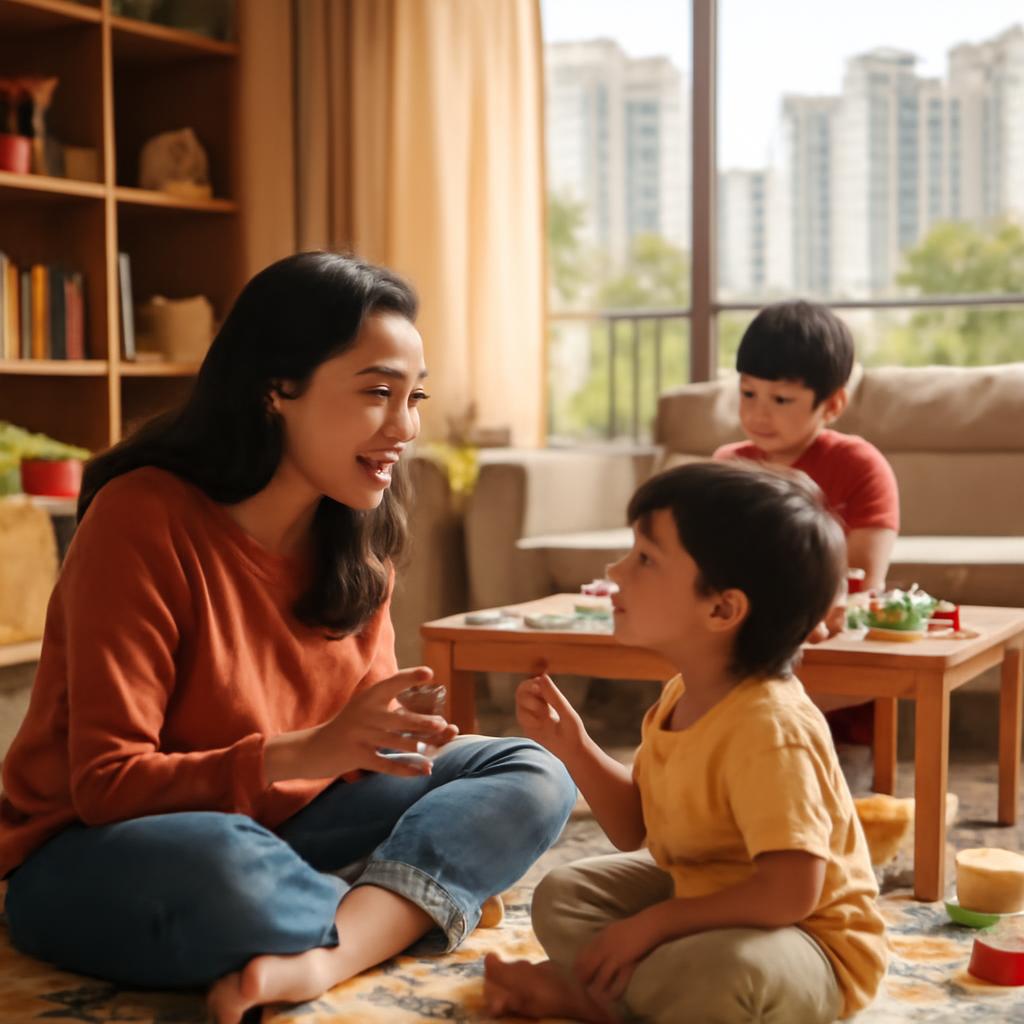
Try these everyday strategies: narrate routines (“Now we wash hands”), expand your child’s words into longer phrases (child: “car” → you: “red car is fast”), use choices to prompt words (“banana or apple?”), and set up short turn-taking games that require talking. Read daily, ask open questions, and use play to model new words in familiar Gurugram contexts (market, park, school).
How Rainbow Child Development Centre supports families
Local families report helpful, caring therapists and multidisciplinary support when their child needs speech or occupational help. The centre offers speech and language assessment and therapy along with parent guidance, and many parents note clear improvements when therapy and home practice are combined. If you’re in Gurugram, the centre is located at H.No 56, Basement House, Gurugram and provides services for children from the surrounding area.
Next steps and encouraging words
If you’re worried, trust your instincts and start with a screening or consultation — earlier support is often more effective. Keep activities fun and natural, celebrate small wins, and stay consistent. Language grows gradually, and with guided support and everyday practice your child can make meaningful progress from words to sentences.
Customer review


Article by
Rainbow Child Development Center | Occupational Therapy in Gurugram | Speech Therapy | ABA Therapy | Special Educator
Rainbow Child Development Centre in Gurgaon, Haryana, provides specialized care for children through occupational therapy, speech and hearing therapy, ABA, special education, and child psychiatry. As a leading occupational therapy centre in Gurgaon, we enhance motor skills, sensory processing, and independence. We also offer expert speech therapy in Gurgaon to improve communication and language. Renowned for effective autism treatment in Gurgaon, we deliver personalized programs, making us a trusted autism centre in Gurgaon. Our skilled special educators in Gurgaon provide tailored learning plans, positioning us among the top special schools in Gurgaon, special education schools in Gurgaon, and centers for comprehensive therapy in Gurgaon.