Home Activities to Support Your Child’s Speech Therapy: A Gurgaon Parents’ Guide
Simple, practical and India‑home‑friendly games and routines parents can use between sessions to help speech, language and communication — drawing on the type of home‑practice guidance families receive at Rainbow Child Development Centre in Gurugram.
Why home practice matters
Therapy sessions are important, but most progress happens when skills are practised regularly at home. Parents who work on small, consistent activities help children transfer what they learn in the clinic into everyday life — improving clarity, vocabulary, attention and confidence. At Rainbow Child Development Centre many families report that therapist guidance for home activities has been a key part of their child’s improvement.
Keep it short, natural and fun
Children respond best to short, engaging practice rather than long drills. Make speech practice a natural part of daily routines — snack time, dressing, bath or play — so it feels like a game, not a chore. Use praise, a smile and slow, clear models of sounds or words. The goal is regular, relaxed practice where the child feels successful.
Daily routine ideas that build language
Daily tasks offer built‑in opportunities for language: name items during mealtimes (cup, spoon, banana), narrate actions while dressing, count steps on the way to school, or describe the bath-time routine. These moments encourage understanding (receptive language) and give natural chances to prompt words or choices without creating pressure.
Simple play games to try at home
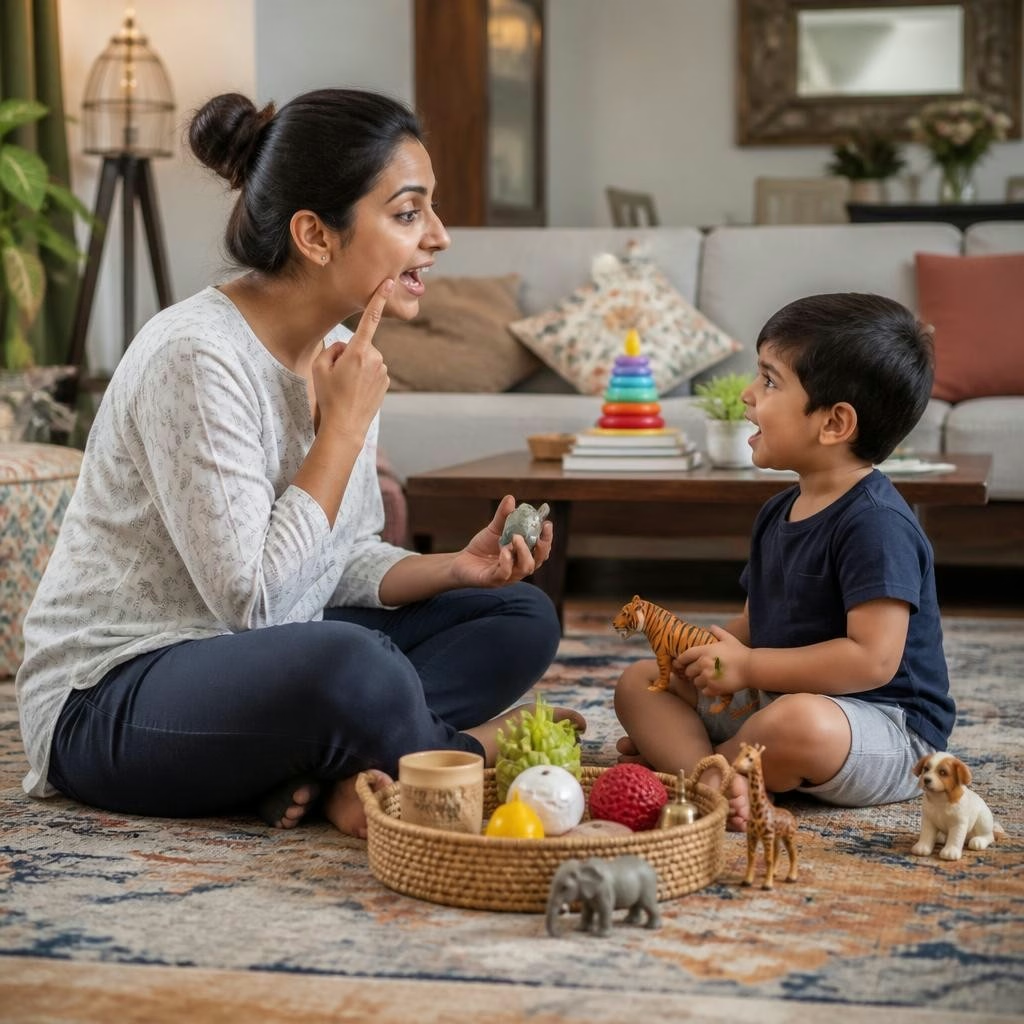
Turn play into practice. Try hide-and-seek with toys and encourage your child to ask for the toy, stack blocks and name colours, or play pretend with dolls/figures to practise short phrases. Use a ball‑toss game where each catch prompts a word or short sentence. Keep games predictable so your child learns the routine and can practise language within it.
Rhymes, songs and reading together
Songs and rhymes are powerful for speech and rhythm. Sing familiar nursery rhymes or simple Hindi and English songs together, and add actions to reinforce meaning. For reading, choose short picture books and pause to point at pictures, name objects and ask simple questions. Repetition of the same book helps children anticipate language and try lines themselves.
Techniques that support expressive language
Use modelling and expansion: repeat a child’s single word and expand it into a short phrase (child: "ball" → parent: "Yes, big ball"). Offer choices to encourage communication — present two snack options and wait for a gesture, a word or a point. Slow down language, use clear chunks, and give time for the child to respond.
Ideas for children who use few words
If your child is not yet speaking much, focus on encouraging communication in any form. Reinforce gestures, pointing, single words and eye contact. Use lots of pausing so the child has a chance to respond, and follow their lead during play. Simple visual supports like a photo board of favourite items or a laminated choice board can make asking easier for a child who struggles to say words.
Making home practice practical in Indian households
You don’t need special equipment — use household items: spoons, clothes, toys, family photos and everyday food. Involve siblings or grandparents in short activities so language happens across family members. Relate practice to festivals and routines (birthday songs, greeting relatives) so language learning is meaningful and culturally familiar.
How to work with your child’s therapist
Therapists can suggest the exact targets and simple activities that match your child’s goals. Many families say therapists provide regular, practical home‑practice steps and check progress each visit. Ask your therapist for: one or two goals to focus on at home, example phrases or prompts to use, and ways to embed practice into daily routines. Keep a brief note of what works so you can report back at the next session.
Keeping expectations realistic and staying encouraged
Progress is often gradual. Celebrate small wins — a new word, clearer sounds, longer attention during a book. If something isn’t working, change the activity or ask your therapist for a different approach. Consistency, patience and a playful approach make home practice sustainable. If you’d like tailored guidance or a home‑friendly plan, Rainbow CDC’s speech team and parent‑coaching approach aim to give practical steps families can use between sessions.
Customer review


Article by
Rainbow Child Development Center | Occupational Therapy in Gurugram | Speech Therapy | ABA Therapy | Special Educator
Rainbow Child Development Centre in Gurgaon, Haryana, provides specialized care for children through occupational therapy, speech and hearing therapy, ABA, special education, and child psychiatry. As a leading occupational therapy centre in Gurgaon, we enhance motor skills, sensory processing, and independence. We also offer expert speech therapy in Gurgaon to improve communication and language. Renowned for effective autism treatment in Gurgaon, we deliver personalized programs, making us a trusted autism centre in Gurgaon. Our skilled special educators in Gurgaon provide tailored learning plans, positioning us among the top special schools in Gurgaon, special education schools in Gurgaon, and centers for comprehensive therapy in Gurgaon.