How Gross and Fine Motor Delays Affect Learning: A Gurgaon Parent’s Guide to Early OT Support
Practical guidance for Gurgaon parents linking balance, coordination, and grip difficulties to classroom and self‑care challenges — and how early occupational therapy can help set children up for success.

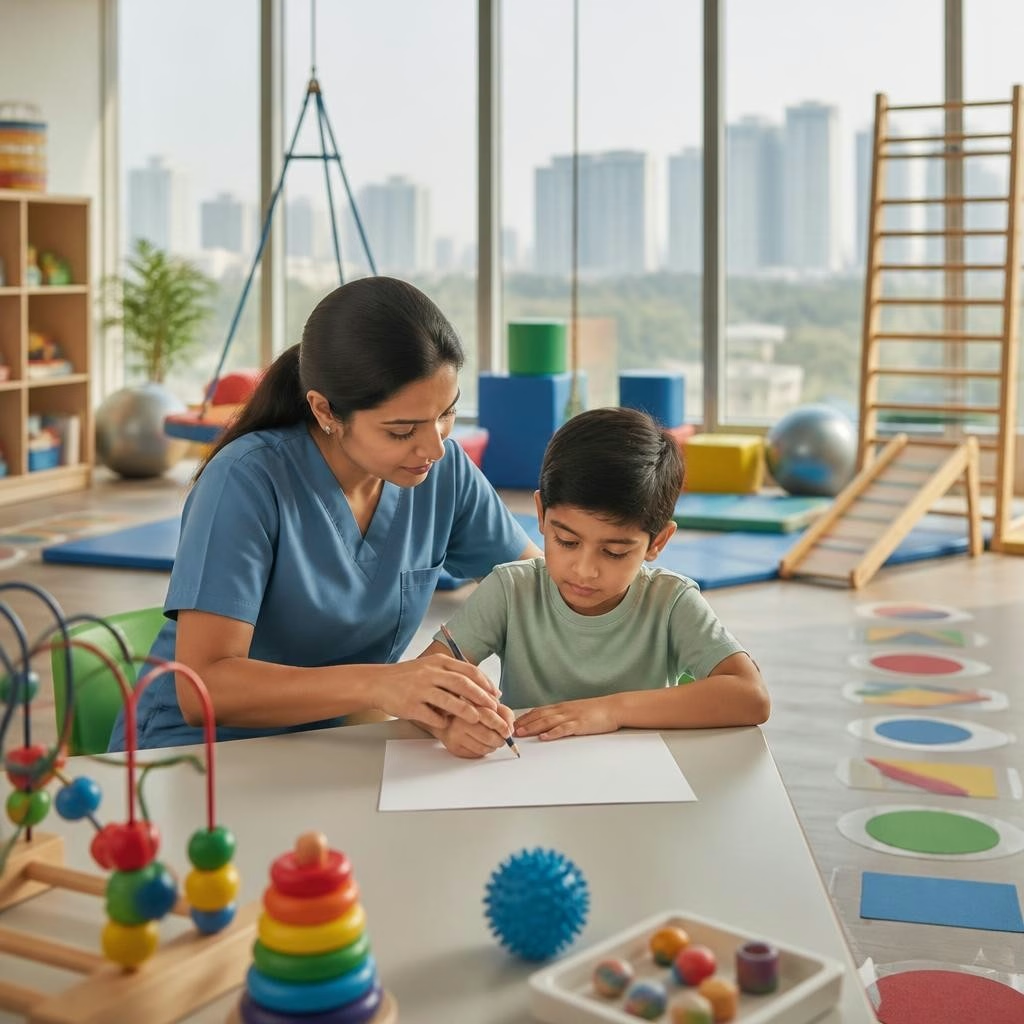
Why motor skills matter for learning
Motor skills are the foundation for many everyday tasks children do at home and at school. Gross motor skills (big movements like running, jumping, and balancing) and fine motor skills (small actions like holding a pencil, buttoning a shirt, or turning pages) both support classroom learning, independence, play and social confidence. When these skills lag, children can struggle with handwriting, classroom participation, self‑care and even paying attention — so spotting issues early gives families a real advantage.
Spotting gross motor delays: what to look for
Gross motor delays often show as poor balance, frequent tripping, clumsiness, trouble catching or kicking a ball, reluctance to climb or jump, or slow coordination. In younger children you might notice delayed crawling or awkward walking patterns. These signs don’t always point to a serious problem, but if they persist or make play and daily activities harder, a focused assessment from an occupational therapist can clarify the issue and options.
Spotting fine motor delays: everyday clues
Fine motor challenges show up in smaller tasks: an awkward pencil grip, messy or very slow handwriting, difficulty cutting with scissors, trouble manipulating buttons or zipper pulls, or avoiding activities like threading beads. Teachers may report the child struggles with classroom tools or copying from the board. Because fine motor skills are so closely tied to writing and classroom tasks, early attention can prevent frustration and falling behind academically.
How motor delays affect classroom learning
Motor difficulties can create a chain reaction in school: slow or illegible handwriting affects note taking and written expression; poor balance or low core strength can make sitting at a desk tiring and lead to reduced attention; difficulty with scissors or puzzles interferes with fine motor practice that underpins reading readiness. Children who find school tasks physically hard may withdraw socially or avoid activities, which can impact learning and peer relationships.
Impact beyond academics: self‑care and confidence
Motor skills are key to independence — dressing, feeding, using the toilet, and participating in playground games. Delays can mean a child needs more help from adults and peers, which may affect self‑esteem and willingness to try new things. Early support focuses not just on skill building but on helping children feel competent and included. That boosts motivation and helps them engage more fully at school and home.
How early occupational therapy helps
Occupational therapy (OT) looks at the whole child: strength, coordination, sensory processing, fine motor control and how these affect daily tasks. Early OT aims to make tasks easier and more automatic — improving balance, hand strength, bilateral coordination (using both hands together), and motor planning. In Gurugram, early OT programs often combine play‑based exercises, sensory integration techniques and targeted practice to build skills that transfer to classroom work and self‑care.
What OT sessions often include — practical examples
Therapists use fun, functional activities tailored to each child. For gross motor work this might include balance beams, obstacle courses, jumping games and core‑strength activities. Fine motor sessions use puzzles, pegboards, play‑dough, threading, and graded handwriting tasks to build precision and endurance. Sensory integration exercises help children who are over‑ or under‑sensitive to movement, touch or noise. Therapists also coach parents and teachers on simple strategies to practice skills across the day.
Simple home strategies parents can try today
You don’t need special equipment to support motor development. Ideas include: making obstacle courses at home to practice balance, encouraging play with building blocks and beads for hand strength, using clothespins or tongs to pick up small objects, offering thick crayons or pencil grips to improve control, and creating short, fun handwriting practice tied to real tasks (lists, greeting cards). Keep activities short, playful and consistent — small daily wins add up.
When to seek an assessment and what to expect
If motor challenges are persistent, affecting school or self‑care, or causing frustration, book a professional assessment. A typical evaluation looks at gross and fine motor milestones, sensory responses, coordination and how difficulties affect daily routines. Recommendations may include targeted OT sessions, home practice, classroom strategies or referrals to other specialists if needed. Parents who come to OT in Gurugram often remark on the therapists’ patience and clear guidance — one parent reported noticeable improvement in coordination and activity after starting OT.
Finding the right support in Gurugram and next steps
When choosing a centre, look for experienced occupational therapists, a child‑friendly environment, clear communication with parents, and a multidisciplinary team if your child needs speech, ABA or special education support as well. Rainbow Child Development Centre in Gurugram offers occupational therapy, sensory integration, handwriting intervention, school‑readiness programs and in‑home services that can be tailored to your child’s needs. If you’re concerned about your child’s balance, grip or classroom struggles, an early chat with a therapist can clarify next steps and help you start practical, achievable work toward improvement.
Customer review


Article by
Rainbow Child Development Center | Occupational Therapy in Gurugram | Speech Therapy | ABA Therapy | Special Educator
Rainbow Child Development Centre in Gurgaon, Haryana, provides specialized care for children through occupational therapy, speech and hearing therapy, ABA, special education, and child psychiatry. As a leading occupational therapy centre in Gurgaon, we enhance motor skills, sensory processing, and independence. We also offer expert speech therapy in Gurgaon to improve communication and language. Renowned for effective autism treatment in Gurgaon, we deliver personalized programs, making us a trusted autism centre in Gurgaon. Our skilled special educators in Gurgaon provide tailored learning plans, positioning us among the top special schools in Gurgaon, special education schools in Gurgaon, and centers for comprehensive therapy in Gurgaon.