How Play-Based Group Therapy Builds Social Skills in Young Children in Gurgaon
A practical guide for Gurgaon parents explaining how play group therapy and social-communication groups work, what activities to expect, which ages benefit most, and how these sessions help shy, withdrawn, or rigid children learn to share, take turns, and make friends.
Why play matters for social development
Play is the natural way young children learn to communicate, cooperate, and understand others. In a group setting, play becomes a social lab: children practise waiting, watching, taking turns, and reading faces while doing something they enjoy. For parents in Gurgaon looking for approachable therapy options, play-based group therapy turns everyday play into targeted learning—helping children move from solo activities to interactive play with peers.
What play-based group therapy looks like
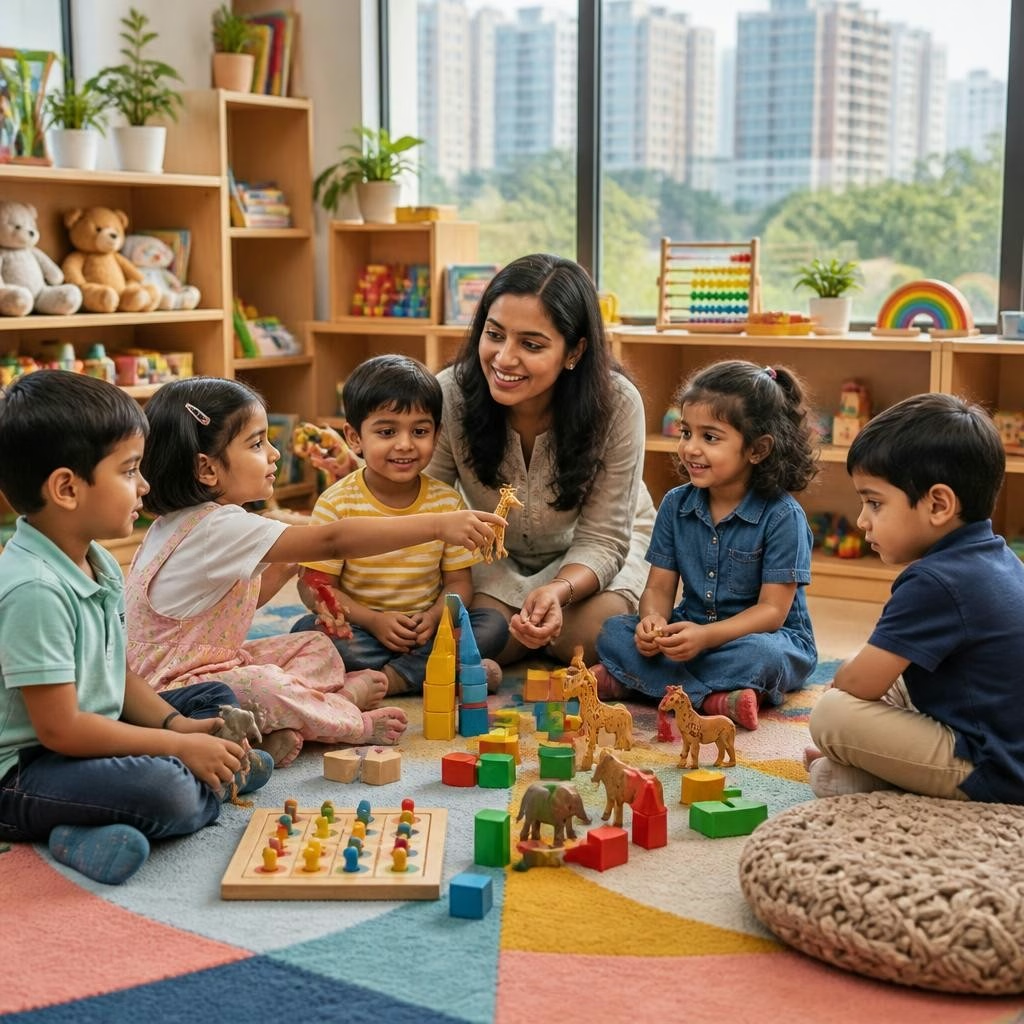
These groups are led by trained therapists and use structured, purposeful play rather than free-for-all recess. A typical session blends short, guided activities (circle games, story time, role-play) with small-group tasks (building together, cooperative art, turn-taking games). Therapists set clear, simple goals for each activity—such as initiating interaction, responding to a peer, or sharing a toy—and use praise, prompts, and gentle modelling to help children reach them.
Who benefits and approximate age ranges
Play-based social groups are most common for preschool and early school-age children, though exact age ranges vary with each program. They’re particularly helpful for children who are shy or withdrawn, have delays in social communication, or show rigid play patterns. Rainbow Child Development Centre in Gurugram lists Play Group Therapy and Social Communication Training among its services, making it an option for local families who want a child-friendly, therapeutic group environment.
Typical activities and what each teaches
Activities are chosen to teach specific social skills: cooperative building tasks encourage sharing and joint attention; turn-taking games teach patience and impulse control; role-play and puppet play build expressive language and perspective-taking; group songs and movement support rhythm, imitation, and group participation. Sensory-rich activities (playdough, water play, obstacle play) also help children who need support with sensory processing so they can join social play more comfortably.
How groups help shy or withdrawn children
Shy children often need low-pressure opportunities to try social steps. In a small, structured group they can observe peers, join in at their own pace, and receive positive reinforcement from the therapist. Therapists break tasks into tiny, achievable steps—like waving to a friend, then offering a toy—so success feels manageable. Over repeated sessions, children build confidence and a sense that interaction is safe and enjoyable.
How groups help rigid, repetitive, or resistant children
Children who prefer routines or repetitive play can learn flexibility through predictable but slightly varied group activities. Therapists use visual schedules, clear transitions, and preferred items to make changes feel safe. Gradual shifts—such as rotating roles in a game or sharing part of a preferred toy—teach flexibility while keeping the child engaged. The goal is to expand the child’s ability to tolerate small changes and to join cooperative play without overwhelming them.
The therapist’s role and multidisciplinary support
Effective group therapy is more than playtime—therapists observe, scaffold, and coach interaction in real time. In multidisciplinary centers, speech therapists, occupational therapists, and special educators coordinate goals so a child’s communication, sensory needs, and play skills develop together. Parents who visit local centres often comment on clear explanations, practical home strategies, and a caring team that keeps them informed about progress and next steps.
What progress looks like and realistic expectations
Progress is typically gradual and skill-specific: initial steps may be looking toward a peer, imitating an action, or tolerating shared play for a minute. Later milestones include initiating play, responding to social bids, or joining a small group activity. Because every child is different, therapists set individual targets and share regular updates so families can see what’s improving and where to focus next. Many parents notice small, meaningful changes that add up over time when home and therapy strategies are used consistently.
Questions to ask before joining a group
Before enrolling, ask the centre about group size, therapist-to-child ratio, the mix of skills in the group, how goals are set for each child, and how progress is communicated to families. Check whether sessions include parent coaching or home-practice suggestions—parents often report that clear guidance for home makes therapy gains more durable. Also ask about the intake process: most centres assess a child first to ensure the group matches their needs.
Simple ways parents can support social learning at home
You don’t need special equipment to reinforce group learning. Try short, playful routines at home that mirror group activities: take turns passing a ball, build a small tower together, or share snacks with simple rules. Use clear, encouraging language, praise attempts at interaction, and offer visual cues for steps when needed. Keep interactions short and predictable at first, then gradually extend time and choice. If you attend a local centre, therapists often provide specific do’s and don’ts to practice between sessions—many parents find these suggestions helpful for keeping progress steady.
Finding the right local program and next steps
If you’re in Gurugram and considering play-based group therapy, look for centres that list Play Group Therapy, Social Communication Training, or Group Therapy on their services. Visit the space to see whether it feels child-friendly and structured—parents consistently praise centres that combine professional staff with a nurturing environment and clear parent communication. Start with an assessment to match your child to the right group, and choose a program that includes regular feedback and tips for home practice so therapy and daily life reinforce each other.
Article by
Rainbow Child Development Center | Occupational Therapy in Gurugram | Speech Therapy | ABA Therapy | Special Educator
Rainbow Child Development Centre in Gurgaon, Haryana, provides specialized care for children through occupational therapy, speech and hearing therapy, ABA, special education, and child psychiatry. As a leading occupational therapy centre in Gurgaon, we enhance motor skills, sensory processing, and independence. We also offer expert speech therapy in Gurgaon to improve communication and language. Renowned for effective autism treatment in Gurgaon, we deliver personalized programs, making us a trusted autism centre in Gurgaon. Our skilled special educators in Gurgaon provide tailored learning plans, positioning us among the top special schools in Gurgaon, special education schools in Gurgaon, and centers for comprehensive therapy in Gurgaon.