How Small-Group Therapy Helps Shy or Rigid Children Build Confidence in Gurgaon
A practical guide for parents on how play-group and social-skills groups help children who avoid peers, insist on routines, or struggle with sharing — and what to expect from progress and parental involvement at Rainbow Child Development Centre, Gurgaon.
Why group work matters for shy or rigid children
Children who avoid peers, cling to routines, or find sharing difficult often benefit from the social micro-environment a small group provides. Group therapy creates natural chances to practice interaction (without the pressure of a full classroom), encourages peer motivation, and lets therapists target social skills in real-time. For many families, group sessions feel like a gentle bridge between one-on-one therapy and everyday social settings.
What small-group sessions look like at Rainbow Child Development Centre
At Rainbow Child Development Centre in Gurgaon, small-group offerings include play-group therapy and social-skills groups delivered by therapists across disciplines. Sessions are activity-based and child-friendly: guided games, turn-taking exercises, joint play tasks, and structured interactions that feel like play rather than formal lessons. The centre’s multidisciplinary approach means speech, occupational, and behavioral goals can be addressed together so each child’s participation is supported from different angles.
How groups increase social motivation
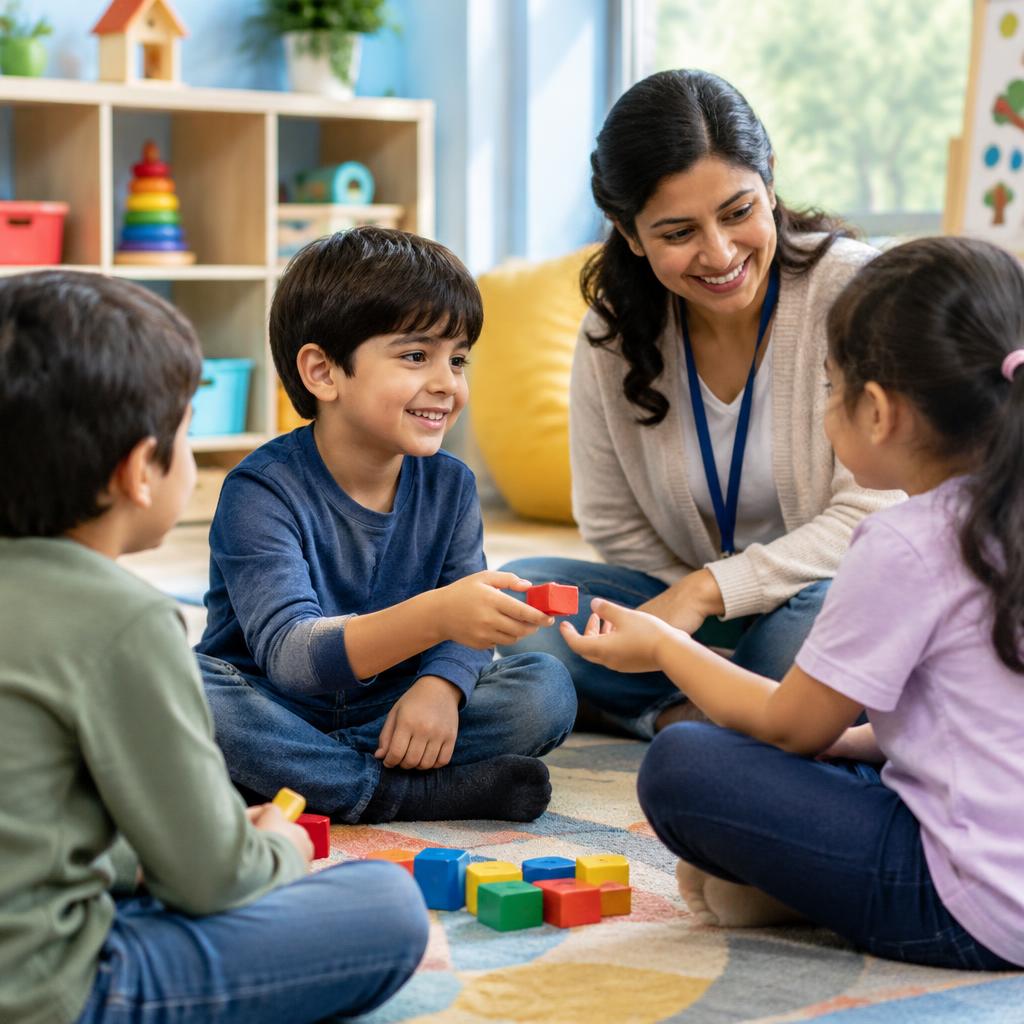
Shy children often need subtle, motivating reasons to engage. In a group, peers become natural motivators—children imitate, follow others’ lead, and respond to shared rewards. Therapists set up short, enjoyable activities where success depends on looking at a peer, handing a toy, or taking a turn. Over repeated, supported experiences, this increases a child’s interest in peers and willingness to attempt interaction.
Gentle, structured steps to reduce rigidity
Children who insist on routines respond best to predictable but gradually flexible approaches. Group therapists introduce small changes in a controlled way: switching a toy after a couple of turns, offering a choice instead of an instruction, or using brief role-play to rehearse transitions. These small, repeated experiences teach children that change can be safe and enjoyable—without overwhelming them.
Practical strategies used during group play
Groups use short, purposeful games and activities that naturally teach sharing and cooperation. Examples include taking turns with a preferred toy, working together on a simple craft, or pair-based tasks that require asking for help. Therapists coach the children through the steps, cue social language, and reinforce attempts to share or wait. Because the activities are short and playful, children get repeated practice without long periods of frustration.
How occupational therapy supports participation
Sensory or motor difficulties can make social situations uncomfortable or overwhelming. Occupational therapists at the centre work alongside group leaders to help children regulate sensory input and develop the fine and gross motor skills needed to join activities. When sensory needs are supported, children are more able to focus on interaction, tolerate new experiences, and participate in group play.
What progress looks like — realistic expectations
Progress in group confidence is individual. Many parents notice small but meaningful changes: shorter avoidance, more eye contact during play, or willingness to try a new game. Bigger changes—consistent sharing, spontaneous peer interaction, or flexibility around routines—tend to emerge with steady attendance, coordinated goals across therapists, and practice at home. The centre’s therapists regularly update parents so families can see incremental gains and adjust plans as needed.
How parents fit into the group-therapy process
Parents play a key role in generalizing skills from the therapy room to daily life. At Rainbow, families receive practical guidance on activities and do’s/don’ts to try at home. You may be invited to observe sessions, practice brief strategies with your child, or follow up specific games that reinforce group learning. Consistent home support helps new social skills stick and builds parent confidence in supporting change.
Why multidisciplinary care strengthens group outcomes
Reviews from local families highlight the benefit of having speech, occupational therapy, ABA, and special-education input under one roof. When a child’s speech goals, sensory needs, and behavior plans are coordinated, group sessions can focus on meaningful, achievable targets. Leadership involvement and regular parent guidance add transparency so families understand the “why” behind each activity and how to help at home.
Getting started: assessment, questions to ask, and next steps
If you’re considering small-group therapy for a shy or rigid child, begin with a developmental assessment at the centre to identify social, speech, sensory, and behavioral needs. Helpful questions to ask the team: what the group’s focus and typical activities are, how progress is measured, how therapists handle distress or refusal, and what home-practice you should expect. Rainbow Child Development Centre’s address in Gurugram is available for scheduling an assessment or visit; their team can recommend whether a play group, social-skills group, or individual therapy (or a combination) is the best starting point for your child.
Article by
Rainbow Child Development Center | Occupational Therapy in Gurugram | Speech Therapy | ABA Therapy | Special Educator
Rainbow Child Development Centre in Gurgaon, Haryana, provides specialized care for children through occupational therapy, speech and hearing therapy, ABA, special education, and child psychiatry. As a leading occupational therapy centre in Gurgaon, we enhance motor skills, sensory processing, and independence. We also offer expert speech therapy in Gurgaon to improve communication and language. Renowned for effective autism treatment in Gurgaon, we deliver personalized programs, making us a trusted autism centre in Gurgaon. Our skilled special educators in Gurgaon provide tailored learning plans, positioning us among the top special schools in Gurgaon, special education schools in Gurgaon, and centers for comprehensive therapy in Gurgaon.