Managing Behaviour Issues in Children: How Behaviour Modification and Child Behaviour Intervention Work in Gurgaon
A practical guide to common childhood behaviour concerns (tantrums, aggression, poor attention) and how structured behaviour modification and child behaviour interventions — including services available at Rainbow Child Development Centre in Gurugram — address them step by step.

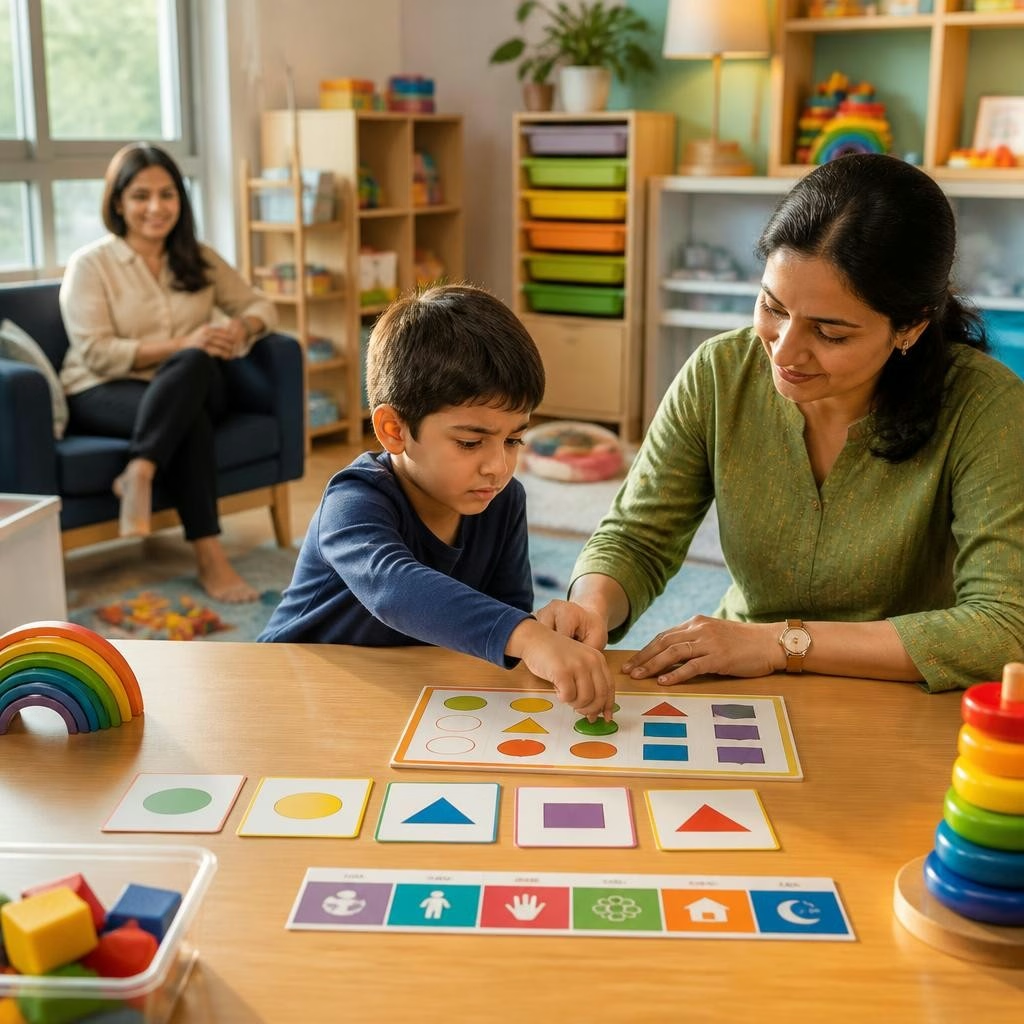
Common behaviour concerns parents see
Many families notice similar challenges as children grow: frequent tantrums, hitting or biting, refusal to follow instructions, poor attention in classroom-like tasks, and difficulty managing emotions. These behaviours can come from frustration, sensory overload, unclear expectations, communication gaps, or co-occurring conditions such as autism spectrum disorder (ASD) or ADHD. Understanding the root cause matters more than blaming the child — it guides the choice of intervention and makes change possible.
Why early assessment helps
Before starting any therapy, a clear, child-focused assessment is essential. General assessments, speech and language assessments, occupational therapy evaluations, and psychological assessment & counselling help identify whether behaviours are driven by communication needs, sensory processing differences, learning barriers, or emotional challenges. An early, accurate picture lets therapists set realistic goals and recommend the right mix of supports.
What behaviour modification therapy means
Behaviour modification is a structured approach that teaches new skills and reduces challenging behaviours using consistent, planned strategies. It focuses on changing the environment, teaching alternative behaviours, and reinforcing positive steps. At centres offering Behaviour Modification Therapy in Gurgaon, therapists tailor techniques to each child’s abilities and family context so learning is meaningful and repeatable at home and school.
Step 1 — Assessment and goal-setting
A typical program starts with assessment and joint goal-setting. Therapists observe the child, review developmental history, and consult caregivers and teachers. From that, they identify target behaviours (for example, reducing aggression, increasing sustained attention, or teaching waiting skills) and break goals into small, measurable steps. Goals are practical and linked to daily routines — the ones parents and teachers care about most.
Step 2 — Structured strategies therapists use
Therapists use a toolbox of evidence-based strategies: positive reinforcement to reward desired behaviours, clear and consistent routines, visual supports (schedules and choice boards), task analysis (breaking complex tasks into simpler steps), and planned practice with immediate feedback. When needed, therapists include sensory strategies from Sensory Integration Therapy to reduce overload and improve self-regulation.
Step 3 — Teaching skills and replacing behaviours
Rather than only stopping a behaviour, good intervention teaches a replacement skill — for example, teaching a child to ask for a break instead of lashing out, or using simple words or gestures instead of screaming. Speech and language therapy, oral placement therapy, or communication training often run alongside behaviour work to ensure the child has the tools to express needs.
How ABA, special education and group work help
Applied Behaviour Analysis (ABA) techniques are commonly used to reinforce learning and generalize skills across settings. Special education and social communication training translate those gains into classroom learning and peer interactions. Group therapy and play-based group sessions give children safe practice with turn-taking, sharing, and social rules under therapist guidance, boosting confidence and real-world skills.
Real families see change — what that looks like
Parents often report steady, visible improvement when therapy is consistent and multi-disciplinary. For example, one family who began occupational therapy and speech therapy alongside behaviour support noticed better communication, reduced outbursts, and improved attention over time — a reminder that combined therapies addressing both behaviour and communication can make a big difference in daily life.
What parents can do at home
Home consistency is crucial. Use simple visual schedules, set predictable routines for meals and sleep, offer clear choices, praise small efforts, and keep instructions short and concrete. Create a calm-down corner with sensory tools (fidget, weighted cushion, quiet book) and teach a few calm-down strategies like deep breathing or squeezing a stress ball. Keep communication simple and celebrate progress — small steps add up.
Finding the right support in Gurugram and next steps
If behaviours persist or interfere with learning and family life, seek a coordinated plan from professionals who offer assessment plus linked services — for example, Behaviour Modification Therapy, ABA, speech and occupational therapy, and parental counselling. Rainbow Child Development Centre in Gurugram provides these services and works with families to create individualized plans and home strategies. Consider scheduling a full assessment to clarify causes, set goals, and get a step-by-step program tailored to your child and family routine.
Customer review


Article by
Rainbow Child Development Center | Occupational Therapy in Gurugram | Speech Therapy | ABA Therapy | Special Educator
Rainbow Child Development Centre in Gurgaon, Haryana, provides specialized care for children through occupational therapy, speech and hearing therapy, ABA, special education, and child psychiatry. As a leading occupational therapy centre in Gurgaon, we enhance motor skills, sensory processing, and independence. We also offer expert speech therapy in Gurgaon to improve communication and language. Renowned for effective autism treatment in Gurgaon, we deliver personalized programs, making us a trusted autism centre in Gurgaon. Our skilled special educators in Gurgaon provide tailored learning plans, positioning us among the top special schools in Gurgaon, special education schools in Gurgaon, and centers for comprehensive therapy in Gurgaon.